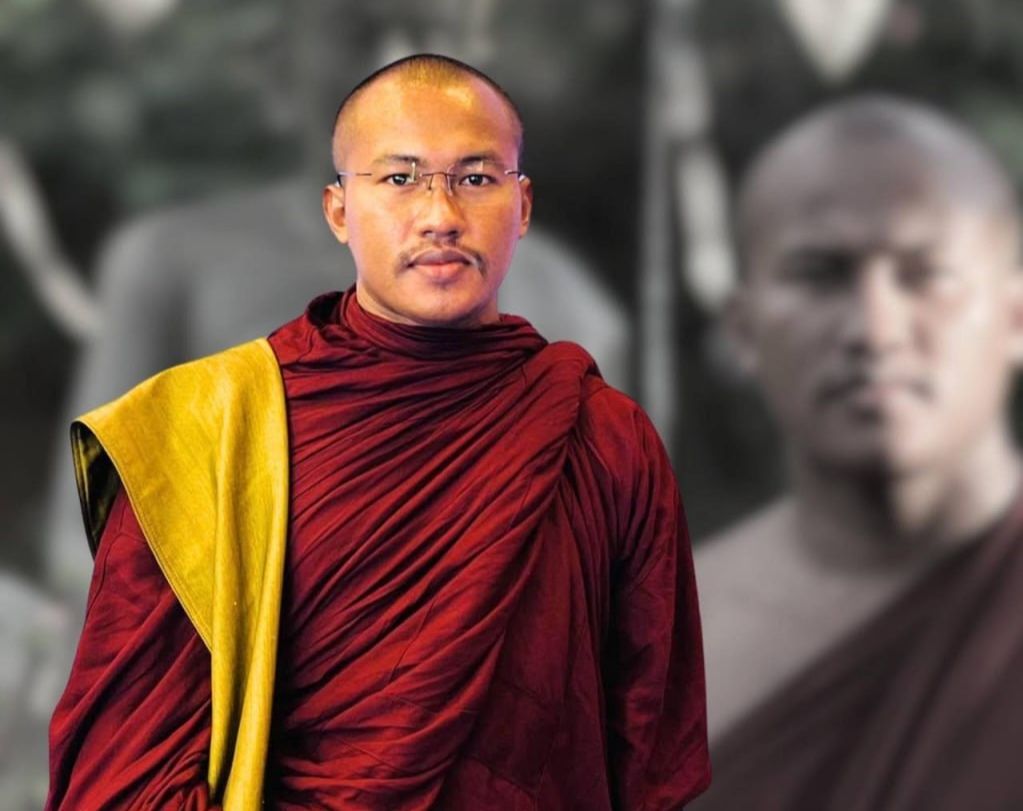
The conviction of Cambodian citizen journalist Chea Vuthy on incitement charges has triggered an unprecedented show of solidarity from Cambodia's civil society sector, with fifty organisations jointly condemning what they describe as a serious violation of fundamental freedoms. On August 19, the Phnom Penh Municipal Court sentenced the 27-year-old former monk to 18 months imprisonment and a fine of two million riel—approximately $500—for remarks he made within a private messenger group chat involving roughly twenty members. The breadth and unity of the response from rights groups, labour unions and media organisations signals deep concern about the direction of judicial proceedings in Cambodia, particularly regarding cases that touch on matters of state security and territorial disputes.
Vuthy's prosecution rested entirely on a single comment he posted in the private group in August 2025, a message related to provincial territories and the ongoing Cambodia-Thailand border situation, specifically addressing the plight of people displaced by the conflict. While the journalist acknowledged authoring the message within the restricted group, he maintained that he never shared it publicly. This distinction proved immaterial to the court, which convicted him under Articles 494 and 495 of Cambodia's Criminal Code, laws that prohibit incitement and carry substantial penalties. For Southeast Asian observers, the case exemplifies a troubling pattern in which governments increasingly weaponise vague incitement statutes to silence critical voices, irrespective of the limited reach of their communications.
The civil society coalition, formalised through a joint statement released on August 20 and coordinated by the Cambodian League for the Promotion and Defense of Human Rights (LICADHO), articulated a cohesive legal argument challenging the verdict's proportionality. The organisations emphasised that Cambodia is bound by the International Covenant on Civil and Political Rights, which permits restrictions on expression only when they are prescribed by law, pursue a legitimate aim, and satisfy the twin tests of necessity and proportionality. They contended that penalising a private message distributed to twenty people with eighteen months' imprisonment fails these criteria dramatically, as the limited audience and confined nature of the communication cannot justify such a severe sanction. The groups further noted that the messenger comment constituted the sole evidentiary basis for the conviction, leaving the prosecution seemingly devoid of corroborating material.
Vuthy's background as both a Buddhist practitioner and journalist amplifies the case's significance within Cambodia. Prior to his arrest, he maintained a visible presence documenting environmental degradation, deforestation and human rights abuses—work that placed him within the community of Cambodian civil society actors monitoring governance challenges. His status as a monk added a dimension of religious freedom concerns to the prosecution, since he was forcibly defrocked following his April arrest at Wat Por Veal pagoda in Battambang province by plainclothes police officers. He subsequently endured pretrial detention without securing bail, despite an appeal to the Phnom Penh Appeal Court in June, before his conviction in August. His current detention at Police Judicial Prison in the capital underscores the state's determination to prosecute this case to conclusion.
The prosecution occurs within a documented pattern of enforcement against individuals who voice criticism related to border disputes, a sensitivity that reflects underlying geopolitical tensions between Cambodia and Thailand. LICADHO has recorded multiple convictions and charges stemming from social media commentary on the border conflict, including cases that have resulted in comparably severe sentences: a chef received eighteen months in May, and a deputy school director was handed two years' imprisonment in June. These prosecutions collectively suggest that Cambodian authorities regard commentary on territorial matters as particularly sensitive, warranting aggressive application of incitement laws even when the audience is minuscule and the remarks lack demonstrable public impact. For Cambodia's neighbours in Southeast Asia, the pattern raises questions about the region's broader commitment to open discourse on matters of genuine public concern.
The diversity of signatories to the August 20 statement reflects the seriousness with which Cambodia's independent sector views the case. Beyond LICADHO and the Cambodian Center for Human Rights (CCHR), the coalition encompasses the Cambodian Human Rights and Development Association (ADHOC), the Cambodian Center for Independent Media (CCIM), the Cambodian Journalists Alliance Association (CamboJA), the Overseas Press Club of Cambodia (OPCC), labour-focused groups such as the Center for Alliance of Labor and Human Rights (CENTRAL), the Committee for Free and Fair Elections in Cambodia (COMFREL), and grassroots networks including the Prey Lang Community Network. This composition demonstrates that concerns about Vuthy's conviction transcend individual organisations and reflect a shared commitment among Cambodia's most credible monitors of democratic practice to defend expressive liberty.
Vuthy's defence strategy centres on appealing the verdict through available legal channels, with his lawyer, Em Chantha, arguing that comments within a messenger group fail to meet the legal threshold for incitement under Cambodian law and that the evidence presented was insufficient to sustain conviction. Chantha has signalled his intention to pursue an appeal, implicitly challenging the municipal court's interpretation of the incitement statutes and the proportionality of the sentence imposed. This avenue, while theoretically available, must be navigated within a judicial environment that has already demonstrated its willingness to prosecute border-related speech aggressively. Malaysian observers will recognise the dynamics at play: a country wrestling with territorial sensitivities, applying broad criminal statutes to suppress commentary, and offering appellate remedies that may prove inadequate if higher courts defer to lower tribunals' determinations.
The Ministry of Information's response, delivered through spokesperson Tep Asnarith, sought to reframe the controversy by asserting that Cambodia's courts operate independently and that the executive branch refrains from interference in judicial proceedings. Asnarith acknowledged Vuthy's formal rights to legal representation and appeal while implicitly urging civil society to refrain from what might be construed as prejudging the case or undermining judicial authority. This defensive posture—emphasising judicial independence while declining substantive engagement with the proportionality arguments raised—reflects a common governmental approach to civil society criticism in Southeast Asia. Yet the statement's framing elides the core concern: whether a judicial system that consistently applies incitement laws to suppress critical speech—particularly on sensitive topics—can genuinely be characterised as independent or whether it has become an instrument of state policy regarding permissible discourse.
For the Malaysian and broader Southeast Asian context, Vuthy's case carries implications extending beyond Cambodia's borders. It exemplifies how governments in the region employ criminal statutes ostensibly designed to protect national security or public order as mechanisms to suppress dissent and chill free expression. The severity of sentences imposed—eighteen to twenty-four months imprisonment for private or limited-audience commentary—suggests that authorities regard the content of speech as more problematic than its public impact, inverting the proportionality framework that international human rights law prescribes. Malaysia, which has grappled with similar tensions between security concerns and expressive liberty, particularly regarding remarks about religious sensitivities and territorial matters, may recognise parallels in Cambodia's approach. The case also underscores the vulnerability of citizen journalists and human rights monitors who operate in environments where independent commentary attracts state suspicion.
The international dimensions of the case are equally instructive. Cambodia committed during its fourth Universal Periodic Review at the UN Human Rights Council to respect freedom of expression and align domestic practice with international obligations. The conviction of Vuthy appears to contradict those commitments, and the civil society statement explicitly invokes Cambodia's international legal obligations as grounds for demanding his release. This appeal to international norms reflects a strategy familiar throughout Southeast Asia: civil society organisations leveraging Cambodia's treaty obligations to challenge prosecutions that appear to violate them. Whether such appeals influence judicial decision-making or government policy remains uncertain, but they establish a clear public record of Cambodia's departure from its stated international commitments.
Looking forward, the case's trajectory will depend substantially on the appeal process and the appellate court's willingness to reconsider both the conviction and the sentence. If higher courts uphold the conviction, Vuthy faces the prospect of serving his full eighteen-month term, with implications extending beyond his individual circumstances to the broader signal such an outcome would send to other potential commentators on sensitive topics. Conversely, if appellate courts overturn the conviction or substantially reduce the sentence, they would implicitly acknowledge the proportionality concerns articulated by Cambodia's civil society sector. Either outcome will resonate throughout Southeast Asia, shaping expectations about the trajectory of expressive liberty and governmental tolerance for criticism in the region's tighter-security states. The unified stance adopted by fifty Cambodian organisations suggests that this case has mobilised civil society in ways that may generate continuing pressure on Cambodian authorities to reconsider the case's prosecution and ultimate resolution.

