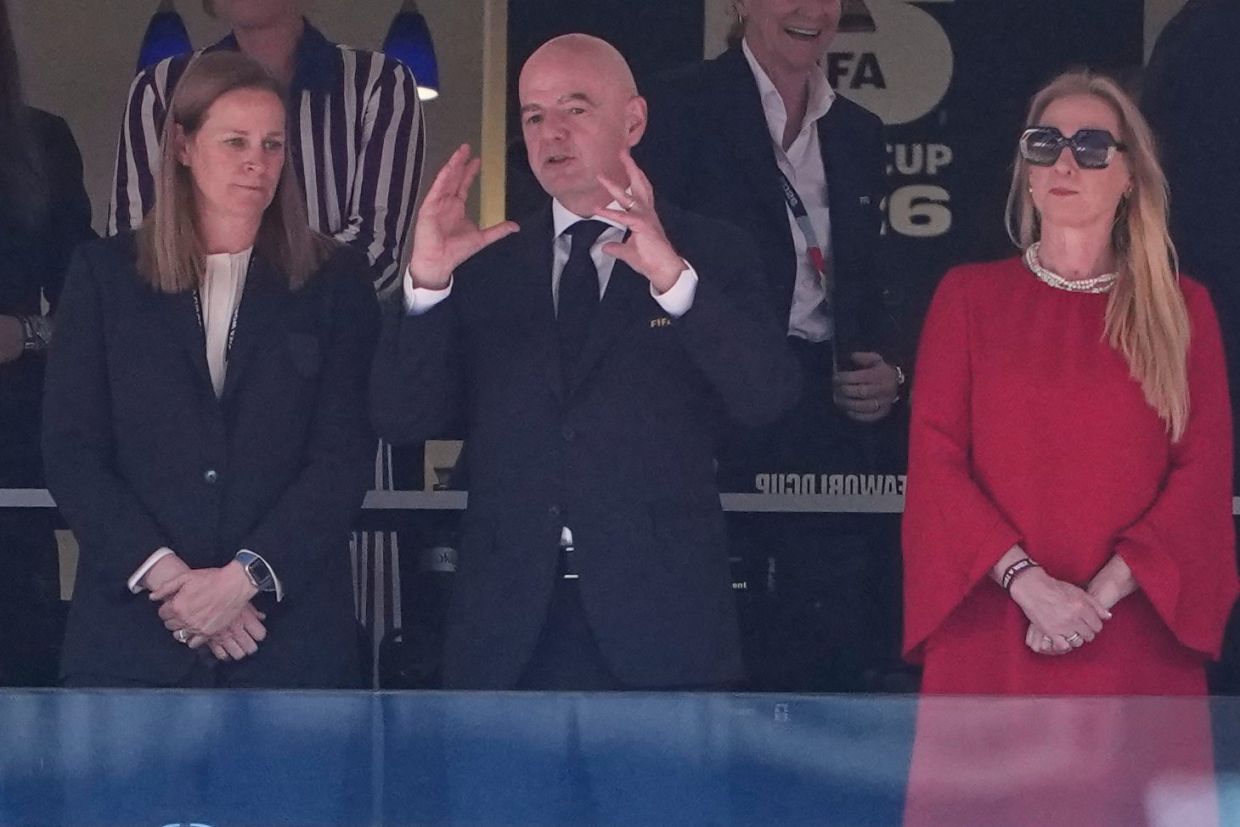
Gianni Infantino's position as FIFA president appears unassailable. Despite a succession of controversies surrounding the 2026 World Cup—ranging from exorbitant ticket costs to accusations of political meddling in match decisions—the 56-year-old administrator has only grown more entrenched in his control of global football's governing body. With elections scheduled for early 2027 in Rabat, Morocco, and no rival candidates emerging, Infantino is set to secure a third term without meaningful opposition from any of FIFA's 211 member associations.
The mounting criticism that has swirled around this World Cup tournament encompasses several distinct controversies. Fans have protested the steep pricing of stadium tickets and concessions, with some venues reporting per-capita spending approaching $100—nearly double the figures seen at major American football fixtures. The tournament has also faced accusations of political favouritism, particularly following reports that United States President Donald Trump intervened to influence the reinstatement of a suspended American player, a decision that sparked international outcry from competing nations and football administrators outside North America. Additionally, FIFA faced criticism for its handling of the Iran squad's representation and the exclusion of a Somali referee, alongside the decision to award a newly created FIFA peace prize to Trump himself.
A prominent UK sports lawyer, Nick De Marco, has articulated the deeper concern underlying these individual controversies. The question is no longer whether any particular disciplinary decision was technically correct, he argues, but whether FIFA's actions have fundamentally compromised the integrity of the World Cup tournament and FIFA's own authority as football's global governing body. This touches on a central tension in modern FIFA: the organisation's dual mandate to both generate unprecedented revenues and uphold the impartial application of the sport's rules and regulations. Under Infantino's leadership, these two objectives have increasingly come into conflict, with financial considerations often appearing to take precedence.
Yet these criticisms have proven remarkably ephemeral. Within days of the most heated controversy—the decision allowing the American player to compete despite a previous suspension—the intensity of international condemnation dissipated almost entirely following the United States' decisive 4-1 defeat to Belgium. This pattern suggests that in the modern World Cup cycle, public outrage tends to be short-lived, particularly when resolved by on-field results that satisfy domestic audiences. Infantino, for his part, has remained steadfastly focused on his primary objective: maximising FIFA's financial extraction from the tournament.
The financial success of this World Cup has been extraordinary. FIFA is projected to generate approximately $9 billion in direct revenue from the 2026 tournament, representing a $2 billion increase over the 2022 Qatar edition. This expansion reflects Infantino's signature approach to growing FIFA's revenue streams: he enlarged the World Cup from 32 to 48 participating teams, thereby increasing the number of matches, broadcast rights opportunities, and sponsorship packages available. The total prize pool has doubled to a record $871 million, with every participating nation guaranteed a minimum of $12.5 million simply for participation. For smaller football associations, this guaranteed payment is transformative—Cape Verde earned over $21 million from its participation, equivalent to approximately 0.75% of the nation's entire GDP.
Beyond FIFA itself, the World Cup's financial benefits have permeated throughout the broader ecosystem of commercial interests. Stadium concessionaires have captured significant portions of this wealth generation, whilst advertising brands have secured unusual promotional opportunities through mandated player hydration breaks that effectively transformed the traditional two-half match structure into a four-quarter American-style format. Host cities, many of which had publicly expressed anxiety about tournament costs beforehand, have experienced measurable economic stimulus. Bank of America spending data from the tournament period showed credit and debit card usage in host cities rising 6.3% year-on-year, with spending by visiting tourists surging 16.7%, indicating substantial visitor spending and tourist revenue generation.
Infantino's consolidation of power reflects a calculated strategy of distributing FIFA's newfound wealth across its member federations in a manner that builds political allegiance. Federations from Asia, South Africa, and throughout the African continent have publicly endorsed his re-election, as have major football associations across South America. The Royal Moroccan Football Federation has publicly praised "the great work carried out by Mr. Gianni Infantino and his team to develop African and world football." Sheikh Salman, president of the Asian Football Confederation, stated plainly that "FIFA is in its best position ever." This geopolitical backing ensures Infantino's election will proceed as a formality, with his three consecutive terms representing an unprecedented consolidation of power within FIFA.
This concentration of authority stands in sharp contrast to FIFA's trajectory before Infantino assumed office. A little more than a decade ago, FIFA had become synonymous with corruption following major prosecutions of its officials by American federal authorities. Sepp Blatter, Infantino's predecessor, resigned in 2015 during this corruption crisis. Infantino was brought in as a reformist figure, tasked with rehabilitating FIFA's global reputation. He did introduce marginal transparency reforms and underwent cosmetic organisational restructuring. However, he simultaneously expanded FIFA's commercial operations, tournaments, and revenue-generating capacity whilst demonstrating a willingness to intertwine FIFA governance with broader geopolitical considerations and the interests of powerful politicians.
The political dimension of Infantino's leadership has become increasingly pronounced. Whether or not the alleged intervention by President Trump in the American player's suspension occurred as reported, the very plausibility of such an intervention—and the international outcry it provoked—reveals how thoroughly FIFA's decision-making processes have become entangled with national political interests. Former Liverpool FC manager Jurgen Klopp captured this concern bluntly, stating: "This is our sport, not theirs. If Donald Trump and Gianni Infantino really sorted this out between themselves, it is madness. It calls everything into question." British and Belgian politicians similarly called for Infantino's resignation. However, such criticism from non-member-association figures carries limited weight within FIFA's political structure.
Crucially, the 2026 World Cup has achieved genuine sporting success on multiple fronts despite its controversies. Stadiums have remained full throughout the tournament, contradicting predictions that high ticket prices would depress attendance. The expansion to 48 teams has produced measurably greater global representation, with nine African teams advancing to knockout rounds—a higher proportion than in traditional 32-team formats. The tournament has been distinguished by outstanding hospitality standards from host nations and high-quality football, with leading players performing at their peak. These legitimate achievements provide FIFA with powerful ammunition to portray the tournament as an unqualified success when addressing international critics.
The upcoming 2027 election in Rabat will serve as a formality confirming Infantino's continued dominance. His re-election appears mechanically assured, given the absence of rival candidates and the solidified support of member federations across multiple continents. The broader question, unresolved within FIFA's current structure, is whether the organisation's commercial imperatives and political entanglements will eventually provoke the kind of institutional crisis that previously engulfed it. For the immediate future, however, Infantino's grip on global football appears unassailable, sustained by the organisation's financial success and the strategic distribution of World Cup revenues across member associations worldwide.

