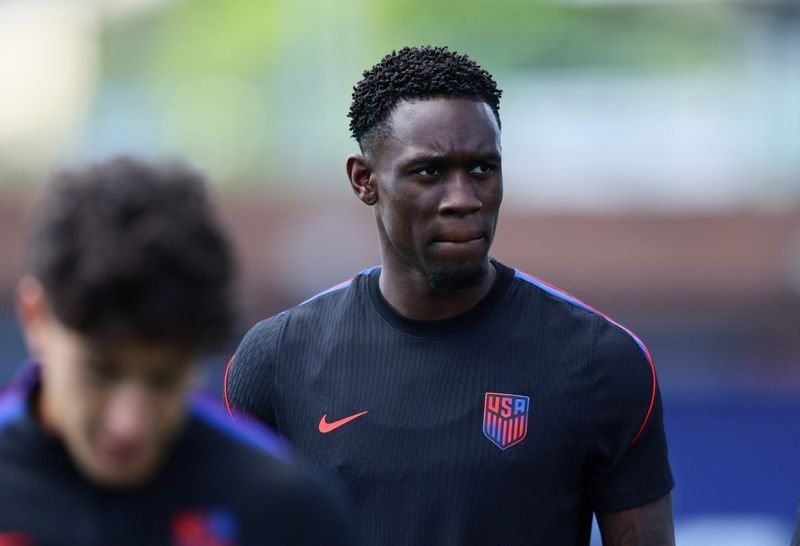
FIFA's controversial decision on Sunday to suspend the implementation of Folarin Balogun's automatic one-match suspension has exposed deep fissures within international football governance, with multiple federation leaders questioning whether political interference has compromised the fundamental principles that govern the World Cup. The United States striker's red card from the previous day's match would normally have rendered him ineligible for Monday's last-16 encounter against Belgium, but FIFA's unexpected intervention—reportedly following a telephone call between US President Donald Trump and FIFA President Gianni Infantino—has unleashed a torrent of condemnation from across Europe's football establishment.
The Belgian Football Association's response crystallises the technical and procedural controversy at the heart of this dispute. While FIFA cited Article 27 of its Disciplinary Code, which grants the FIFA Disciplinary Committee discretionary power to suspend the enforcement of previously imposed sanctions, the Belgian federation countered that Article 66.4 of the same code unambiguously stipulates that a sending-off automatically triggers a suspension for the team's subsequent match. This collision between two sections of FIFA's own rulebook raises uncomfortable questions about selective interpretation and whether emergency invocation of discretionary powers represents a legitimate exercise of authority or an abuse of it. The Belgians emphasised that throughout the current tournament, all previous red-card recipients have dutifully served their mandatory suspension, establishing a consistent precedent that now lies shattered.
German Football Association President Bernd Neuendorf articulated the broader institutional anxiety afflicting football's governing body. His pointed demand that FIFA issue a swift, conclusive statement disavowing political interference underscores the existential threat that even the appearance of presidential pressure poses to the sport's credibility. Neuendorf's caustic observation—that FIFA appeared to believe July 5 had somehow transformed into April 1—conveyed the surreal nature of a reversal that contradicted months of established practice within the tournament. He framed the crisis not as a defence of any particular team, but as a defence of football itself, suggesting that permitting external political actors to influence on-field decisions strikes at the legitimacy of the entire competitive enterprise.
The structural damage extends beyond this single incident. By allowing one player to escape consequences that bound all others, FIFA has created what football administrators regard as the most poisonous precedent: the weaponisation of discretionary authority during an active tournament. Future match officials, VAR panels, and disciplinary committees now labour under the knowledge that similar infractions committed by players from politically influential nations might attract comparable interventions. This asymmetry corrodes the foundational premise of competitive sport—that identical conduct produces identical consequences regardless of geography or geopolitical weight. Federation leaders across Europe fear that FIFA's action has, in effect, transformed the Disciplinary Code from a rule of law into a rulebook subject to reinterpretation based on which capitals exert pressure.
The practical implications for legitimate teams competing under traditional rules cannot be overstated. One commentator noted the paradox of Balogun's situation acutely: should the United States defeat Belgium and progress further, that victory will forever carry an asterisk, forever remain entangled with questions of whether the competition was fairly adjudicated. This taint attaches not merely to the American team but to FIFA's credibility, to the entire tournament structure, and to the legitimacy of whatever champion emerges from a competition where the rulebook was rewritten mid-tournament under political duress. The decision effectively transforms a World Cup victory into something hollow and contested.
What renders this crisis particularly acute is the absence of any procedural legitimacy for FIFA's intervention. Infantino did not convene an emergency disciplinary hearing, did not invite Balogun's legal representation, did not publish detailed reasoning for invoking Article 27's discretionary powers, and most damningly, did not establish any objective criteria for when such extraordinary reversals might apply in future. The decision appears reactive, personalised, and fundamentally arbitrary—precisely the characteristics that delegitimise governance institutions. Football federations worldwide now face a predicament: do they accept FIFA's authority despite this flagrant deviation from procedural norms, or do they view this moment as evidence that FIFA's leadership has abandoned commitment to neutral rule application?
The timing amplifies the damage. Allowing Balogun to play against Belgium, a nation whose federation now feels aggrieved, risks poisoning the relationship between FIFA and European football authorities precisely when global coordination on integrity matters is most essential. Belgian administrators must now address their supporters' perception that their team plays under one set of rules while others enjoy political intercession. This breeds not merely cynicism but active hostility toward FIFA's governance, potentially weakening compliance with future rulings across the continent.
For Southeast Asian and other non-European confederations watching this unfold, the message is equally corrosive. If political pressure from developed nations proves capable of rewriting established norms, smaller federations with less geopolitical leverage may reasonably conclude that FIFA's rulebook offers them no reliable protection. This dynamic could precipitate a cascading loss of faith in FIFA's impartiality, ultimately fragmenting what remains of universal acceptance of its authority. The Balogun incident thus threatens not merely one tournament but FIFA's foundational legitimacy to govern global football.
The immediate sporting consequence—Balogun's availability against Belgium—matters far less than what this decision signals about FIFA's institutional character. It reveals an organisation unable or unwilling to resist political pressure, unable to maintain consistent application of its own rules, and apparently willing to sacrifice the integrity of its flagship competition to accommodate powerful state actors. That European federations responded swiftly and decisively, refusing to participate in the fiction that FIFA acted properly, suggests they recognise this moment as a potential watershed. The question now becomes whether their collective objections will force FIFA to acknowledge the damage done, or whether Infantino's leadership will double down on an indefensible position, further fragmenting international football governance.

