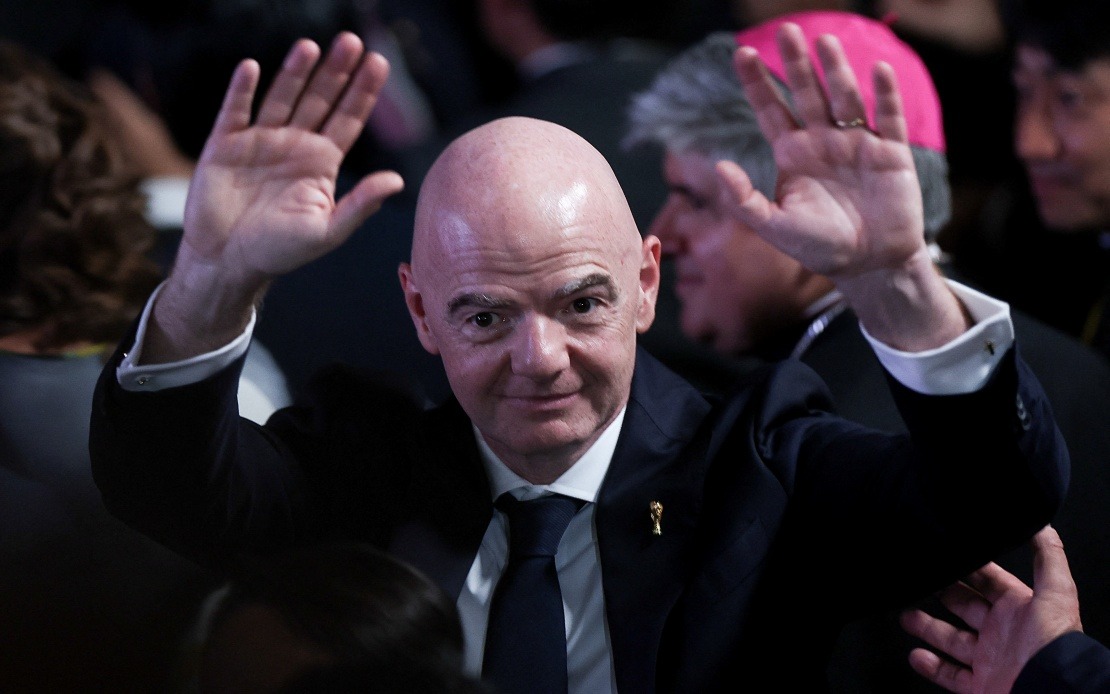
In a strongly worded statement released from Istanbul on Saturday, FIFA has moved to quash mounting dissent surrounding Gianni Infantino's continued presidency, signalling that any attempt to engineer a leadership transition outside the organisation's established governance framework will face institutional resistance. The statement comes at a pivotal moment as Infantino prepares to pursue another term leading world football's governing body, with the federation emphasising that its president retains the legitimate backing of member associations globally.
The core of FIFA's position rests on procedural grounds, with the organisation insisting that presidential elections must comply strictly with its statutes and established democratic mechanisms. This stipulation appears designed to preempt alternative pathways that critics might pursue, whether through informal coalitions among confederations or pressure campaigns seeking to bypass conventional electoral processes. By framing the issue in terms of institutional integrity and proper governance, FIFA establishes a defensive perimeter around Infantino that extends beyond defending the individual to protecting the organisation's administrative framework itself.
FIFA's statement explicitly references support from major continental confederations, particularly CONMEBOL in South America and CAF in Africa, suggesting that Infantino's backing extends across regions rather than being concentrated in Europe. This confederation-level endorsement provides geographical legitimacy to his continued leadership, demonstrating that his mandate transcends any single continental authority. The federation also notes ongoing consultations with member associations worldwide, indicating a deliberate effort to demonstrate consensus rather than division, though the very need to emphasise such support suggests underlying tensions that cannot be entirely dismissed.
Central to FIFA's defence is the accusation that unnamed opponents are engaging in a coordinated campaign to destabilise both the organisation and Infantino personally. The federation characterises these efforts as attempts to achieve through allegations and insinuations what critics have failed to accomplish through legitimate democratic channels, a framing that positions challenges to Infantino's leadership as fundamentally illegitimate regardless of their merits. This rhetorical strategy effectively delegitimises criticism before specific allegations can be properly aired or examined, creating a hostile environment for dissenting voices.
The statement contains an implicit acknowledgement that substantial criticism exists, evidenced by FIFA's insistence that recent reporting has included unsubstantiated claims and demonstrably false assertions. Rather than engaging substantively with specific criticisms, FIFA employs a blanket dismissal strategy, warning that repetition does not transform allegations into truth and that speculation should not be presented as established fact. This approach, while protecting institutional stability in the short term, may provoke further scrutiny from media and stakeholders seeking concrete responses to specific concerns about governance and conduct.
For Southeast Asian football stakeholders, including Malaysia's football authorities, Infantino's continued grip on FIFA leadership carries implications for continental representation and resources. The Asian Football Confederation's position in these internal divisions remains unclear from FIFA's statement, potentially leaving Asian members in an ambiguous position. As a region increasingly important to global football's commercial and competitive future, Southeast Asia has vested interests in FIFA's governance stability and the equitable distribution of tournament hosting opportunities and development funding.
Infantino's three-decade involvement in European and world football provides substantial institutional continuity and technical expertise, qualities FIFA emphasises in defending his record. The federation credits him with expanding access, resources, and opportunities across the sport, suggesting that his leadership has delivered tangible benefits to member associations, including those in developing regions. However, this emphasises accomplishments without addressing specific governance concerns that may have prompted the criticism FIFA is responding to.
FIFA's insistence that it welcomes legitimate scrutiny whilst simultaneously dismissing recent reporting as distortive presents an inherent tension. The organisation appears to distinguish between scrutiny it deems constructive and criticism it characterises as undermining, a distinction that may ultimately be determined by FIFA's own assessment rather than objective standards. This positioning creates space for FIFA to dismiss future challenges to Infantino as illegitimate interference, potentially limiting genuine accountability mechanisms.
The statement's invocation of FIFA's responsibility to 211 member associations and football globally serves to anchor institutional authority beyond the individual president. By emphasising organisational continuity and mission rather than personal leadership qualities, FIFA strengthens the case for maintaining current structures regardless of who occupies the presidency. This institutional appeal may resonate with member associations prioritising stability and predictability over leadership renewal, though it does not definitively resolve underlying governance questions.
Looking ahead, Infantino's fourth-term pursuit will likely proceed through standard electoral procedures, where member associations cast votes according to FIFA's constitutional framework. The strength of opposition he faces during this formal process will determine whether FIFA's current defensive posture succeeds in maintaining institutional consensus or whether fractures become more pronounced. For Malaysian football observers, understanding these internal FIFA dynamics matters because they influence how continental development agendas are prioritised and which nations gain enhanced access to international competitions and financial support.
The episode illustrates broader tensions within international sports governance between institutional preservation and leadership accountability. FIFA's approach prioritises organisational stability and existing power structures, a position that may prove effective in securing Infantino's reelection if member associations ultimately prioritise continuity. Nevertheless, the very necessity of such a forceful defence suggests underlying dissatisfaction that procedural dominance alone may not permanently resolve, potentially setting conditions for renewed challenges following the next electoral cycle.

