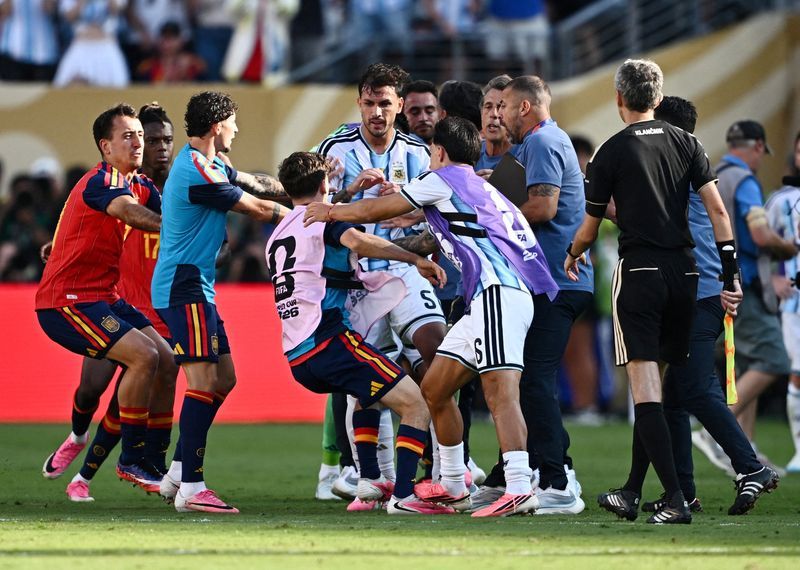
Football's international governing body FIFA has formally launched an investigation into the violent confrontation that overshadowed Spain's narrow World Cup final triumph over Argentina, enlisting a dedicated disciplinary and ethics prosecutor to examine the circumstances surrounding the on-field clash.
Spain secured their second World Cup championship through an extra-time goal from winger Ferran Torres, but the celebratory mood quickly soured when tempers flared between the two squads as the final whistle approached. The match had already been emotionally charged following Argentina midfielder Enzo Fernandez's dismissal in the 93rd minute of normal time, when he received his second yellow card and left his team a man down during the decisive extra period.
The physical altercation erupted when Argentina's midfield enforcer Leandro Paredes initiated contact with multiple Spanish players near the final whistle, drawing reactions from defenders like Eric Garcia and midfielder Gavi. What began as an isolated clash quickly escalated into a broader melee, with players from both teams exchanging pushing and shoving as officials struggled to restore order on the pitch. Argentina's head coach Lionel Scaloni found himself actively involved in attempting to restrain his players and defuse the mounting tensions before the situation deteriorated further.
The appointment of a formal prosecutor underscores FIFA's determination to conduct a thorough examination of the incident, signalling that the governing body intends to scrutinise not only the physical contact itself but also the broader context of disciplinary breaches and potential misconduct by players and coaching staff during the flashpoint. Such investigations typically examine video footage, witness statements from match officials, and official match reports to determine whether additional sanctions beyond any on-field disciplinary action are warranted.
For Malaysian and Southeast Asian football followers, this incident carries wider significance in discussions about player conduct and sportsmanship at football's highest level. The World Cup final serves as the sport's ultimate showcase, and unsavoury scenes of physical confrontation between opposing teams risk damaging the competition's image globally and particularly in emerging markets where football continues to expand its reach and commercial appeal.
The investigation's scope likely encompasses whether any players or officials violated FIFA's code of conduct provisions governing aggressive behaviour, abusive language, or failure to comply with match official instructions. The prosecutor will need to determine whether the incident constituted isolated heated moments or more deliberate acts of violence warranting suspension or monetary penalties beyond the immediate consequences of any match expulsions.
Argentina's numerical disadvantage following Fernandez's red card had intensified the pressure on the South American side during extra time, potentially contributing to the emotional volatility that manifested after the final whistle. Playing with ten men against a Spanish side seeking to convert their possession advantage into goals would naturally heighten frustration levels, yet such circumstances do not excuse players from maintaining professional standards of behaviour.
The lack of a specified timeline for completing the investigation means FIFA retains flexibility in conducting comprehensive enquiries, a common approach when high-profile incidents require careful examination to ensure all relevant evidence is properly considered. Previous World Cup incidents have taken several months to conclude, with outcomes ranging from fines to multi-match bans depending on the severity of findings.
For regional leagues and football associations across Southeast Asia, the investigation's conclusions will likely influence local disciplinary guidelines and enforcement practices, as FIFA's determinations often serve as precedent for how national federations address similar conduct issues. The World Cup final's profile ensures widespread attention to the investigation's outcome, making it a significant moment for establishing standards of player behaviour in international football.
The incident also raises questions about match management and whether on-field officials could have employed preventive measures earlier to address the escalating tensions between the two teams. The appointment of a prosecutor signals FIFA's commitment to examining not only player actions but potentially the effectiveness of match control measures in preventing such confrontations.

