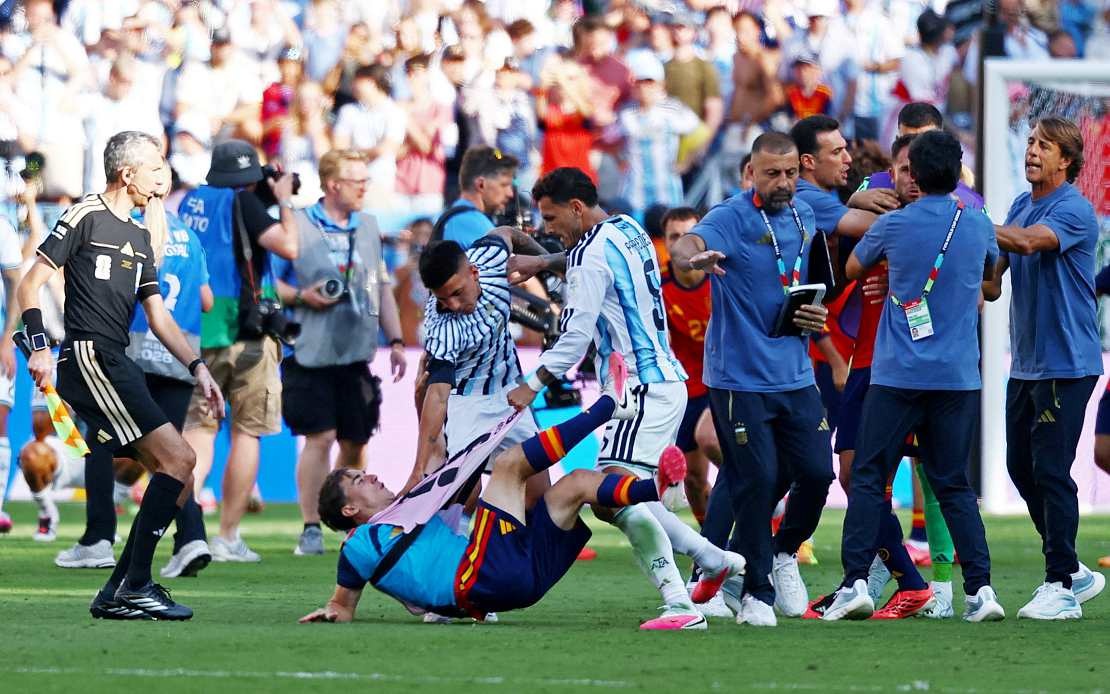
Football's governing body FIFA has initiated formal disciplinary proceedings against Argentina stemming from their World Cup final defeat to Spain, with particular concern centred on physical confrontations that occurred after the final whistle in New Jersey. The investigation represents FIFA's attempt to address on-pitch misconduct that marred what should have been a celebratory conclusion to one of sport's most prestigious tournaments.
The immediate trigger for the inquiry involves midfielder Leandro Paredes, who appeared to engage in physical altercations with Spanish players as they celebrated their victory. Eyewitness accounts from the match indicated that Paredes threw punches at members of the Spain squad in what observers described as a heated moment during the post-match period. FIFA's Match Commissioner filed a detailed report documenting these incidents, which subsequently prompted the governing body to move beyond preliminary assessment and initiate formal proceedings.
Under Article 36 of the FIFA Disciplinary Code, the FIFA Disciplinary Committee has now appointed a dedicated Disciplinary and Ethics Prosecutor to conduct a thorough investigation into potential breaches. This appointment signals FIFA's intent to take the matter seriously and examine whether Argentina's actions violated specific provisions of the code. The prosecutor will review all available evidence, including video footage, witness statements, and match official reports, before determining appropriate sanctions if violations are confirmed.
Argentina's physical approach throughout the tournament had already drawn criticism from observers and rival teams. During their semi-final victory over England, the South American side faced accusations of excessive physicality that influenced match outcomes. Midfielder Enzo Fernandez received a red card during that encounter after accumulating two bookable offences, illustrating how the team's aggressive playing style created disciplinary complications. The pattern of conduct suggested in the final merely reinforced concerns that had been mounting throughout Argentina's tournament campaign.
The investigation may extend beyond the immediate post-match scuffle to examine other potential infractions. There remains ambiguity about whether FIFA is simultaneously investigating Argentina's display of a banner asserting Argentine sovereignty over the Falkland Islands following their England victory. Such political messaging would constitute a direct violation of Article 34.3 of the tournament regulations, which explicitly prohibit political statements or gestures during official competition.
Precedent suggests FIFA takes a relatively lenient approach to sovereignty-related political demonstrations compared to other governing bodies. The Argentine Football Association previously received only a financial fine for an identical banner display during a 2014 friendly match against Slovenia. In contrast, UEFA imposed one-match bans on Spanish players Rodri and Alvaro Morata after they engaged in chanting about Spain's territorial claims to Gibraltar following their Euro 2024 victory, demonstrating that UEFA's enforcement can be considerably stricter regarding nationalist political expression.
FIFA's historical stance on political gestures and symbols reveals an inconsistent enforcement pattern that has attracted considerable debate within international football circles. The English FA faced explicit warnings that captain Harry Kane would receive sporting sanctions, beginning with a yellow card, if he wore the 'OneLove' rainbow-coloured armband at the 2022 World Cup in Qatar. This prohibition occurred despite the armband's purpose being to advocate for LGBTQ+ inclusion in a country where homosexuality remains criminalised, highlighting FIFA's apparent priority in maintaining political neutrality over addressing human rights concerns.
For Malaysian and Southeast Asian readers, FIFA's investigation underscores how international sports governance addresses disciplinary matters when powerful football nations are involved. The outcome will likely influence how subsequent tournaments handle similar situations involving nations with regional geopolitical tensions or political messaging. It also demonstrates that even at football's highest level, post-match conduct and respect for opponents remain subject to formal scrutiny and potential punishment.
The Disciplinary and Ethics Prosecutor will need to balance enforcement consistency with the escalating physical nature of modern football. Whether Argentina receives sanctions comparable to those imposed on other nations for similar infractions will significantly impact FIFA's credibility in applying its disciplinary code uniformly. The investigation results are expected to be communicated once the prosecutor completes their comprehensive assessment, with further details to be announced by the FIFA Disciplinary Committee.
This investigation represents a broader challenge facing FIFA as it attempts to maintain competitive integrity while managing the intense emotions and national pride that accompany World Cup competition. How decisively FIFA acts regarding Argentina's conduct will establish important precedent for future tournaments and signal whether the organisation prioritises consistent disciplinary enforcement over political considerations regarding which nations are involved.

