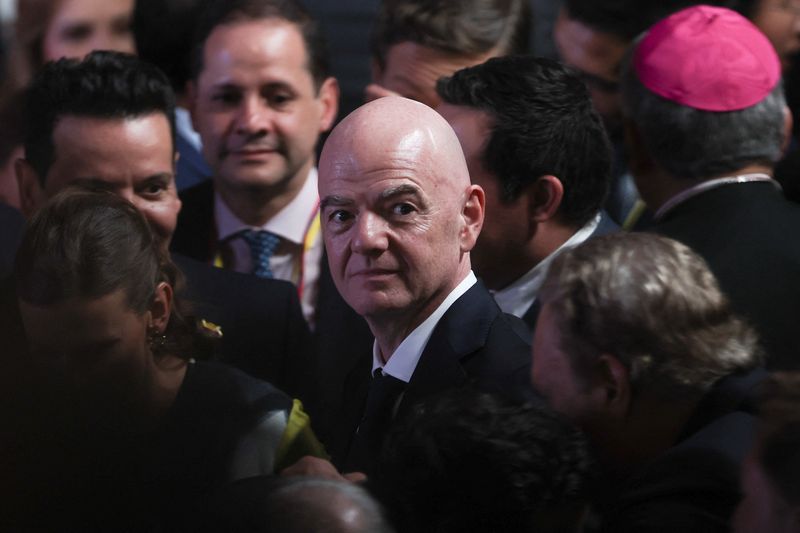
FIFA has issued a stern public warning against what it characterises as a deliberate, systematic campaign to destabilise President Gianni Infantino's grip on power, as the organisation confronts its deepest institutional crisis in recent years. The governing body's defensive posture comes amid mounting pressure from multiple continental confederations and prominent national associations, many of which have openly questioned whether Infantino possesses sufficient legitimacy to lead the global soccer community through the remainder of his tenure and into a potential fourth term.
At the heart of the turmoil lies the catastrophic failure of Infantino's audacious scheme to monetise FIFA's future by attracting investment partners willing to pay approximately $4.2 billion for commercial stakes in the World Cup and other tournament rights. The proposal was supposed to generate unprecedented revenue streams for FIFA and its member associations, but instead triggered an extraordinary backlash that exposed deep fractures within soccer's governing structure and raised fundamental questions about the decision-making processes at the highest levels of the organisation.
The controversy intensified following a crisis management gathering in Morocco earlier this week, where FIFA's leadership attempted damage control by apologising to member associations for mishandling the failed initiative while simultaneously reaffirming their unwavering support for the embattled president. This dual message—admitting serious errors whilst maintaining confidence in Infantino—has struck many observers as contradictory and has failed to quell the growing revolt among some confederations and national bodies who view the president's judgment as fundamentally compromised.
UEFA, European soccer's governing body, has formally withdrawn its confidence in Infantino, marking perhaps the most significant institutional rejection of his leadership. Adding considerable weight to the mounting pressure, Lise Klaveness, president of the Norwegian Football Federation, explicitly called for his resignation, arguing that Infantino no longer commands the institutional trust necessary to effectively govern a global organisation as complex and influential as FIFA. These challenges represent serious threats to his anticipated bid for a fourth consecutive term at the FIFA Congress scheduled for March in Morocco.
Yet the picture remains profoundly complicated by the reality that Infantino continues to command majority support across FIFA's sprawling 211-member association network. The Confederation of African Football delivered a decisive show of unity by unanimously backing Infantino's continued leadership, signalling that African federations—which collectively wield substantial voting power—remain aligned with the incumbent. Similarly, South America's CONMEBOL confederation has declared its opposition to any removal process that circumvents a full membership vote, effectively stating that Infantino's fate should rest with the entire FIFA family rather than a subset of continental bodies.
Mexico's football federation has also rallied behind Infantino despite internal tensions, with the FMF explicitly rejecting any effort to alter the institutional framework governing presidential succession. This creates a significant paradox: whilst regional confederations such as UEFA and CONCACAF have questioned Infantino's fitness for office, the national federations within those regions show mixed loyalty, with some prioritising stability and established procedure over demands for change. This divergence between confederations and member associations reflects deeper structural questions about how FIFA should govern itself and who truly speaks for the global soccer community.
FIFA's public statement deliberately avoided naming specific critics or identifying which allegations it considered baseless, instead deploying broad language about "unsubstantiated assertions and demonstrably false claims." The governing body appeared particularly focused on recent investigative reporting by The Daily Telegraph concerning payments UEFA made to a former employee during Infantino's tenure as the European confederation's general secretary—allegations Infantino has firmly denied and which FIFA has dismissed as groundless. By refusing to engage with specifics, FIFA's communications team may have inadvertently amplified rather than contained the controversy.
The regulatory language FIFA employed carries significant implications for how the organisation intends to manage its succession process and defend its current leadership. By insisting that any challenge to Infantino's authority must operate strictly within established democratic procedures and statutes, FIFA has effectively elevated procedural propriety above substantive concerns about governance, accountability, and performance. This stance suggests the organisation views attempts to force presidential change outside formal channels as threats to institutional stability that must be resisted regardless of their merits.
For Southeast Asian soccer federations and confederations, this crisis carries important ramifications. The region's members have historically maintained pragmatic relationships with FIFA leadership, prioritising infrastructure investment and tournament hosting opportunities. How the region's federations position themselves during this succession struggle could influence FIFA's future allocation of resources and development programmes across Asia. Should Infantino survive to secure a fourth term, those who backed him will likely enjoy preferential treatment, whilst those who opposed him might face marginalisation in future priority rankings.
The absence of any clear alternative candidate to challenge Infantino in the March Congress presidential election has paradoxically strengthened his position even as institutional confidence has fractured. Without a viable challenger commanding broad backing, opponents of Infantino face a difficult choice between supporting a contested incumbent or attempting to rally behind a hastily assembled alternative. The coming months will determine whether opposition coalitions can coalesce around a credible challenger or whether Infantino's substantial grassroots support within African and American confederations proves sufficiently durable to secure him another term despite the ongoing institutional tumult.

