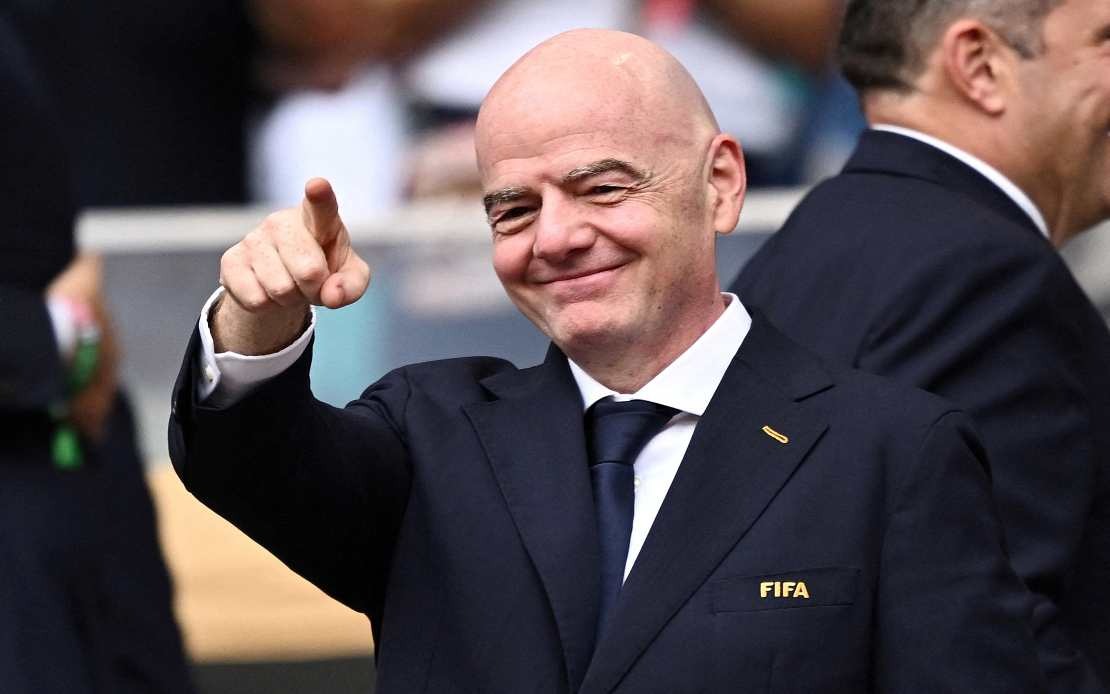
FIFA has engaged in an unusual promotional campaign by dispatching pre-written endorsement letters to football associations worldwide, lending institutional backing to Gianni Infantino's presidential re-election efforts ahead of voting scheduled before the upcoming World Cup in the United States, Mexico and Canada. The correspondence, which carried the names and signatures of association presidents already inserted before distribution, highlighted Infantino's management record in infrastructure development and women's football advancement during his presidency.
The timing of this orchestrated letter campaign comes amid significant turbulence within FIFA's leadership and governance structure. Not every national association received the pre-written materials, suggesting a selective distribution strategy, though the rationale for choosing certain recipients over others remains unclear. This approach to building support for an incumbent leader's re-election raises questions about standard democratic processes within the global football governing body.
The backdrop to Infantino's re-election push involves a controversial monetisation scheme that has provoked fierce international resistance. FIFA announced plans in July to generate US$4.2 billion by divesting approximately 20 per cent ownership stake in a newly created entity that would control the organisation's extensive media and commercial rights portfolios, most significantly those tied to World Cup broadcasting and licensing across multiple territories.
Investment discussions reportedly centred on a fund potentially managed by Joshua Kushner, brother of Jared Kushner who serves as son-in-law to United States President Donald Trump. The involvement of Trump-connected figures in such a high-stakes sports commerce deal immediately drew scrutiny and concern from traditional power brokers within international football governance, particularly those wary of American influence over the sport's administration and commercial future.
The proposal proved sufficiently controversial that UEFA, representing European football's most powerful confederation, announced that all member associations under its jurisdiction would boycott FIFA tournaments unless the media rights monetisation scheme was completely withdrawn and abandoned. This represents an extraordinary escalation in intra-FIFA conflict, as UEFA controls some of world football's richest and most influential national programmes, making any widespread tournament boycott potentially catastrophic for FIFA's event calendar and commercial revenues.
Facing this coordinated resistance and escalating pressure from football associations representing billions of football fans globally, Infantino's political position weakened considerably. Media organisations monitoring FIFA developments speculated openly that the president might choose to resign rather than face what appeared to be mounting institutional opposition and the prospect of a contested re-election campaign that could damage his authority even if he prevailed.
The distribution of pre-written support letters must be understood within this context of political vulnerability. By securing written endorsements from association leaders before they had opportunity for meaningful deliberation, FIFA's administration was attempting to create momentum and a public record of support that could shift the narrative away from the governance crisis and financial scheme controversy. The tactic represents a calculated effort to manufacture consensus and present a façade of institutional unity during a period of genuine fracture.
For Malaysian football and other Southeast Asian nations participating in FIFA's structures, this governance struggle carries tangible implications. The outcome of Infantino's re-election battle will determine FIFA's direction on critical issues including World Cup expansion, commercial rights allocation that affects broadcasting arrangements in the region, and investment priorities that may benefit or disadvantage Asian football development programmes. The controversy also signals broader questions about FIFA's transparency and democratic legitimacy that Malaysian sporting institutions and fans should monitor carefully.
The pre-written letter strategy ultimately illuminates the gap between FIFA's public proclamations about transparency and good governance versus its institutional practices. The fact that association leaders' signatures could be pre-filled onto endorsement documents without their active participation suggests a hierarchical command structure and suggests that many smaller or less influential associations may have minimal meaningful voice in FIFA's strategic decisions, despite each nation theoretically holding one vote.
This episode encapsulates tensions within international sports governance more broadly, where financial pressures, media rights monetisation, and concentrated decision-making authority frequently generate conflicts between the global governing body's commercial interests and member associations' concerns about democratic participation and equitable benefit distribution. The resolution of FIFA's current crisis will establish precedents affecting sports governance across multiple disciplines for years to come.

