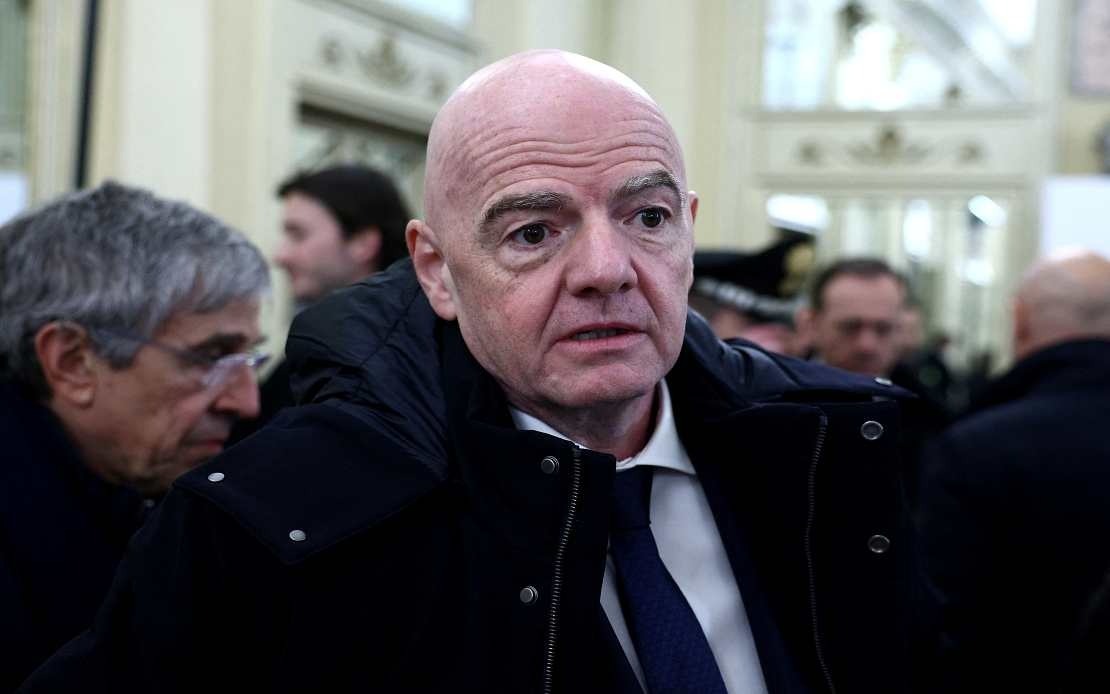
The International Olympic Committee has received a formal complaint against FIFA President Gianni Infantino, with human rights organisation FairSquare charging him with repeated violations of Olympic neutrality codes and ethics standards. The complaint, submitted in mid-July, centres on allegations that Infantino has compromised his impartiality as an IOC member—a position he has held since 2020—through his handling of high-profile World Cup matters that intersect with political pressure from world leaders.
At the heart of the controversy lies the case of United States striker Folarin Balogun, whose one-match suspension from international competition was unexpectedly lifted by FIFA's disciplinary committee. The reversal permitted Balogun to feature in a crucial World Cup knockout encounter against Belgium, a decision that FairSquare asserts was improperly influenced by external political forces rather than determined through FIFA's purportedly independent review mechanisms. The timing and circumstances of the ban's suspension have drawn particular scrutiny, as the action followed a direct telephone conversation between United States President Donald Trump and Infantino.
Infantino has publicly maintained that FIFA's various committees operate with complete autonomy and are insulated from external influence, yet FairSquare's legal assessment identifies what it characterises as five unambiguous violations of IOC political neutrality protocols. Beyond these core breaches, the organisation's complaint identifies two additional serious infractions that it claims possess sufficient preliminary evidence to warrant formal investigation. The pattern alleged extends beyond the Balogun incident, pointing instead to a broader framework of conduct that FairSquare contends systematically undermines the principles FIFA and the IOC are constitutionally bound to uphold.
This escalation to the IOC represents a significant intensification of scrutiny against the FIFA chief. FairSquare had previously lodged a parallel complaint through FIFA's own internal ethics committee in December, establishing a documented record of concern within football's governance structures. The human rights group's decision to simultaneously pursue complaints across multiple international bodies signals deep dissatisfaction with FIFA's capacity for self-regulation, particularly regarding matters that intersect with powerful political actors.
The complaint has gained traction among European political representatives, who view the matter as emblematic of broader governance deficiencies in international sport. Fifty members of the European Parliament took the extraordinary step of submitting a collective letter to FIFA's ethics committee on June 29, urging swift and transparent investigation into FairSquare's allegations. This parliamentary intervention underscores the view that the issues raised transcend football governance to touch upon fundamental questions of institutional integrity and democratic accountability.
For Southeast Asian and Malaysian observers of international football, the complaint illuminates the precarious balance between sport and politics at the highest levels of global administration. The World Cup, as football's preeminent tournament, has long been viewed through the lens of national pride and geopolitical positioning. The suggestion that executive decisions affecting competition outcomes might be vulnerable to pressure from heads of state raises concerns about the integrity of competitions that millions of fans across the region follow with intense passion.
The Norwegian football federation has also contributed to the escalating pressure, formally requesting that FIFA's ethics committee examine FairSquare's original complaint with appropriate seriousness. This backing from a significant European football confederation carries institutional weight, positioning the matter not merely as advocacy by a single NGO but as a concern shared across established football governance structures.
FIFA's unwillingness to provide any substantive explanation for the Balogun suspension decision has itself become noteworthy. When governmental decisions affecting sporting outcomes lack transparent justification, it inevitably invites speculation about improper influence. The vacuum created by FIFA's silence has allowed FairSquare's interpretation—that political intervention shaped outcomes—to gain narrative prominence in public discourse surrounding the decision.
The complaint mechanics also reflect evolving expectations around accountability in international sport. The IOC, increasingly positioned as an arbiter of ethical standards for connected organisations and officials, must now evaluate whether conduct that might technically comply with FIFA's rules nevertheless violates Olympic principles to which IOC members must adhere. This distinction between institutional rules and higher ethical standards represents a potential new frontier in sports governance oversight.
For Malaysian readers and sports governance specialists across Southeast Asia, these developments carry implications extending well beyond Infantino's personal conduct. They signal that international sporting bodies face mounting pressure to demonstrate genuine independence from political influence. As Asian nations continue expanding their roles in hosting major international competitions, the precedent being established through the Infantino complaint may shape expectations around governance standards that future host nations and football administrators will face.
The coming IOC investigation will test whether international sporting bodies possess the institutional will to hold even their most prominent figures accountable to the neutrality principles they claim to champion. The outcome could significantly influence how the football world—and by extension, international sports governance generally—navigates the increasingly complex intersections between sport, politics, and national interests in the years ahead.

