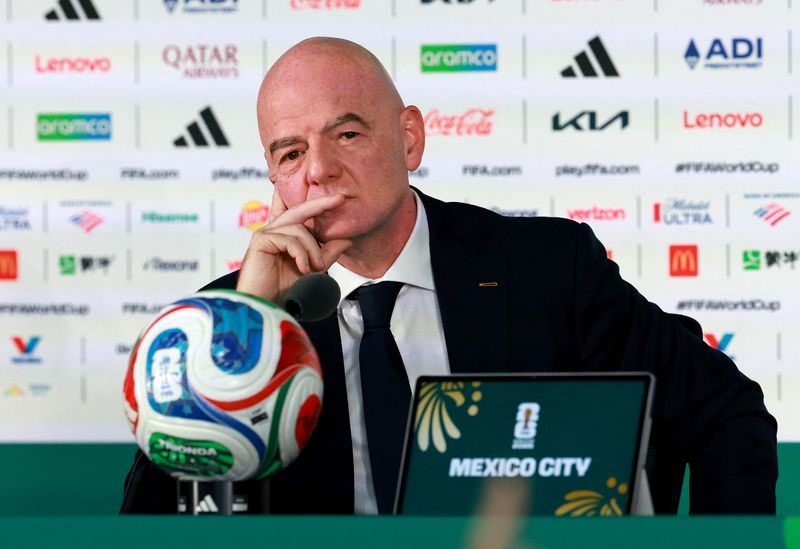
FIFA's attempt to move beyond its most serious internal conflict under Gianni Infantino appears superficial, with persistent questions about the organisation's fundamental approach to strategic decision-making likely to shape football politics well beyond the 2027 presidential election. The world governing body gathered in Rabat to publicly reaffirm support for Infantino, yet simultaneously acknowledged that a controversial proposal to monetise future World Cup commercial rights "should have been handled differently." This contradiction encapsulates the central problem: FIFA's leadership recognises procedural failures but resists the structural reforms that might prevent similar crises.
The botched commercial proposal ignited the fiercest rebellion against Infantino's administration, with national federations across multiple continents complaining that they had been systematically excluded from consultation processes. FIFA's subsequent apology to its 211 member associations represented a tactical retreat rather than a genuine policy shift. The organisation committed to reviewing the processes that led to the controversy and pledged to present findings to the Council at its next meeting, yet such commitments ring hollow without concrete mechanisms to ensure meaningful stakeholder engagement. The conciliatory language deployed after Wednesday's gathering contrasts sharply with the dismissive tone FIFA had adopted earlier, when the organisation defended its actions as compliant with existing regulations—a distinction that highlights the gap between technical compliance and legitimate governance.
What FIFA refuses to acknowledge is that the legitimacy crisis extends far beyond a single failed initiative. European Leagues, which represent over 1,300 clubs across the continent, publicly criticised the organisation's handling of a separate proposal to expand the 2030 World Cup from 48 to 64 teams. The four-week assessment timeline imposed on stakeholders for such a consequential decision underscores a pattern of behaviour in which FIFA presents fait accompli rather than inviting meaningful dialogue. This approach has poisoned relations with some of world football's most influential bodies, including UEFA, and created resentment among regional confederations such as CONCACAF and the Asian Football Confederation, which represent hundreds of millions of football supporters.
Infantino's immediate political objective—securing public endorsement from FIFA's management board and Secretary General Mattias Grafstrom ahead of March's presidential election in Morocco—has been achieved. The display of unity, complete with social media photographs of smiling leadership at a women's Africa Cup of Nations match, served its purpose in temporarily dampening institutional tensions. However, this cosmetic repair masks substantive fractures in FIFA's authority structure. Grafstrom's internal memo to staff, which lamented a "sad and reproachable series of events" without explicitly naming Infantino, acknowledged the gravity of the situation even as the organisation presented a united public face.
The president's political position remains robust in the short term, primarily because no credible challenger has emerged for the upcoming election and because his administration maintains strong support among smaller associations, particularly across Africa and Asia. For these member federations, FIFA development funding represents a lifeline for their national programmes, creating constituencies with limited appetite for institutional conflict. Yet this structural dependence also reveals why governance reform is unlikely to emerge from within FIFA's existing power structures. Those most satisfied with the current dispensation—nations with limited independent resources—lack the leverage to demand accountability, while those with sufficient influence to challenge the system are geographically concentrated in Europe.
Looking beyond the immediate political cycle, however, the governance debate has acquired momentum that will prove difficult for FIFA to contain. The controversy has fundamentally altered expectations regarding transparency and consultation. Future commercial initiatives, tournament expansions, or governance reforms will face substantially elevated scrutiny and demands for accountability that FIFA's current institutional culture is poorly equipped to handle. The organisation's insistence that the commercial rights proposal complied with existing regulations, even as it apologised for process failures, reveals the inadequacy of FIFA's rule-based framework for addressing legitimacy concerns. Rules can technically permit decisions without conferring legitimacy upon them.
For Malaysian and Southeast Asian football stakeholders, the implications are significant. These nations occupy a middle ground within FIFA's membership—large enough to merit consultation but not sufficiently influential to alter outcomes unilaterally. The governance crisis demonstrates that FIFA's decision-making processes are vulnerable to domination by larger confederations and commercial interests, often at the expense of smaller member states. Malaysia's football association and those of neighbouring countries have limited formal mechanisms through which to influence strategic decisions that directly affect their competitions, media rights, and development opportunities. The absence of meaningful consultation protocols disadvantages regional players in negotiations over tournament structures and commercial arrangements.
The path forward remains uncertain, and FIFA's current trajectory suggests incremental rather than transformative change. The promised review of processes will likely yield procedural adjustments—perhaps expanding consultation timelines or establishing formal stakeholder committees—without fundamentally redistributing power within the organisation. Infantino appears positioned to secure re-election in 2027, provided no major new scandals emerge, but his presidency will operate under sustained scrutiny. The tolerance for unilateral decision-making has diminished, and even compliance with technical governance requirements will no longer provide political cover for decisions perceived as exclusionary.
Moreover, the governance question transcends personalities. Infantino's tenure has exposed structural vulnerabilities that would likely persist under any leader operating within FIFA's current institutional framework. The concentration of decision-making power in the hands of a small executive group, the asymmetry of information and influence between major confederations and smaller members, and the absence of robust mechanisms for meaningful stakeholder participation create recurring risks of conflict and legitimacy crises. These systemic issues will continue generating friction throughout football's global governance architecture, regardless of who occupies the presidency.
The Rabat gathering, then, represents not a resolution but merely a pause in an ongoing institutional reckoning. FIFA has addressed the immediate political emergency while postponing deeper questions about how world football should be governed. Member associations have demonstrated capacity to mobilise opposition to unpopular decisions, and that capacity will likely be deployed again if future proposals trigger similar concerns about exclusion and accountability. The world governing body's pretence that a few procedural adjustments and apologies will restore confidence appears misplaced. The debate over FIFA's governance practices has acquired sufficient momentum to outlast Infantino's tenure, reshaping expectations about institutional legitimacy in global sport.

