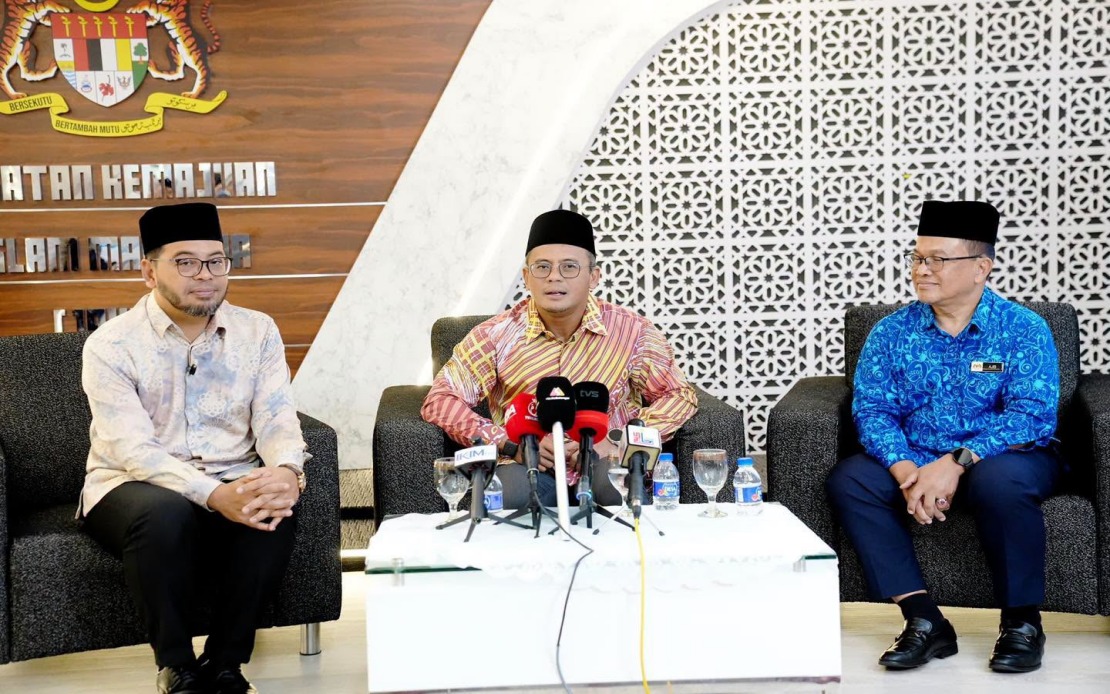
The Festival Turath Islami Selangor has secured promotion to national status, with its fourth iteration rebranded as Festival Turath Islami Malaysia (FTIM) 2026 and scheduled to unfold over eight days starting September 13. The expansion represents a significant scaling-up of what has become a flagship intellectual gathering for Muslim scholars and learners across Malaysia, moving from regional state-level proceedings to a nationwide platform with enhanced scope and ambition.
Selangor Menteri Besar Datuk Seri Amirudin Shari announced the upgraded festival would be hosted primarily at the Putra Mosque in Putrajaya rather than at the Selangor state mosque, where the three preceding editions were conducted. This geographical shift to the federal capital underscores the festival's metamorphosis from a Selangor-focused initiative into a collaborative venture between the state government and the federal authorities via the Prime Minister's Department (Religious Affairs). Minister in the Prime Minister's Department (Religious Affairs) Dr Zulkifli Hasan attended the unveiling, signalling high-level government commitment to the proceedings.
The 2026 edition will carry the thematic banner "Hikmah Warisan Islam" and centre its intellectual explorations on Al-Hikam al-Ata'iyyah, a seminal work composed by the 13th-century Islamic scholar Ibn Ata-illah As-Sakandari. This classical Sufi treatise has endured as one of the most consequential texts within Islamic scholarly circles, particularly throughout the Malay-speaking world, offering profound reflections on spiritual sincerity, trust in the divine, and the intimate relationship between servant and God. The selection of this particular text continues the festival's established pattern of drawing from the Islamic intellectual canon.
Since its inception in 2023, the festival has functioned as a dedicated forum for examining and celebrating significant Islamic scholarly heritage. The inaugural event engaged with Ihya' 'Ulumuddin, the monumental work of Imam Al-Ghazali, while subsequent editions explored Al-Arba'in al-Nawawiyah by Imam al-Nawawi and Tafsir al-Jalalain by Imam Jalaluddin al-Suyuti. This trajectory demonstrates a methodical approach to deepening engagement with foundational Islamic texts, allowing audiences to progressively build knowledge across multiple philosophical and exegetical traditions. The festival's design encourages sustained intellectual development rather than isolated one-off encounters with religious material.
The FTIM 2026 programme will convene an impressive roster of 23 Islamic scholars from Malaysia and abroad, who will deliver insights across more than 42 distinct scholarly sessions. Among the international and domestic figures participating are Sheikh Dr Ali Jum'ah, a globally recognised Islamic authority; Prof Dr Sayyid Idris al-Fasi al-Fihri; Ustaz Dr Adi Hidayat; Ustaz Wadi Annuar; and Selangor Mufti Datuk Setia Dr Haji Anhar Haji Opir. This breadth of scholarly expertise ensures that audiences will encounter diverse interpretative traditions and contemporary applications of classical Islamic thought.
Beyond formal lecture sessions, the festival will encompass a varied programme of religious and educational activities designed to engage multiple learning styles and preferences. Dawn lectures (Kuliah Subuh), recitations of Dalail al-Khairat—a collection of prayers and supplications—and intensive five-day seminars on Al-Hikam will provide structured pathways for intellectual and spiritual engagement. The festival also intends to showcase contemporary Islamic publishing through an Islamic Book Festival component, while ceremonial elements including Qasidah performances will blend aesthetic and devotional dimensions.
A particularly novel addition to the 2026 iteration is the inaugural National Muzakarah Ulama Turath, a convening designed to unite Islamic scholars from across the federation for sustained dialogue and collaborative problem-solving. This gathering aims to fortify intellectual networks among Malaysia's religious leadership and to develop coordinated responses to contemporary challenges confronting Muslim communities. Such an initiative reflects recognition that fragmented scholarly efforts limit the capacity to address systemic issues affecting the ummah, and that institutional frameworks fostering regular scholarly cooperation can generate more robust and contextually informed guidance.
The festival's elevation to national status carries implications for how Malaysia positions itself within the broader Islamic world. By establishing a dedicated platform for engagement with classical Islamic texts and hosting international scholars alongside local expertise, the country signals commitment to being a site of serious Islamic intellectual discourse rather than merely a consumer of religious thought generated elsewhere. For Southeast Asia specifically, the festival's emphasis on texts that have particularly influenced Malay Islamic traditions creates space for recovering and revitalising scholarly heritage that shaped the region's religious character.
The government's joint investment in FTIM 2026 through both state and federal channels suggests recognition that cultural and intellectual initiatives constitute legitimate priorities for public resources. The decision to host the festival in Putrajaya, the administrative centre, places Islamic scholarship in proximity to the machinery of state governance, implying an understanding that religious thought and public policy are interconnected domains. This positioning could influence how Islamic perspectives inform contemporary policy discussions across various government sectors.
For Malaysian Muslim intellectuals and students, the expanded festival provides unprecedented access to world-class Islamic scholarship and creates networking opportunities within a structured, government-supported framework. The inclusion of 42 scholarly sessions across eight days means substantial content will be generated that could influence ongoing theological and jurisprudential discussions within Malaysian Islam. The festival's documentation and potential publication of proceedings could extend its reach beyond those physically attending, creating enduring intellectual resources.
Registration details and comprehensive programme information for FTIM 2026 are expected to be released through the festival's official digital platforms. Given the festival's track record of well-attended previous editions and the heightened profile accompanying its national status, early registration would be prudent for those seeking places in the most popular sessions, particularly those featuring prominent international speakers.

