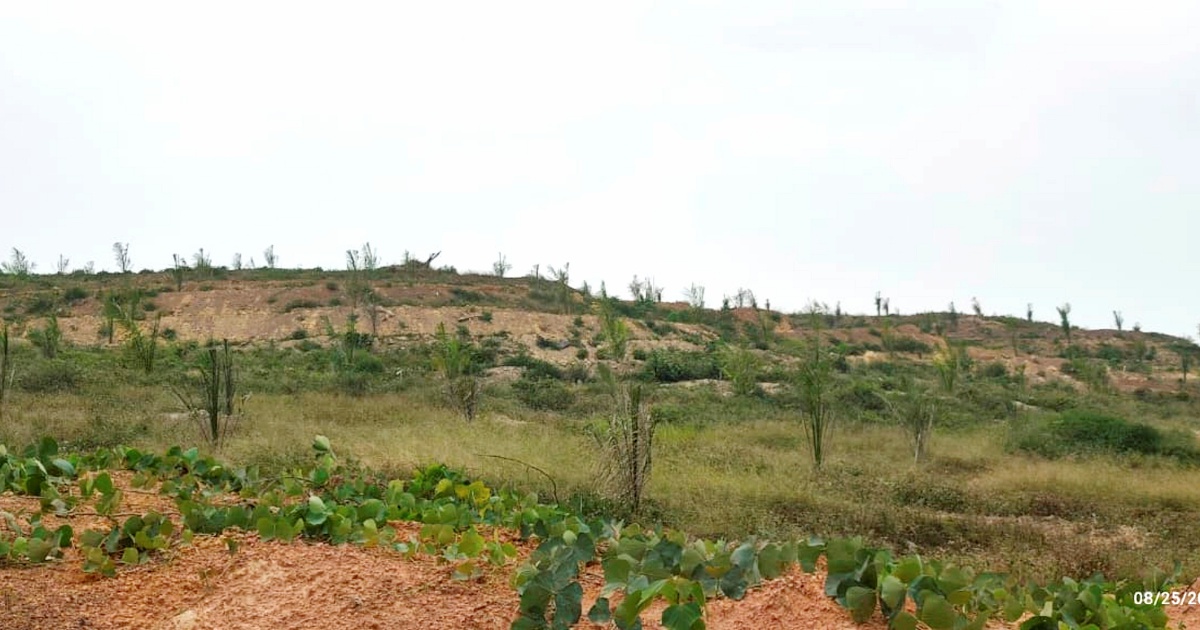
Residents of Felda Palong 7 have formally escalated grievances to the Malaysian Anti-Corruption Commission concerning the provision of inferior-grade oil palm seedlings for plantation operations. The action, taken in the Jempol area, reflects growing frustration among smallholder farmers over the quality and consistency of planting materials supplied to their estates.
The complaint submitted to the MACC highlights a critical issue affecting productivity and long-term viability of palm cultivation at the settlement. Non-uniform seedlings present a significant challenge for Felda settlers, whose livelihoods depend on achieving consistent yields and meeting strict horticultural standards demanded by palm oil processing facilities. Variations in seedling quality can result in uneven crop maturation, differential growth rates across plots, and ultimately compromised harvests that impact household incomes.
Felda settlements occupy a unique position within Malaysia's agricultural landscape, serving as anchor operations where federal land development schemes have traditionally provided smallholder farmers with land access, technical support, and supply chain integration. Palong 7, established as part of this federal framework, represents the interests of dozens of farming families whose economic stability depends on reliable inputs and institutional support. The decision to lodge a formal MACC complaint suggests that internal grievance mechanisms may have proven insufficient or unresponsive.
Quality control in oil palm seedling production is not merely a technical matter but involves procurement processes, supplier accountability, and institutional oversight. The fact that settlers have turned to an anti-corruption body indicates suspicions that irregularities in the supply chain may extend beyond simple quality lapses. Such concerns frequently centre on whether preferred suppliers are receiving contracts without competitive bidding, whether proper quality inspections are being conducted before delivery, and whether complaints are being adequately documented and remedied.
Oil palm remains among Malaysia's most significant agricultural commodities, with smallholder farmers operating approximately 450,000 hectares, or roughly 40 per cent of the nation's cultivated palm estates. Felda settlers form a substantial component of this smallholder base, meaning issues affecting their input quality and cost efficiency ripple across regional supply networks and export volumes. Disruptions to seedling supply quality at major Felda settlements thus carry implications beyond individual farm productivity.
The Jempol district, situated in Negeri Sembilan, represents productive agricultural terrain where palm cultivation intersects with broader rural development objectives. The filing of a MACC report from this locality draws attention to accountability mechanisms available to farming communities when institutional channels appear inadequate. The anti-corruption body's investigation, should it proceed, would examine procurement documentation, supplier performance records, and whether established quality standards were observed during seedling preparation and distribution.
Seedling quality directly influences the economic calculation of plantation farming across multi-decade production cycles. Inferior planting materials may appear cost-effective initially but create downstream inefficiencies, higher labour inputs for replanting, and reduced per-hectare yields during peak production years. For Felda settlers operating on relatively modest land parcels and constrained by commodity price volatility, such quality compromises accumulate into substantial economic burdens over time.
The escalation to the MACC also signals broader questions about institutional governance within Felda itself and the mechanisms through which settler concerns regarding agricultural inputs are addressed. Federal land development schemes have historically served developmental and social objectives alongside economic ones, making accountability particularly important within these frameworks. Settlers' recourse to anti-corruption authorities suggests that conventional grievance channels—whether through individual settler associations, district Felda management, or subsidiary companies—may require strengthening.
Geopolitically, Malaysia's reputation as a reliable palm oil supplier depends partly on production consistency and quality standards across its smallholder base. Issues affecting Felda settlements, which collectively contribute significantly to export volumes, have potential ramifications for international buyer confidence and pricing negotiations. Transparency in addressing quality concerns thus carries competitive implications alongside developmental considerations.
The MACC report from Felda Palong 7 represents one documented instance of input quality concerns, but similar issues may exist across other Felda locations without formal complaint. The investigation's findings and any remedial actions undertaken may establish precedents affecting how seedling procurement is conducted across the broader Felda estate system. For Malaysian smallholder farmers beyond Felda, whose access to quality inputs is often more constrained, resolution of these issues holds wider sector significance.
Resolution will likely require multiple interventions: verification of seedling quality standards, audit of procurement procedures, assessment of supplier accountability mechanisms, and potentially structural reforms ensuring competitive bidding and independent quality certification. The involvement of the MACC signals that stakeholders view the matter with sufficient gravity to justify anti-corruption investigation, suggesting that suspected irregularities extend beyond simple quality management lapses.

