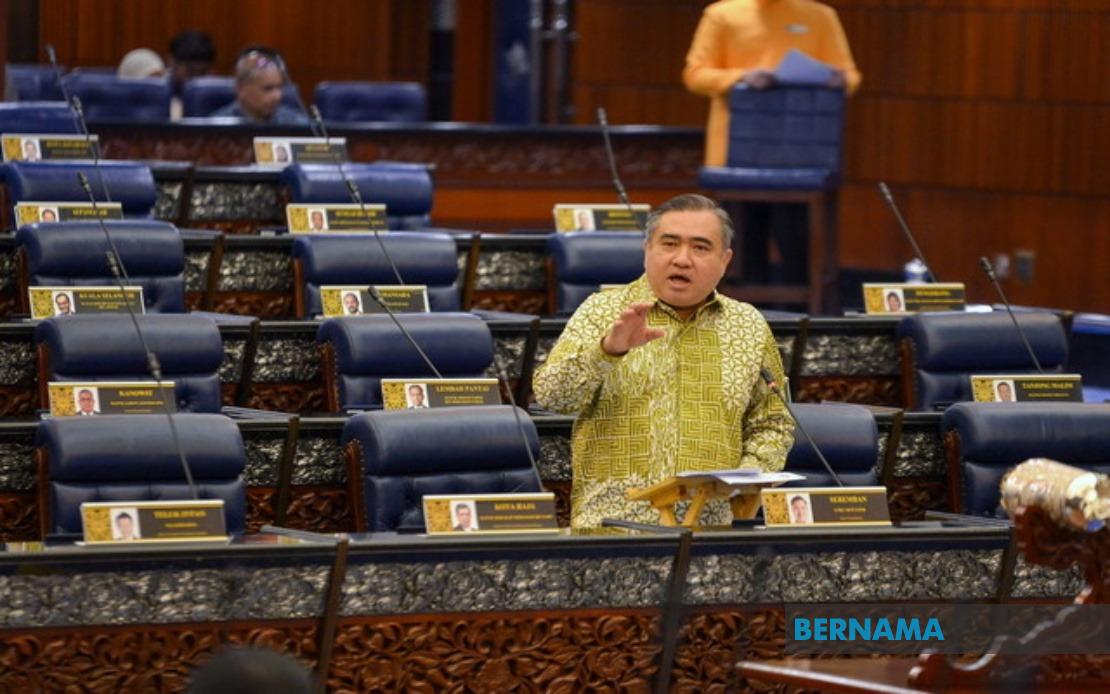
The Federal Government has committed to financing Johor's ambitious Elevated Autonomous Rapid Transit project after determining that the infrastructure cannot remain viable under purely private sector investment models. Transport Minister Anthony Loke made this announcement during parliamentary question-and-answer proceedings, signalling a significant shift in the project's financial structure and operational approach.
Loke outlined the shifting financial arrangement, explaining that whilst the initial phase was intended to be underwritten by the appointed private consortium, recent assessments have fundamentally altered this trajectory. The evaluation revealed substantial gaps between projected revenues from the system and the actual capital investment required to construct and operate the infrastructure sustainably. Consequently, federal resources will now supplement private contributions to bridge the viability shortfall, though the precise mechanics of this partnership arrangement remain subject to ongoing discussion between government agencies and the private partners.
The minister emphasised that multiple facets of the financing structure—including the methodological approach to fund deployment, the quantum of federal financial commitment, and the mechanism for repayment obligations across the concession period—continue to be negotiated. These discussions represent standard practice in large-scale public-private partnerships, where identifying equitable risk distribution and financial responsibility provisions requires extensive technical and legal deliberation.
The E-ART project carries considerable significance for Johor's transportation landscape, particularly given the imminent arrival of the Johor Bahru-Singapore Rapid Transit System Link, scheduled for commencement in January 2027. This international connectivity development will compound existing traffic pressures in one of Malaysia's most congested urban corridors, making complementary domestic transit infrastructure increasingly essential. Loke indicated that the government has developed a comprehensive traffic dispersal strategy in partnership with Johor's state administration to manage congestion once the Singapore link becomes operational, with the E-ART project expected to reach completion within four years of the Letter of Acceptance issuance.
Beyond the E-ART initiative itself, the Transport Ministry is executing a broader modernisation programme for Johor's public transportation ecosystem. The BAS.MY service network is undergoing substantial expansion, with the number of routes increasing to 28 and the vehicle fleet growing to 254 units, including a proportion of environmentally-friendly electric buses. These enhancements represent an effort to create integrated multimodal transit options that can absorb demand more effectively than any single infrastructure project alone.
The Stage Bus Service Transformation programme, now in its second iteration, will dedicate 157 buses specifically to high-demand corridors connecting Johor Bahru Sentral with Bukit Chagar. These services are projected to commence operations in early 2027, coinciding with the critical period when both the RTS Link and expanded bus networks must coordinate seamlessly to prevent system congestion. The timing reflects deliberate planning to ensure that multiple transit improvements crystallise simultaneously, creating genuine alternatives to private vehicular travel.
Rail connectivity enhancements also feature prominently in the transport strategy. The ministry is pursuing procurement of twelve additional KTM Komuter Southern train sets to augment the existing network's capacity. Whilst formal approval for this acquisition remains pending, the government has already launched the Shuttle Selatan service, which commenced operations on 16 June and operates 14 daily trips across the Kulai-Kempas-Johor Bahru and Kempas-Pasir Gudang corridors. This interim solution provides immediate capacity relief whilst longer-term infrastructure investments progress through procurement and construction phases.
Fare policy has emerged as a parallel consideration in the broader transport governance framework. Loke indicated that the government maintains regulatory authority over public transport fares across all projects, implementing a deliberate policy of holding fares at affordable levels for the travelling public. However, this approach carries fiscal implications—maintaining artificially suppressed fares relative to operational costs necessitates ongoing government subsidy injections to maintain service viability and investor returns. The minister framed this as a policy choice prioritising accessibility over commercial optimisation, reflecting a determination to ensure that public transport expansion benefits remain equitably distributed across income groups.
The E-ART project itself represents an evolution in Johor's transit aspirations, moving beyond conventional bus and rail modalities towards automated elevated guideway technology. This system architecture offers advantages including reduced land acquisition requirements, grade-separation from competing traffic, and potential for rapid service frequencies that conventional bus networks cannot readily match. The adoption of such technology signals regional confidence in automated transit solutions, following international precedent from systems in Asia's leading metropolitan areas.
From a Southeast Asian perspective, Johor's infrastructure investments carry significance beyond state boundaries. As a major commercial and population hub positioned directly adjacent to Singapore, Johor's transport capacity directly influences bilateral economic integration and labour mobility patterns. The convergence of the RTS Link with expanded domestic transit networks will create unprecedented connectivity, potentially accelerating cross-border commerce and reshaping residential and employment location decisions for workers operating across the Singapore-Johor boundary. Federal funding commitment to E-ART thus represents investment in regional economic dynamism, not merely local congestion mitigation.
The parliamentary disclosure of federal financing confirms earlier indications that major Malaysian infrastructure projects increasingly require direct government involvement beyond conventional project finance frameworks. This pattern reflects both the capital intensity of modern transit systems and genuine demand for affordable public mobility in rapidly urbanising regions. Future large-scale transport projects in Malaysia will likely follow similar hybrid models, combining private sector operational expertise and capital contributions with government underwriting of financial viability gaps. The Johor E-ART arrangement therefore establishes a template that may influence project structuring across the region.

