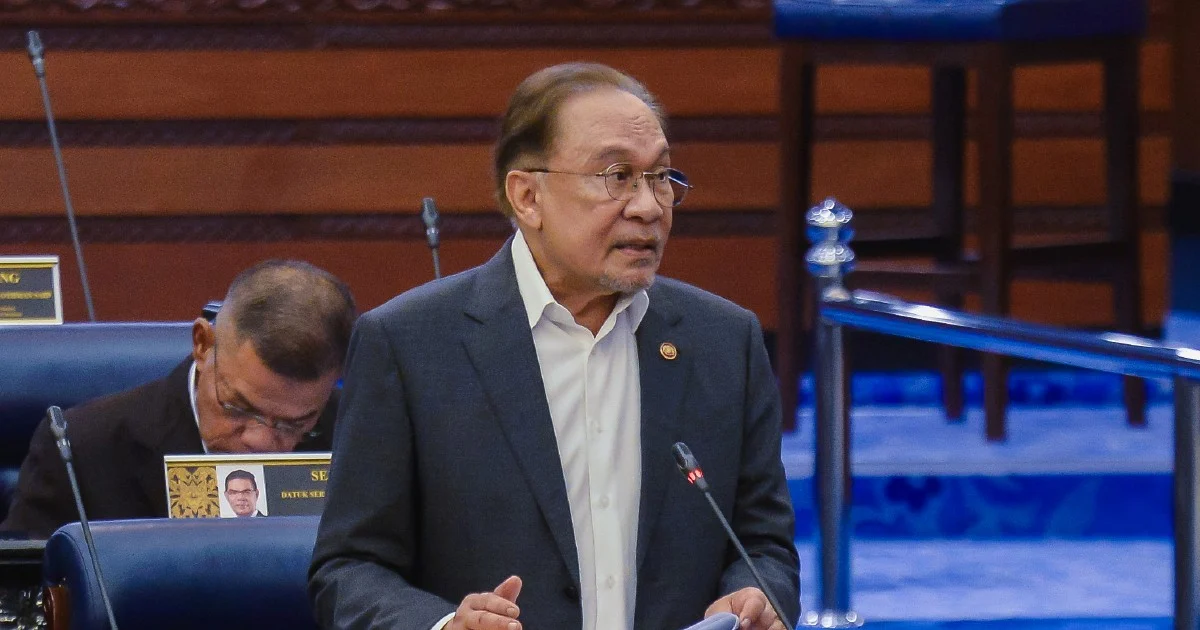
Prime Minister Datuk Seri Anwar Ibrahim has confirmed that the federal government is engaged in active negotiations with Sarawak to boost the state's special grant arrangement under the Malaysia Agreement 1963, according to statements from the Prime Minister's office in Kuala Lumpur. The disclosure represents a significant development in federal-state relations and reflects Putrajaya's willingness to revisit one of the most contentious issues in Malaysian federalism.
The Malaysia Agreement 1963, commonly referred to as MA63, forms the constitutional foundation upon which Sabah and Sarawak joined the federation. Among its provisions are special financial arrangements intended to compensate these states for their sovereignty and natural resource wealth. The special grant mechanism has long been a touchstone of state-federal negotiations, with Sarawak consistently arguing that the original allocation no longer reflects contemporary economic realities or adequate recognition of its contributions to national resources.
Sarawak's position on MA63 implementation has evolved considerably over recent years. The state has progressively advanced claims that the original special grant formula fails to account for inflation, economic growth, and the substantial petroleum revenues historically extracted from its maritime territories. These grievances have resonated across Sarawak's political spectrum, creating a rare area of consensus between government and opposition representatives within the state.
The timing of these negotiations carries particular significance within Malaysia's broader political context. The federal government's approach signals recognition that cementing stable relations with Sarawak requires tangible financial acknowledgement beyond symbolic gestures. This proves especially relevant given the competitive regional dynamics where states continually assess whether their federal relationship delivers proportionate benefits relative to their economic contributions and resource endowments.
Financial arrangements under MA63 have represented an ongoing friction point since 1963. Sarawak has consistently contended that the grant mechanism requires substantial enhancement to reflect the state's true economic significance and historical role in the formation of Malaysia. Previous administrations similarly conducted discussions on this matter, though concrete outcomes remained limited. The current government's engagement therefore reflects continuity in recognising the issue's importance while potentially indicating greater openness to substantive revisions.
For Malaysian federalism more broadly, these discussions carry implications extending beyond simple fiscal reallocation. They touch upon fundamental questions regarding how the federation values constituent state contributions, acknowledges historical agreements, and maintains political stability across geographically dispersed territories with distinct interests and historical experiences. Sarawak's leverage within federal negotiations has strengthened considerably, particularly following the state's enhanced political influence in recent parliamentary configurations.
The economic dimensions of increased MA63 provisions merit particular attention for Malaysian policy observers. Additional federal resources flowing to Sarawak could facilitate infrastructure development, particularly in rural areas where connectivity and service provision remain constraints on economic diversification. Enhanced state revenues might accelerate transition initiatives away from resource extraction toward knowledge-based and value-added industries, benefiting both Sarawak and the national economy.
Regional considerations also feature prominently in this negotiation framework. Neighbouring Sabah, which similarly enjoys MA63 protections, inevitably monitors Sarawak's progress closely. Any substantially enhanced arrangement for Sarawak could trigger parallel demands from Sabah, creating complex cascading implications for federal fiscal planning. Both states remain acutely sensitive to perceptions of differential treatment or inadequate recognition of their respective constitutional positions.
The negotiations also occur against evolving regional geopolitical circumstances affecting Malaysia's development trajectory. As Southeast Asia experiences shifting investment patterns and economic competition intensifies, states like Sarawak seek to position themselves competitively through enhanced resource capacity. Federal government acknowledgement of MA63 adjustment imperatives therefore reflects recognition that long-term Malaysian stability and growth depend partly upon satisfying constituent state aspirations within the federation's constitutional framework.
Anwar Ibrahim's public confirmation of these negotiations demonstrates willingness to address previously contentious issues directly rather than through backchannels or vague commitments. This transparency potentially builds confidence in the federal government's sincerity regarding MA63 obligations, though concrete outcomes remain undefined. The substance of eventual agreements will ultimately determine whether these negotiations represent meaningful progress or represent political positioning without corresponding fiscal commitments.
Stakeholders across Malaysian politics, from constitutional experts to development economists, recognise that MA63 arrangements fundamentally affect not merely Sarawak's finances but the federation's entire intergovernmental relations architecture. Successfully navigating these discussions could establish precedents for addressing similar grievances from other states, or alternatively, might necessitate careful calibration to prevent creating expectations becoming unmanageable within constrained federal budgetary circumstances.
Looking forward, the progression of these negotiations will likely influence perceptions regarding the federal government's commitment to honourable implementation of constitutional provisions and equitable federal structures. For Sarawak, tangible outcomes would validate sustained advocacy for MA63 rights, while for Malaysia's federation overall, successful resolution could strengthen unity by demonstrating that legitimate state interests find responsive federal engagement rather than dismissal or indefinite postponement.

