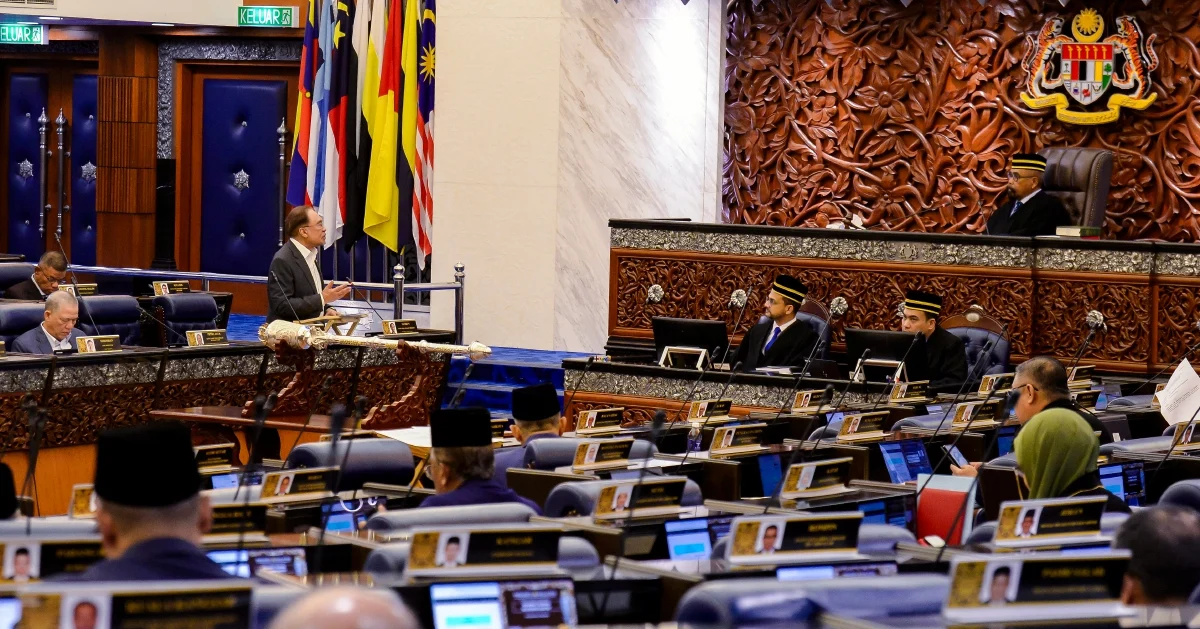
Prime Minister Datuk Seri Anwar Ibrahim has drawn a clear boundary around federal fiscal responsibility, asserting that Putrajaya cannot be treated as an automatic funding source for policy decisions made at the state level. The statement represents a significant position on the constitutional and financial relationship between Malaysia's federal and state governments, reflecting broader concerns about budget sustainability and accountability.
Anwar's remarks underscore a fundamental tension in Malaysia's federal structure, where states retain considerable policy-making autonomy yet often look to the centre for supplementary resources when their initiatives generate unforeseen expenditures. This dynamic has historically created friction between federal and state administrations of different political complexions, as well as within coalitions where federal and state governments theoretically align. The Prime Minister's articulation suggests the federal government intends to enforce stricter discipline in how it evaluates requests for additional support from state authorities.
The timing of this statement carries significance as Malaysia continues to navigate post-pandemic fiscal pressures and manages competing demands on limited budgetary resources. States have pursued various development and welfare programmes in recent years, some generating costs that exceed original projections or that later require federal intervention. Without clear fiscal boundaries, such arrangements risk creating open-ended liabilities for federal coffers, ultimately constraining Putrajaya's ability to manage macroeconomic stability or invest in national-level priorities.
Under Malaysia's constitution, states exercise jurisdiction over matters including land, agriculture, forestry, local government, and certain welfare functions. This constitutional division was designed to enable regional autonomy but also creates ambiguity about cost-sharing when state initiatives have national ramifications or when unexpected expenses arise. Anwar's statement effectively resets expectations: states must budget responsibly for their own decisions, and any federal support will require transparent justification and careful assessment rather than reflexive approval.
The implications extend beyond budgetary mechanics. For state governments, particularly those controlled by opposition parties or led by individual leaders with aspirations for federal influence, the message is clear—they cannot rely on Putrajaya as a financial backstop. This encourages more rigorous planning and evaluation of new programmes before implementation. Conversely, it may constrain states' ability to launch ambitious welfare initiatives or infrastructure projects without federal coordination, potentially affecting citizens dependent on state-level services.
Malaysian state governments operate with fixed federal allocations determined by revenue-sharing formulas established by the Finance Minister. Beyond these transfers, states generate revenue through land sales, licenses, and permits. When state-initiated programmes require urgent federal intervention—whether due to implementation challenges, unforeseen costs, or welfare imperatives—the decision-making process becomes politically delicate. Anwar's framework attempts to impose rational criteria: if a state chooses a policy path that generates costs, state resources must be the primary solution.
This approach aligns with broader themes in Anwar's economic management philosophy, which emphasises fiscal consolidation and preventing inefficient spending. Malaysia's debt-to-GDP ratio has been a concern for international credit rating agencies, and federal discipline regarding unfunded liabilities contributes to fiscal sustainability objectives. By insisting that states absorb the consequences of their own decisions, Anwar positions the federal government as a custodian of long-term economic stability rather than a convenient revenue source for provincial ambitions.
State-level politicians may view the statement as a constraint on their operational flexibility, particularly those representing less economically developed states where revenue generation is inherently limited. These states often depend on federal allocations and may argue that certain functions—social welfare, public health, education support—carry national significance beyond state boundaries. The tension between Anwar's financial discipline and the reality that some state responsibilities have nation-wide implications will likely require ongoing calibration.
The statement also reflects lessons from previous federal-state fiscal disputes, where accumulated contingent liabilities or unfunded mandates created budget surprises. By articulating clear principles before such situations arise, Anwar aims to reduce ad-hoc negotiations and establish predictability in federal-state relations. States can plan knowing they must carry their own weight, while the federal government can commit its resources to agreed national priorities without unexpected demands.
For Malaysian business and civil society, Anwar's position signals a government committed to disciplined fiscal governance at all levels. Investors seeking macroeconomic stability may view this as positive, while citizens dependent on state services may want clarity on whether this constraint affects essential functions. The statement suggests Anwar intends federal finances to be allocated strategically rather than reactively, a principle essential for a middle-income country managing demographic changes, infrastructure needs, and economic diversification simultaneously.
Moving forward, this position will likely shape interactions between Putrajaya and state administrations across the political spectrum. States will need to develop more robust long-term budgeting practices, coordinate planning with federal authorities earlier in the policy cycle, and make difficult choices about programme scope given finite resources. The federal government, meanwhile, demonstrates its intention to be a supportive partner for national objectives while refusing to become a financial safety net for preventable mismanagement at the state level.
Anwar's remarks ultimately reflect a mature approach to federal governance: clearly defined roles, transparent criteria for extraordinary support, and an expectation that all levels of government exercise fiscal responsibility appropriate to their constitutional standing and revenue capacity. Such discipline, while requiring adjustment from states accustomed to greater flexibility, establishes the foundation for sustainable long-term economic management across Malaysia's federal system.

