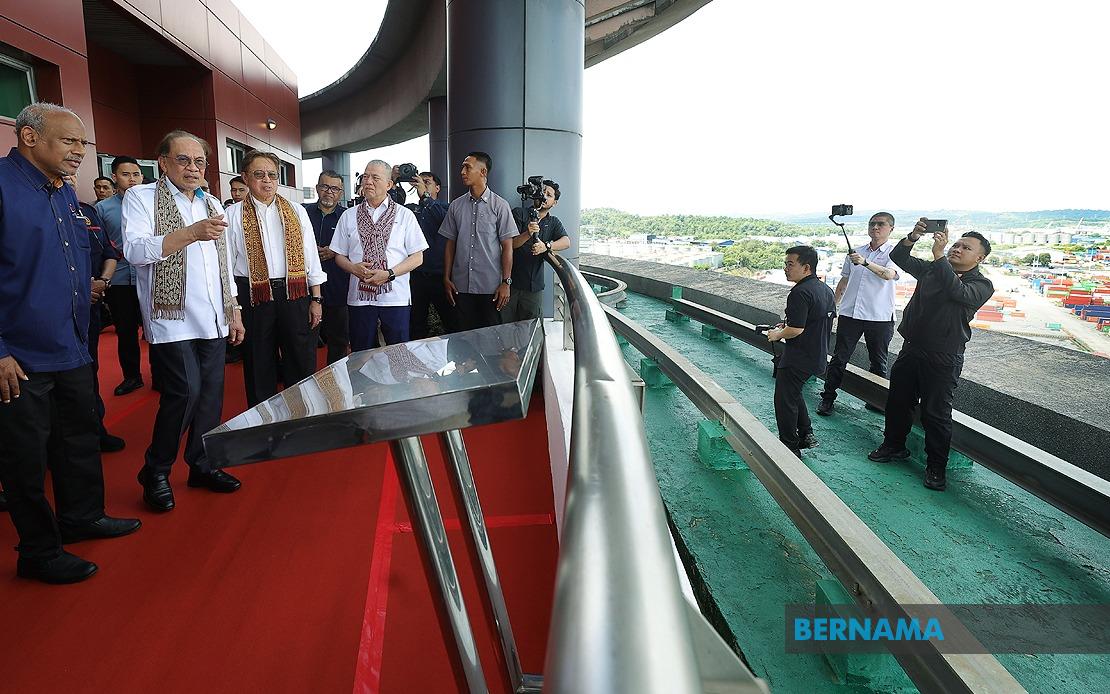
The Federal Government has formally transferred control of Bintulu Port to Sarawak, marking a significant shift in the governance of one of Malaysia's strategically important maritime facilities. Prime Minister Datuk Seri Anwar Ibrahim announced the confidence placed in Sarawak's administrative capacity during remarks at the Sarawak Level Gawai Dayak 2026 Dinner in Kuching on June 21, indicating that the change of status reflects broader federal support for the state's economic autonomy and operational competence.
The port's transition from federal to state management represents a meaningful devolution of responsibility over infrastructure that plays a critical role in Malaysia's energy exports and regional commerce. Bintulu Port has long served as a vital hub for the country's liquefied natural gas industry, handling significant volumes of LNG that supply markets across Asia and beyond. The facility's strategic importance extends beyond energy logistics; it functions as a regional transport node facilitating broader trade flows throughout Southeast Asia, making its operational efficiency a matter of national economic concern.
According to the Prime Minister, Sarawak possesses the technical expertise and qualified personnel necessary to assume operational control of the facility. Anwar's assertion that the state has "leading personnel having the expertise" suggests the Federal Government's assessment that Sarawak's administrative structures and workforce are adequately prepared for the management transition. This evaluation indicates a degree of confidence in both institutional readiness and human capital, though the specifics of which individuals or departments will lead the operation were not detailed in the Prime Minister's public remarks.
The handover ceremony took place in Bintulu itself on the same day, formalising the administrative change through a formal cheque transfer process. This ceremonial approach underscores the significance of the transition, treating it not merely as a bureaucratic reclassification but as a substantive shift in operational authority and responsibility. The dual events—the ceremony in Bintulu coupled with the Prime Minister's confirmation in Kuching—suggest coordination between federal and state officials in managing the transition's optics and formal procedures.
For Malaysia's broader energy sector, the port's operation by Sarawak carries implications for how LNG export logistics will be managed going forward. The state government will now bear direct responsibility for maintaining the port's efficiency, managing labour relations, overseeing maintenance schedules, and coordinating with energy companies that depend on the facility. Any operational disruptions or inefficiencies could affect Malaysia's ability to meet international LNG contracts, a consideration that likely informed the Federal Government's careful framing of confidence in Sarawak's readiness.
The decision to transfer the port reflects a pattern of decentralisation observed across Malaysian federalism in recent years, wherein certain infrastructure assets and revenue-generating facilities have been shifted to state control. For Sarawak, this represents enhanced fiscal autonomy and direct revenue capture from port operations, positioning the state to reinvest earnings into local development priorities. The change also aligns with broader discussions about state-level economic sovereignty and the distribution of commercial opportunities between Putrajaya and the state governments.
Regionally, the governance transition may be viewed by other Southeast Asian nations as an indicator of Malaysia's commitment to utilising Bintulu as a reliable, professionally managed port for regional trade. Countries and companies dependent on Malaysian LNG exports have an interest in port operational stability. Sarawak's track record in managing other commercial and industrial facilities will likely influence how international stakeholders assess the reliability of continued service through the port under state management.
The Prime Minister's framing of the handover as "a sign of our confidence and friendship" suggests the Federal Government intends the transfer to be understood as a gesture of goodwill toward Sarawak, reinforcing cooperative federalism at a time when centre-state relations merit cultivation. Such language serves multiple audiences: reassuring Sarawak of federal support, signalling to the business community that the transition is orderly and confident, and positioning the Anwar Ibrahim administration as respectful of state autonomy within the federation.
Operationally, Sarawak will need to ensure continuity in the port's services during the transition period, maintaining existing contractual arrangements with shipping companies, energy exporters, and logistics operators. Any regulatory changes or policy adjustments introduced by the state government will require careful communication with stakeholders who rely on Bintulu Port's services. The state's ability to balance revenue maximisation with service reliability will be closely watched by both private sector operators and the federal authorities who retain interest in the facility's economic contribution to national export performance.
Looking ahead, the success of this governance transfer will depend on Sarawak's demonstrated commitment to professional port management, competitive pricing structures, and infrastructure investment that keeps Bintulu competitive with other regional LNG and general cargo facilities. The Federal Government's public confidence, while diplomatically important, ultimately rests on the state's execution of its new responsibilities and its capacity to maintain the port's standing as a premier Southeast Asian maritime facility.
%22%2F%3E%3C%2Fpattern%3E%3C%2Fdefs%3E%3Crect%20width%3D%22100%25%22%20height%3D%22100%25%22%20fill%3D%22url(%23ph39leig)%22%2F%3E%3Crect%20width%3D%22100%25%22%20height%3D%22100%25%22%20fill%3D%22url(%23ph39leip)%22%2F%3E%3Ctext%20x%3D%2250%25%22%20y%3D%2250%25%22%20text-anchor%3D%22middle%22%20dominant-baseline%3D%22central%22%20fill%3D%22rgba(255%2C255%2C255%2C0.95)%22%20font-family%3D%22Georgia%2C%20'Times%20New%20Roman'%2C%20serif%22%20font-weight%3D%22700%22%20font-size%3D%22320%22%20letter-spacing%3D%22-0.02em%22%3E300%3C%2Ftext%3E%3C%2Fsvg%3E)
%22%2F%3E%3C%2Fpattern%3E%3C%2Fdefs%3E%3Crect%20width%3D%22100%25%22%20height%3D%22100%25%22%20fill%3D%22url(%23ph14edxg)%22%2F%3E%3Crect%20width%3D%22100%25%22%20height%3D%22100%25%22%20fill%3D%22url(%23ph14edxp)%22%2F%3E%3Ctext%20x%3D%2250%25%22%20y%3D%2250%25%22%20text-anchor%3D%22middle%22%20dominant-baseline%3D%22central%22%20fill%3D%22rgba(255%2C255%2C255%2C0.95)%22%20font-family%3D%22Georgia%2C%20'Times%20New%20Roman'%2C%20serif%22%20font-weight%3D%22700%22%20font-size%3D%22151%22%20letter-spacing%3D%22-0.02em%22%3EMalaysian%3C%2Ftext%3E%3C%2Fsvg%3E)