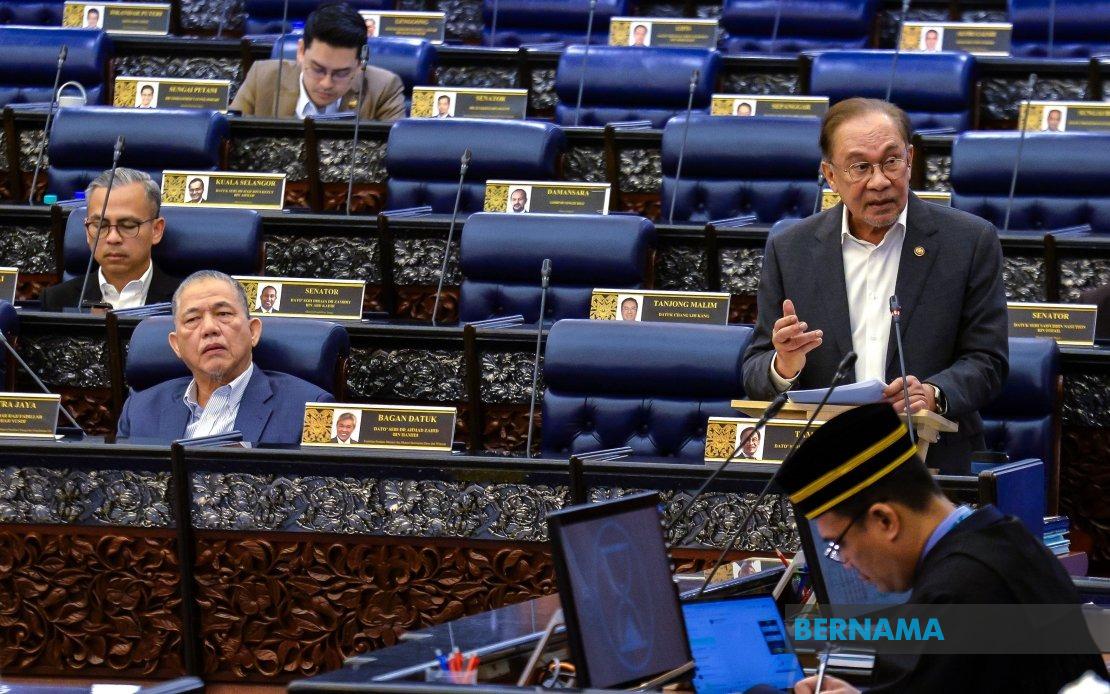
Prime Minister Datuk Seri Anwar Ibrahim has moved to settle ongoing debate over federal funding distribution by underlining a fundamental principle: that allocations flow to states based on their developmental requirements and the welfare of their populations, rather than being mechanically tied to tax revenue collected from each jurisdiction. Speaking during parliamentary Question Time, the premier acknowledged that nearly every state benefits from federal grants that exceed their individual tax contributions, with only Selangor and Penang generating tax revenues greater than their allocations—a reality that reflects the federal system's redistributive character and its commitment to ensuring equitable national development.
The Prime Minister's remarks represent a direct response to longstanding grievances from several state governments that have periodically challenged the fairness of the allocation formula. These complaints typically centre on the perception that certain states, particularly those in East Malaysia and the rural peninsula, receive insufficient federal support relative to their infrastructure deficits and development backlogs. By publicly reaffirming the needs-based approach, Anwar has sought to counter claims that his administration is marginalising or neglecting any jurisdiction, a sensitive political issue in a federation where regional disparities remain pronounced and where state governments jealously guard their interests.
The administration's prioritisation framework focuses on concrete development challenges across the country. Flood mitigation initiatives have absorbed significant resources, reflecting the increasing frequency and severity of monsoon-related disasters that impact multiple states annually. The Pan Borneo highway upgrade represents a major undertaking to improve transport connectivity in Sarawak and Sabah, addressing historical infrastructure gaps in East Malaysia. Water drainage systems, particularly critical in urban and peri-urban areas experiencing rapid development, constitute another priority. Poverty alleviation efforts remain embedded in the allocation strategy, acknowledging that pockets of deprivation persist across multiple states regardless of their tax-generating capacity. Educational infrastructure and school development programmes form part of this comprehensive approach, with the government recognising that human capital investment benefits from early emphasis.
Anwar's emphasis on the MADANI Government's performance compared to its predecessor carries political weight in Malaysia's competitive electoral landscape. By highlighting increased allocations to traditionally less-developed states such as Kedah, Terengganu and Kelantan, the Prime Minister has sought to demonstrate concrete commitment to regions that have historically faced infrastructure challenges and economic marginalisation. This framing serves multiple purposes: it neutralises opposition criticism while consolidating support among constituencies in these states, and it presents the current administration as more attentive to peripheral regions than previous governments.
The allocation system reflects broader realities of Malaysian federalism, where the central government must balance competing demands from thirteen state administrations while managing a national budget under fiscal constraints. The principle that wealthy, developed states like Selangor and Penang contribute more in taxes than they receive in allocations is structurally inevitable and theoretically defensible—such redistribution mechanisms are standard in federal systems globally. However, political management of this reality demands constant explanation and justification, particularly when state opposition leaders challenge the fairness of the arrangement.
The question posed by Datuk Seri Doris Sophia Brodi, herself from a Sarawak constituency, reflects East Malaysian sensitivities about federal resource distribution. Despite the constitutional entrenchment of Sarawak and Sabah's interests through Malaysia Agreement 1963 provisions, these states periodically voice concerns about infrastructure investment and financial support. By addressing this query directly in Parliament, Anwar has attempted to provide assurance that the federation's commitment to equitable development encompasses all regions, including those geographically distant from federal administrative centres.
The government's allocation methodology, grounded in needs assessment rather than tax-revenue metrics, represents a principled approach to national development. However, it also creates space for legitimate debate about prioritisation and implementation. Different stakeholders may reasonably disagree about whether flood mitigation should rank above school construction, or whether transport infrastructure improvements should take precedence over water systems. The needs-based framework, while defensible in theory, requires transparent criteria and consistent application to maintain political credibility across state boundaries.
This clarification from the Prime Minister carries implications for Malaysia's developing infrastructure landscape and fiscal federalism architecture. As climate change intensifies weather-related challenges and population growth strains urban services, the allocation system will face increasing pressure. States facing mounting costs for disaster resilience and water management will naturally seek higher federal support, potentially straining relationships if they perceive their requirements as underestimated. The government's communication about allocation principles thus becomes critical to managing expectations and maintaining intergovernmental cooperation.
The MADANI Government's approach reflects a deliberate shift toward needs-focused budgeting, moving away from formulaic calculations that might overly privilege revenue-generating regions. This represents a commitment to inclusive development that acknowledges unequal starting points across states. Yet maintaining political consensus around such redistributive mechanisms requires continuous engagement with state leaders and public explanation of the principles underlying allocation decisions. By articulating these justifications in Parliament, Anwar has sought to establish a foundation for ongoing dialogue about federal-state fiscal relations that extends beyond partisan controversy.

