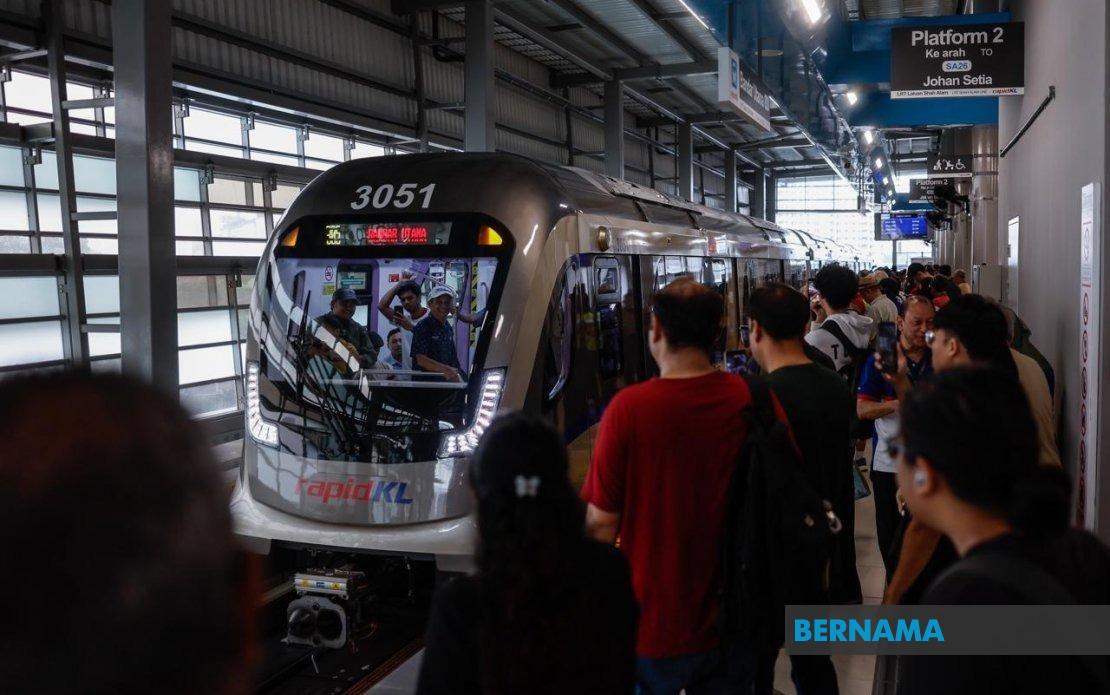
A defective component on a Light Rail Transit 3 train triggered an incident at Shah Alam Stadium Station on July 4, when the faulty part came into contact with the power conductor system. According to a statement released by Rapid KL, the malfunction occurred at 7.05 pm and produced a small explosion-like sound accompanied by visible sparks, yet fortunately resulted in no injuries to any passengers or staff members aboard the vehicle.
The immediate response from Rapid KL personnel was to remove the affected train from active service without delay. Passengers who were on board at the time of the incident were safely disembarked at the subsequent station stop, allowing them to continue their journeys using an alternative train without significant disruption to their travel plans. Normal service operations on the line continued throughout the incident and its aftermath, maintaining reliable connectivity for commuters across the Shah Alam corridor.
Following the incident, the train was transported to Rapid KL's maintenance depot for comprehensive technical examination. Engineers conducted detailed inspections to identify the precise nature of the component failure and assess whether any other systems had been compromised by the power conductor contact. The specific component responsible for the malfunction was subsequently removed and replaced with a functional unit, addressing the root cause of the problem.
Before the train could return to passenger service, Rapid KL technicians verified through rigorous safety testing that all systems were functioning within normal parameters and that no residual damage remained from the incident. Only after confirming the vehicle met all operational safety standards was it cleared for deployment back into the regular LRT3 schedule, demonstrating the company's adherence to established safety protocols.
Rapid KL emphasized in its statement that passenger safety constitutes the paramount concern guiding all operational decisions and maintenance protocols. The company indicated that this incident, while handled swiftly and without casualties, had prompted a broader precautionary review across its train fleet. The maintenance team initiated comprehensive inspections and enhanced monitoring procedures on other vehicles operating on the LRT3 line to identify and address any similar component issues before they could potentially cause problems during service.
This incident underscores the critical importance of preventive maintenance in urban rail systems serving millions of commuters annually. The Shah Alam Stadium Station incident, though minor in terms of consequences, illustrates how a single component failure can create hazardous conditions when trains operate at full electrical capacity. The fact that the faulty part made direct contact with the high-voltage power conductor demonstrates the potentially serious nature of such failures in rail infrastructure.
For Malaysian commuters and the broader transportation sector, this case highlights how public transit operators must balance the demands of maintaining frequent, reliable service with the non-negotiable requirement for safety. The swift response from Rapid KL—isolating the problem, protecting passengers, conducting thorough repairs, and implementing fleet-wide precautions—reflects established best practices in public transit management. Such incidents, when handled transparently and comprehensively, can actually strengthen public confidence in the rail system's safety culture.
The LRT3 Shah Alam Line serves as a vital transportation corridor connecting suburban communities with central Kuala Lumpur, handling substantial passenger volumes daily. Any disruption to this service affects thousands of commuters relying on the system for work, education, and other essential travel. The July 4 incident occurred during evening peak hours when ridership peaks, making the potential consequences more significant had the fault resulted in extended service interruptions or injuries.
Rapid KL's decision to conduct comprehensive inspections across the train fleet following this incident reflects a systematic approach to risk management in public transportation. Such proactive measures can identify similar component degradation affecting other vehicles, potentially preventing future incidents before they occur. This approach also demonstrates commitment to continuous improvement and reinforces the importance of investing in preventive maintenance rather than reactive repairs after failures cause operational disruptions or safety concerns.
For passengers using the LRT3 system, incidents like these serve as reminders that modern rail infrastructure, despite occasional component failures, operates under stringent safety frameworks designed to protect users. The absence of casualties despite the dramatic appearance of sparks and explosive sounds indicates that safety systems functioned as intended, containing the incident and preventing escalation to more serious consequences for those aboard.

