A deadly collision in Kuala Lumpur early yesterday morning that claimed the lives of three family members will see its investigation file submitted to the Attorney General's Chambers tomorrow for prosecutorial review. The incident involved a truck operated by the Kuala Lumpur Immigration Department and has sparked immediate scrutiny into the circumstances surrounding the crash and the subsequent referral for potential charges. The traffic police authority moved swiftly to coordinate with the prosecution director to determine the next steps in the judicial process, signalling the seriousness with which authorities are treating the matter.
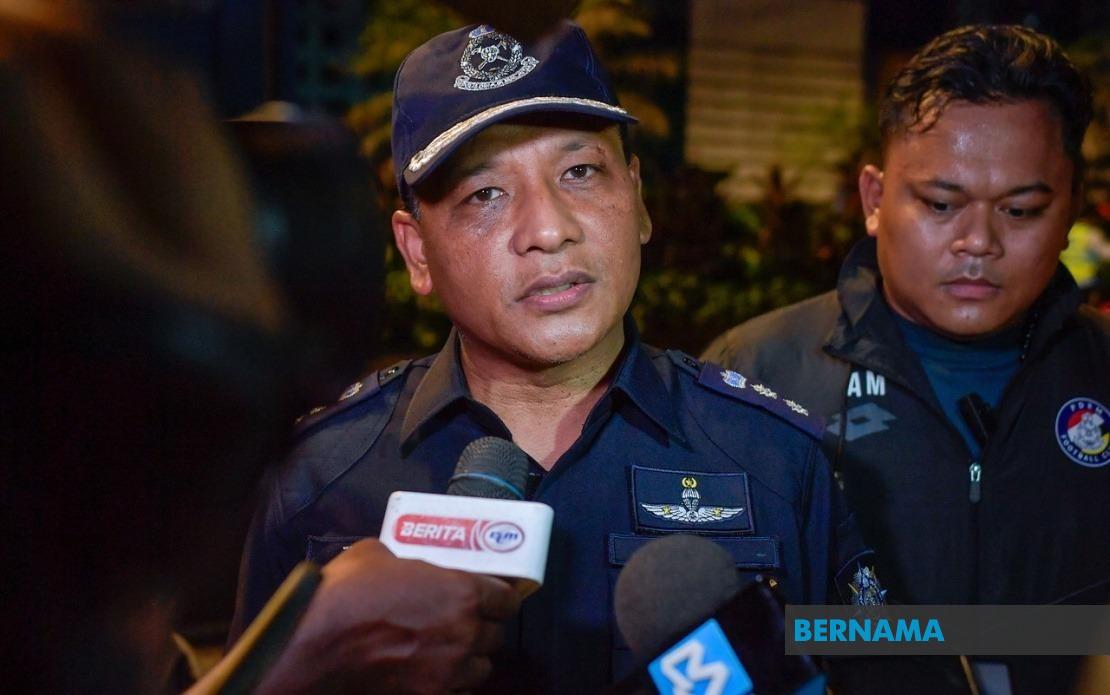
ACP Mohd Zamzuri Mohd Isa, who heads the Kuala Lumpur Traffic Investigation and Enforcement Department, explained that the investigation dossier would be transferred to the Head of the General Crime and Public Order Division at the Attorney General's Chambers. He indicated that both the prosecution director and the investigating officer would accompany the file, enabling the AGC to make informed decisions regarding potential charges against those implicated in the incident. This procedural step represents a critical juncture where legal professionals will assess whether the evidence gathered warrants formal prosecution.
Police have already secured a one-day remand order for two individuals central to the crash: the driver of the Immigration Department truck and the driver of the Proton Saga car involved in the collision. Both are being investigated under Section 41(1) of the Road Transport Act 1987, a statute that addresses traffic-related offences and the duties of vehicle operators on Malaysian roads. The legal framework under which they are being examined focuses on the obligations drivers bear to operate vehicles safely and in compliance with traffic regulations.
The tragedy unfolded on Jalan Sultan Ismail at approximately 1 am when a Kuala Lumpur Immigration Department vehicle, commonly known as a "Black Maria," struck four pedestrians. The truck, which was travelling empty towards Chow Kit to conduct an operation targeting undocumented migrants, is believed to have entered an intersection while the traffic signal was against it, despite having its emergency beacon and siren activated. This detail raises questions about the interpretation of right-of-way and emergency vehicle protocols in Malaysia's traffic code.
The Immigration truck then collided with a Proton Saga that was proceeding lawfully through the same junction with a green light. The impact proved catastrophic, causing the truck to lose control and careen off the roadway into the path of pedestrians and other vehicles. An Inokom Matrix was also struck during the sequence of events. For Malaysian road safety advocates, the incident underscores the tension between emergency vehicle operation and the protection of other road users, particularly pedestrians who have limited ability to react to sudden threats.
The fatalities included Shaik Mohd Firdaus Shaikh Yahya, aged 53, and his two daughters, Siti Nor Sazlin, 25, and Siti Darwisyah Auni, 12. The family's mother, Norhayati Razali, 55, sustained serious injuries and remains hospitalized in the Intensive Care Unit at Kuala Lumpur Hospital. The loss represents a devastating blow to the family and their extended community, serving as a stark reminder of the fragility of life and the potential consequences of traffic violations, regardless of circumstance or intent.
The referral to the Attorney General's office will determine whether criminal negligence, dangerous driving, or other statutory offences can be established against the parties involved. The evidence compiled by the traffic investigation team must meet the legal threshold for prosecution, meaning that intent, causation, and breach of duty must be convincingly demonstrated. For the family affected, this process will shape the legal accountability that emerges from their tragedy.
This incident arrives amid broader concerns in Malaysia about traffic safety and the proper conduct of government vehicles. Official vehicles are frequently afforded special privileges on the road, including the ability to proceed through red lights when emergency signals are activated. However, such privileges carry corresponding responsibilities to ensure that the safety of other road users is not compromised. The case will likely be scrutinized closely to determine whether the Immigration Department truck's crew exercised appropriate caution when exercising these privileges.
The investigation's progression through the Attorney General's Chambers represents a standard but important procedural safeguard in Malaysia's criminal justice system. Rather than allowing police to independently determine whether charges should be filed, the AGC provides an independent prosecutorial assessment that helps ensure charges are brought only when evidence is compelling. For the public, this process aims to ensure that accountability is pursued fairly while protecting individuals from unfounded prosecution.
The outcome of this referral will likely influence how government agencies across Malaysia approach emergency vehicle operation and traffic rule compliance. If charges are pursued, the subsequent court proceedings may establish important precedents about the balance between operational urgency and public safety. For immigration and law enforcement agencies, the case may prompt reviews of driver training, emergency protocol procedures, and the conditions under which high-speed responses are authorized.
As the investigation file moves toward the Attorney General's review, focus will intensify on the specific traffic conditions at the time, the speed of the Immigration truck, visibility factors, and the training and experience of the driver involved. Engineering experts and accident reconstruction specialists may be called upon to provide technical analysis. The legal framework applied will determine whether this is treated as a tragic accident or as behaviour that rises to the level of criminal responsibility.

