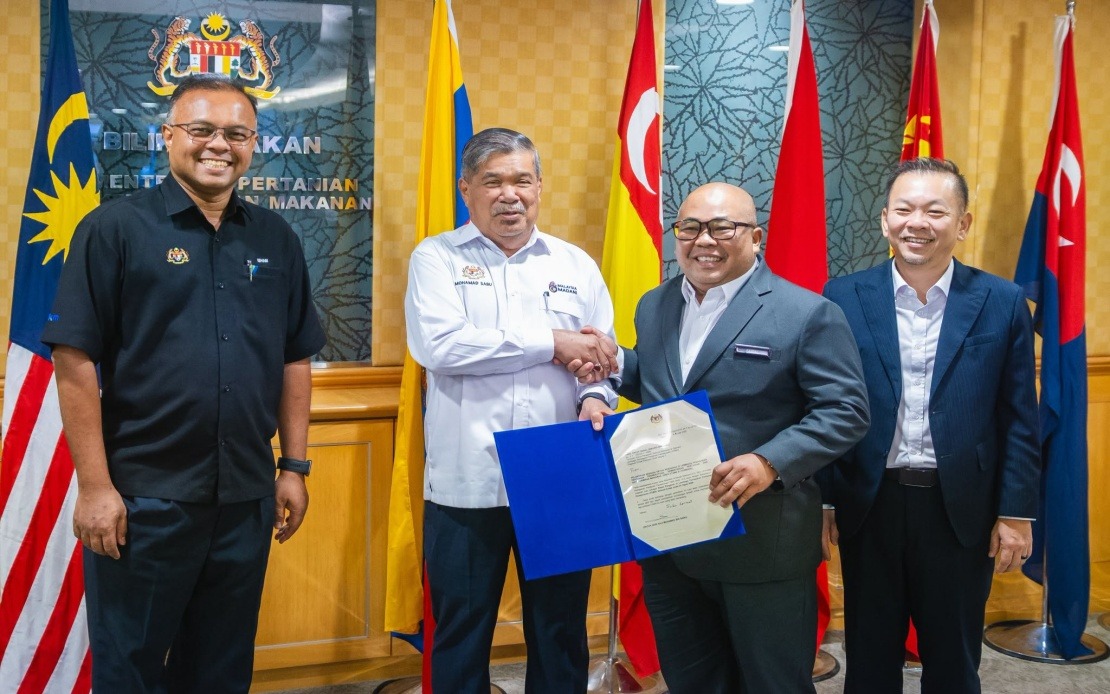
Faisal Iswardi Ismail, who previously served as deputy director-general overseeing food security and operations at the Federal Agricultural Marketing Authority, has been elevated to the position of director-general with effect from August 1. The formal presentation of his appointment letter occurred on August 5 when Agriculture and Food Security Minister Datuk Seri Mohamad Sabu made the announcement following a post-Cabinet meeting in Kuala Lumpur.
The appointment represents a significant transition in leadership at FAMA, one of Malaysia's key institutions charged with supporting the domestic agri-food sector. Faisal Iswardi's ascension from the deputy role reflects confidence in his operational experience and understanding of the authority's mandate. His previous responsibilities in managing food security and operations positioned him with direct insight into FAMA's day-to-day functions and strategic priorities.
In publicly congratulating the newly appointed director-general through a Facebook post, Mohamad Sabu underscored the gravity of the position and the institutional expectations attached to it. The minister acknowledged that FAMA's responsibilities extend far beyond administrative functions, encompassing critical roles in facilitating market access for local farmers and agri-entrepreneurs. The appointment letter itself served as a formal recognition of these weighty responsibilities now transferred to Faisal Iswardi's shoulders.
The minister's remarks highlighted three interconnected pillars that define FAMA's contemporary mission: enhancing the competitiveness of domestic agricultural products in both local and regional markets, fortifying the nation's food supply chain infrastructure, and directly improving the economic returns available to farming communities and value-added agri-food businesses. These priorities reflect broader national concerns about agricultural sustainability, rural income stability, and food self-sufficiency in an increasingly uncertain global marketplace.
For Malaysian agricultural stakeholders, this transition arrives at a moment when the sector faces mounting pressures from climate variability, labour shortages, and competition from regional suppliers. FAMA's effectiveness in fulfilling its mandate directly influences the viability of smallholder farming operations and the broader question of whether domestic production can meet growing domestic demand. Faisal Iswardi's appointment signals continuity in institutional focus, given his entrenched understanding of operational challenges within the authority.
The timing of the leadership change, effective from August 1, suggests a measured transition period. This staggered implementation allows for proper handover procedures and ensures that no disruption occurs to FAMA's ongoing programmes and market interventions. For farmers and agri-food exporters relying on FAMA's support mechanisms, such institutional stability during leadership transitions is operationally important.
Modern agricultural marketing in Malaysia increasingly demands sophisticated supply chain coordination, particularly as domestic producers compete with imports and seek new export opportunities. FAMA's director-general must navigate complex interactions between government policy, market dynamics, and the practical realities facing growers. Faisal Iswardi's elevation to this post carries implicit expectations that he will drive strategic initiatives aligned with national food security objectives and agricultural modernisation priorities.
The appointment also reflects the ministry's broader organisational philosophy regarding leadership development. By promoting from within rather than recruiting external candidates, the ministry demonstrates confidence in institutional capacity-building and succession planning. This approach often fosters consistency in institutional culture and strategic direction, though it equally places responsibility on promoted leaders to bring fresh perspectives to established roles.
Regional context matters here as well. Southeast Asian agricultural markets are increasingly integrated, with Malaysian producers operating alongside Thai, Indonesian, and Vietnamese competitors. FAMA's effectiveness in positioning local products competitively depends partly on its director-general's ability to understand regional market trends and negotiate advantageous terms for Malaysian exports. Faisal Iswardi's experience managing food security operations suggests familiarity with supply chain complexities across multiple tiers.
Minister Mohamad Sabu's emphasis on wishing the appointee ease in executing his duties carries practical significance beyond ceremonial politeness. The agriculture portfolio encompasses diverse constituencies—from large-scale commercial operators to smallholder subsistence farmers—each with distinct needs and leverage. Navigating these competing interests while advancing coherent institutional strategy represents a genuine administrative challenge that extends beyond formal job responsibilities.
The appointment marks a juncture where FAMA's trajectory will be significantly shaped by Faisal Iswardi's decisions regarding programme prioritisation, resource allocation, and stakeholder engagement. His promotion from a deputy role managing critical operations provides him with granular understanding of institutional constraints and opportunities. Whether he will introduce fresh initiatives or consolidate existing approaches remains to be observed, but his promotion suggests the ministry judges him capable of advancing FAMA's core mission effectively during his tenure.

