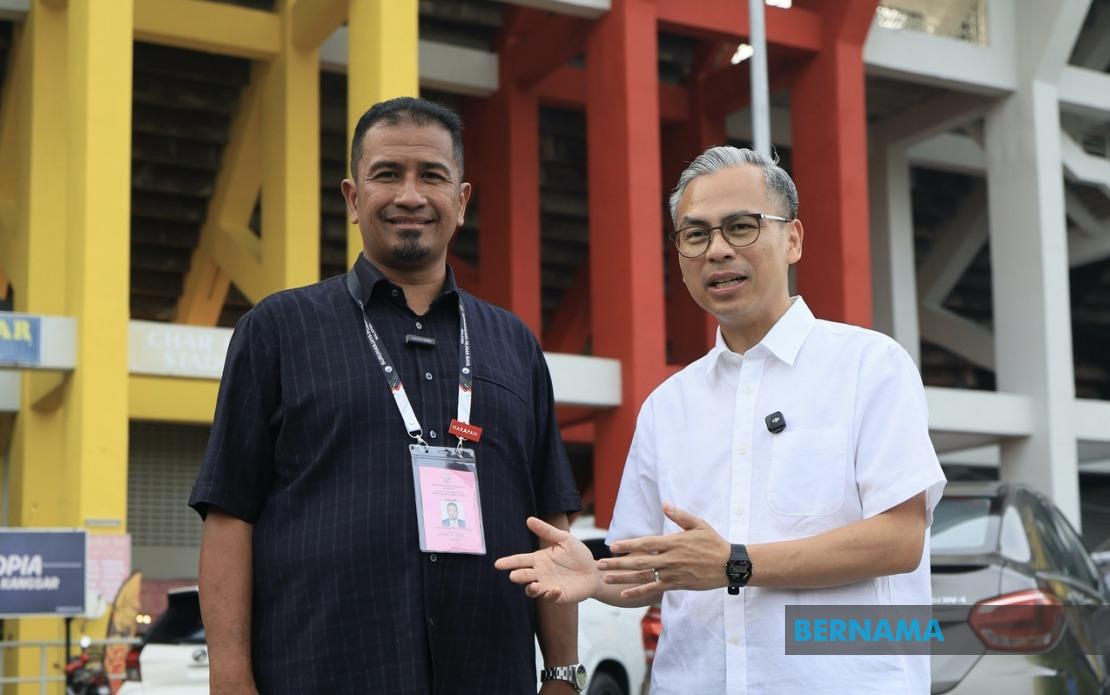
Communications Minister Datuk Seri Fahmi Fadzil has appealed to all political parties involved in the Negeri Sembilan state election to maintain campaign standards centred on substantive debate and factual discussion, steering clear of personal attacks and deliberate damage to rival candidates' materials. The call came after Pakatan Harapan's Rantau state constituency candidate, Dr Azizul Hakim Mahdi, reported that multiple campaign billboards bearing his image and message had been defaced or destroyed during the ongoing electoral period.
Fahmi, who was in Seremban to accompany PH's Sikamat state seat contender Nur Azman Mohamad during a campaign engagement at Paroi Stadium, characterised the vandalism incidents as objectionable behaviour that authorities must investigate and prosecute as criminal offences. He referenced social media posts purporting to document individuals in the act of vandalising these promotional structures, emphasising that such conduct undermined the democratic process and degraded public discourse surrounding electoral competition.
The minister's intervention reflects growing concerns within political circles about campaign conduct as Malaysia's state-level elections increasingly attract intense rivalry and resource commitments from competing coalitions. Billboard defacement has emerged as a recurring flashpoint in recent election cycles across the peninsula, with candidates from multiple parties reporting similar incidents. Such vandalism not only represents property damage but signals deeper anxieties about how political opponents view acceptable boundaries during voting periods, particularly when campaigns become competitive.
Fahmi's message addressed all participating parties without identifying specific culprits, framing his intervention as a non-partisan appeal to electoral ethics and democratic maturity. He stressed that campaigns should function as contests of competing visions and policy platforms rather than opportunities for intimidation, character assassination, or physical interference with opponents' campaign infrastructure. This positioning allows the government to appear above partisan factionalism while reinforcing state-sanctioned norms around election administration.
The communications minister acknowledged that the campaign remained in early momentum, with most political actors still deploying resources at measured pace rather than maximum intensity. He projected that the campaign would escalate significantly during the final week before polling, with increased participation from senior party figures and expanded ground-level activism. Prime Minister Datuk Seri Anwar Ibrahim had already conducted multiple campaign stops that same afternoon, signalling intensifying federal involvement in securing Negeri Sembilan's electoral outcome.
For Malaysian readers, this development carries implications beyond the immediate state contest. The Negeri Sembilan election occurs against a backdrop of broader coalition politics, where state-level outcomes influence federal power calculations and demonstrate whether governing coalitions command grassroots confidence. Vandalism incidents, even if isolated, feed into narratives about political desperation and deteriorating civility, potentially influencing voter perceptions of which parties deserve their support based on campaign conduct alone.
The Election Commission has scheduled August 1 as polling day, with early voting procedures commencing on July 28. This compressed timeframe means campaign intensity will spike rapidly, creating potential friction as parties jostle for visibility and voter attention within a condensed period. Historical patterns suggest that campaigns intensify most sharply during the final seven to ten days before voting, making conduct standards increasingly difficult to maintain as pressure mounts and competition sharpens.
Fahmi's specific invocation of Facebook posts documenting vandalism underscores how digital platforms have transformed electoral transparency and accountability. Unlike previous election cycles where campaign sabotage might occur with limited documentation, contemporary incidents generate immediate video evidence and public commentary, creating both deterrent effects and amplification of grievances. Political parties navigate this environment carefully, knowing that their campaign conduct is instantly scrutinised and shared across social networks, shaping voter perceptions independently of official campaign messaging.
The minister's appeal resonates within Malaysia's regulatory framework surrounding elections, where the Election Commission possesses authority to sanction parties and candidates for campaign code violations. These codes theoretically prohibit defamatory statements, harassment of candidates, and destruction of electoral materials, though enforcement remains uneven and politically sensitive. Fahmi's public statement essentially invokes these regulatory frameworks while encouraging voluntary compliance, recognising that managing campaign conduct relies substantially on internal party discipline and candidate self-restraint.
For Southeast Asian observers monitoring Malaysian democratic practices, this episode illustrates both vulnerabilities and institutional responses within the region's largest economy. While vandalism represents a relatively minor form of electoral misconduct compared to violence or systemic disenfranchisement, it indicates friction points in how different political communities respect shared rules and norms. Fahmi's intervention demonstrates that elected officials and state institutions retain capacity to articulate standards and encourage compliance, even amid intense partisan competition.
The Negeri Sembilan election acquires particular significance given the state's historical political dynamics and its relative accessibility to federal intervention. Unlike more demographically complex constituencies, Negeri Sembilan presents clearer electoral pathways for either coalition to demonstrate organisational competence and grassroots mobilisation. Campaign conduct thus becomes not merely a sideshow to policy discussion but a substantive indicator of which coalition commands better party discipline and voluntary respect for democratic norms among its activists and supporters.

