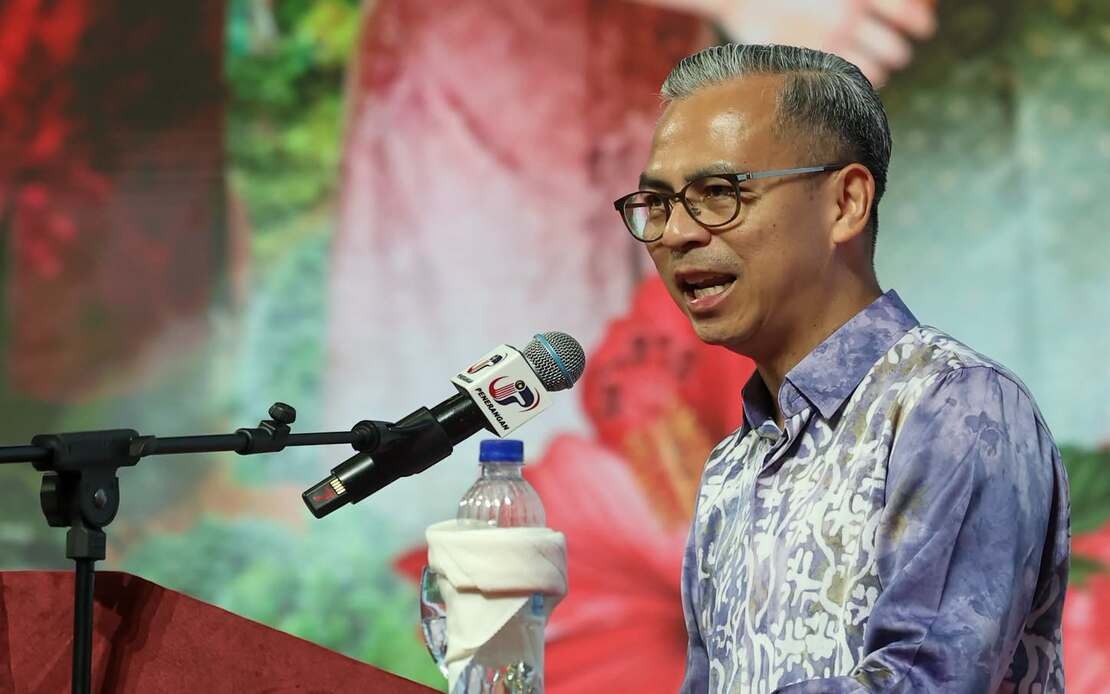
The Communications Ministry has thrown its weight behind a new patriotic composition that will serve as the official soundtrack for Malaysia's joint National Day and Malaysia Day commemorations in 2026. Datuk Seri Fahmi Fadzil, the minister overseeing the portfolio, publicly commended accomplished musician Faizal Tahir for delivering a song that resonates with themes of cohesion, collective purpose and national pride at a time when such messaging carries particular significance.
Faizal Tahir premiered the composition, titled 'Aku Berjanji', during the official kickoff of the 2026 National Month campaign and the Fly the Jalur Gemilang initiative in Ipoh. The event marked a formal launch of the ministerial push to build momentum for the upcoming commemorations, with Fahmi describing the moment as a pivotal point in drumming up enthusiasm across the country. By introducing the theme song during this flagship launch, organisers sought to establish a unifying cultural touchstone for the celebrations throughout the year-long build-up.
In his remarks circulated through social media platforms, Fahmi emphasised that Faizal's composition encapsulates precisely the sentiments that national leadership wishes to project during the 2026 HKHM cycle. The minister specifically highlighted how the song distils concepts of unity, solidarity, and patriotic devotion into a single artistic work—qualities deemed essential as Malaysia navigates contemporary social and political dynamics. By enlisting a respected and commercially successful musician for this role, policymakers appear intent on ensuring the theme resonates across demographic and generational lines rather than remaining confined to official spheres.
The unveiling of the campaign and theme song was spearheaded by Prime Minister Datuk Seri Anwar Ibrahim, signalling high-level political backing for the 2026 commemorative efforts. Fahmi noted that this prime ministerial involvement has already generated palpable energy and anticipation throughout Malaysian society, setting a collaborative tone for the months ahead. The staged rollout—beginning with a provincial launch in Ipoh before expanding nationally—reflects a deliberate strategy to cultivate grassroots enthusiasm alongside official support.
Beyond celebrating the artistic contribution, Fahmi issued a broader call to action directed at the Malaysian public. He encouraged citizens nationwide to display the Jalur Gemilang, the national flag, with visible pride during the coming year. However, his statement also carried an implicit reminder about the responsibilities accompanying patriotic expression: flags should be maintained in pristine condition and installed according to proper protocols. This emphasis on dignity and respect for national symbols reflects longstanding cultural sensitivities around how the flag is treated and presented in public spaces.
A particularly noteworthy dimension of Fahmi's message concerned the intersection of technology and patriotic representation. The minister specifically cautioned social media users against deploying artificial intelligence tools to generate imagery of the Jalur Gemilang without careful oversight. Such AI-generated content can inadvertently produce inaccurate depictions—incorrect colour schemes, proportions, or design elements—that, while perhaps unintentional, risk compromising the symbolic integrity of the national emblem. This guidance reflects growing official concern about how digital technologies can either enhance or undermine the coherence of national messaging in the social media age.
The deployment of a celebrity musician as the face of a national campaign illustrates evolving approaches to patriotic messaging in Malaysia. Rather than relying exclusively on government-produced content or formal institutional channels, policymakers increasingly recognise the power of established cultural figures to amplify messages of national significance. Faizal Tahir's track record as a successful composer and performer gives the 'Aku Berjanji' project credibility and reach that a purely bureaucratic initiative might lack. His artistic standing transforms what could have been a routine government announcement into a cultural event worthy of media attention and public interest.
The 2026 HKHM celebrations carry particular weight given that they commemorate both National Day on August 31 and Malaysia Day on September 16, observances that bookend a period traditionally dedicated to national reflection. The decision to unify promotional efforts around these dates, rather than treating them as separate occasions, represents a deliberate attempt to strengthen national cohesion messaging. By anchoring the campaign to a single theme song performed by a respected artist, organisers hope to create a memorable and emotionally resonant experience that transcends typical flag-waving exercises.
For Malaysian audiences accustomed to witnessing patriotic campaigns launched annually, the involvement of personalities from the entertainment sphere signals an effort to make 2026 feel distinct and significant. The combination of political endorsement from the prime minister's office, ministerial coordination, and cultural credibility from Faizal Tahir's involvement creates a multi-layered push that reaches different segments of society through different entry points. Some citizens will engage through traditional media coverage of the government launch, others through social media discussions about the song itself, and still others through exposure to the composition via radio, streaming platforms, or live performances throughout the year.
The implicit message beneath Fahmi's public statements also speaks to concerns about national unity at a moment when Malaysia's diverse society faces various pressures—economic, social, and political. By framing the 2026 HKHM celebrations around concepts of togetherness and collective commitment, government messaging attempts to position patriotic observance as an antidote to divisive tendencies. Whether through artistic expression via 'Aku Berjanji' or through the concrete act of displaying the national flag with care and pride, the campaign encourages Malaysians to translate abstract notions of unity into visible, tangible gestures.

