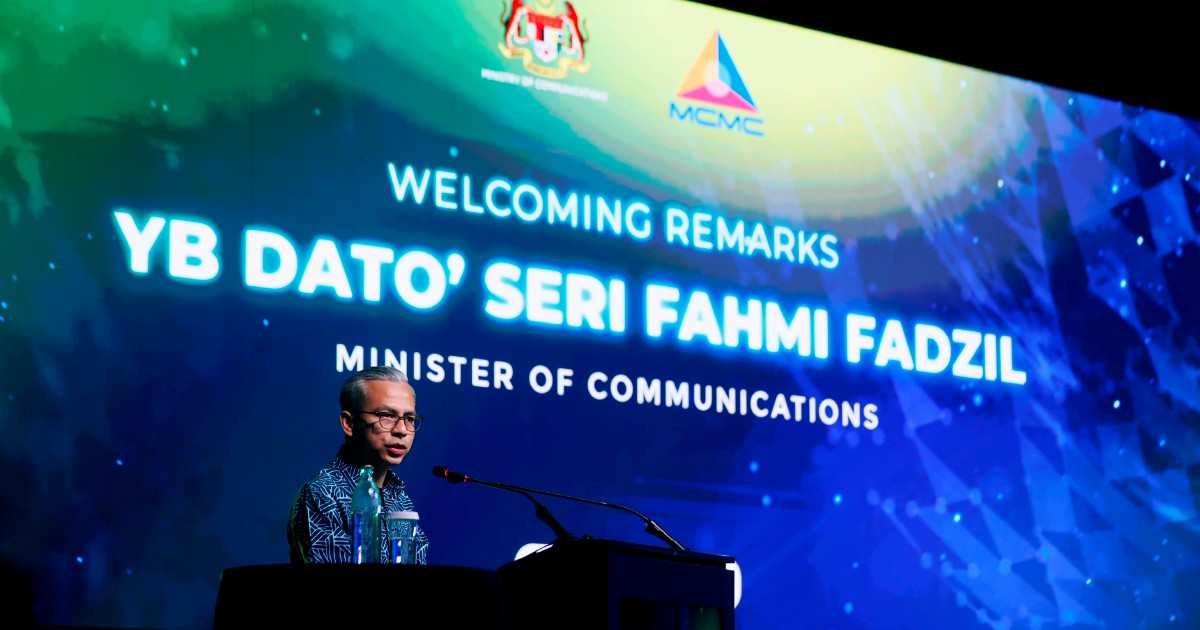
Communications Minister Datuk Seri Fahmi Fadzil has moved to quell persistent speculation about internal divisions within the Cabinet, characterising recent public differences as routine discourse among a functioning government rather than evidence of serious fracture. Speaking in Kuala Pilah, Fahmi stressed that the administration continues to operate as a unified entity despite disagreements that surfaced publicly during the Negri Sembilan election campaign, suggesting that such exchanges should not be misconstrued as symptomatic of deeper institutional dysfunction.
The reassurance comes at a moment when Malaysian governance has faced closer scrutiny regarding Cabinet cohesion, particularly as tensions emerged around how ministers should conduct themselves while campaigning for electoral advantage. Maintaining ministerial discipline during election periods represents a recurrent challenge for coalition governments, where the impulse to campaign aggressively can conflict with expectations of impartiality or established protocols governing official behaviour. Such tensions are not uncommon in democracies managing both electoral ambitions and institutional standards, yet they invariably attract speculation about whether disagreements signal broader governance instability.
Fahmi's reference to a convivial lunch engagement appeared designed to communicate informality and camaraderie among Cabinet members, implying that contentious issues have been satisfactorily resolved through private dialogue rather than escalating into structural crisis. This approach of emphasising personal relationships and informal resolution mechanisms reflects a communication strategy that seeks to deprioritise disagreements while reinforcing narratives of collective purpose. In the Malaysian context, where coalition management has historically involved competing interests requiring careful diplomatic balancing, such signals of unified messaging carry particular weight in maintaining investor and public confidence.
The Negri Sembilan campaign period had prompted observable friction regarding how extensively ministers should mobilise government resources and institutional platforms for partisan advantage. These dynamics reflect broader tensions inherent in systems where Cabinet members occupy dual roles as both government administrators and political functionaries, each with distinct accountability standards. Different ministers appear to have interpreted their responsibilities during the campaign period through varying lenses, with some emphasising stricter separation between official duties and partisan activity, while others adopted more integrated approaches.
For Malaysian observers and regional stakeholders, Cabinet stability remains a significant indicator of governance effectiveness and policy continuity. A Cabinet perceived as genuinely unified presents stronger capacity for executing legislative agendas and weathering external shocks, whereas one beset by visible divisions risks policy inconsistency and reduced institutional authority. Fahmi's intervention seeks to provide assurance on the first dimension while implicitly acknowledging that the second had been temporarily tested.
The Communications Ministry's particular interest in framing this narrative reflects the portfolio's responsibility for managing government messaging and public perception. Fahmi's statements effectively constitute a communication intervention designed to shape public interpretation of events that observers might otherwise characterise as divisive. This proactive approach—addressing speculation before it crystallises into established narrative—represents standard practice in government communications management, though its necessity itself can paradoxically highlight the underlying concern triggering the reassurance.
Within the broader Malaysian political landscape, where coalition governments require careful maintenance of multiple stakeholder relationships, demonstrations of unity serve important domestic and international functions. Regional investors and trading partners monitor governance stability closely, as perceived internal division can influence confidence in policy implementation capacity and regulatory consistency. By publicly dismissing rift narratives, Fahmi effectively addresses concerns that might influence economic behaviour and international relations, not merely domestic political calculations.
The specific focus on ministerial discipline during election campaigns reflects evolving expectations regarding standards of official conduct in Malaysian politics. As democratic institutions mature and civil society demands heightened accountability, the gap between permissible partisan activity and improper instrumentalisation of state resources has narrowed, with greater clarity expected regarding where appropriate boundaries lie. This dynamic creates genuine challenges for office-holders balancing legitimate political participation with fiduciary responsibilities, explaining why disagreements over campaign conduct prove recurrent rather than exceptional.
Looking forward, the Cabinet's capacity to manage such differences through internal mechanisms without allowing them to fester into visible ruptures will likely influence both institutional effectiveness and public trust in governance. Fahmi's framing suggests confidence that private dialogue has adequately resolved substantive disagreements, though the necessity of public reassurance indicates the issues carried sufficient weight to warrant attention. For Malaysian readers following government stability, whether this represents successful management of routine coalition friction or temporary containment of deeper tensions will likely become clearer through subsequent policy implementation and ministerial interactions.

