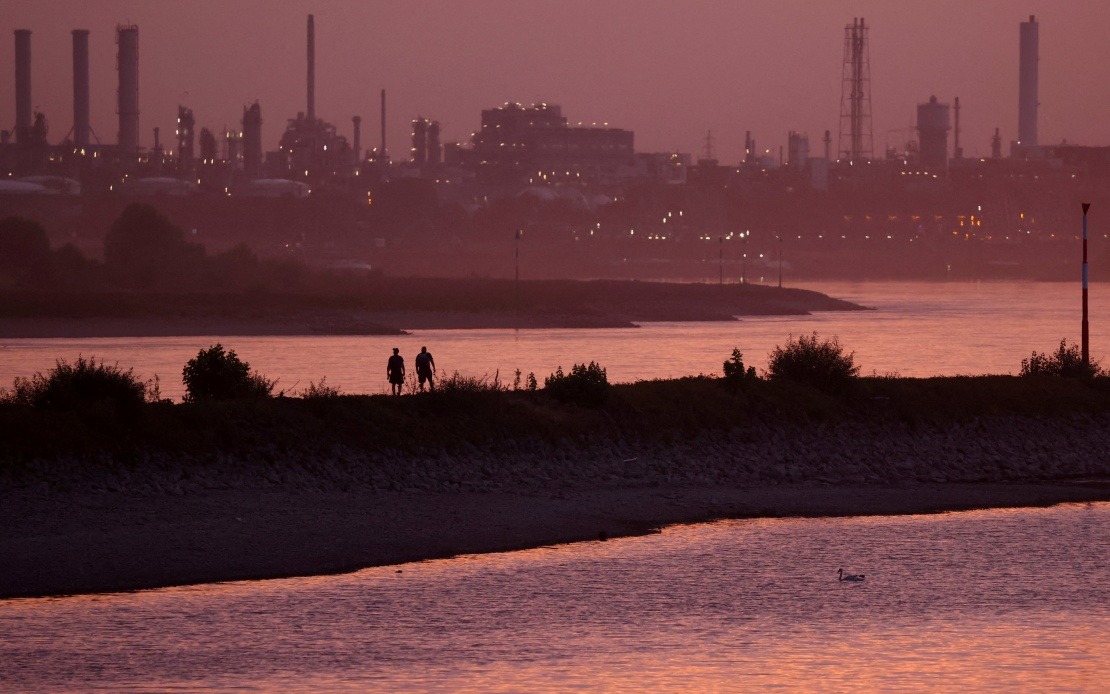
A half-tonne World War II aerial bomb has surfaced in the Rhine River near Cologne as Germany grapples with an extraordinary drought that has pushed water levels to historically low marks. German explosives specialists were mobilised on Thursday to neutralise the 500-kilogramme United States device, which emerged from the riverbed on Wednesday evening in the vicinity of Cologne's Rheinpark following weeks of intense heat and minimal rainfall. The discovery underscores how climate extremes are reshaping Europe's geography, literally pulling forgotten instruments of warfare back into public view after nearly eight decades of concealment.
The evacuation zone established by city authorities encompassed a 400-metre perimeter centred on the bomb's location, affecting approximately 360 residents and workers. Among those required to leave their premises were occupants of a retirement home and personnel at the nearby RTL television studios, a major broadcasting facility that normally operates uninterrupted. Local authorities have yet to confirm the precise timing for the defusing procedure, though the operation was expected to commence imminently once final safety protocols were completed.
The Rhine's water crisis has reached critical proportions across western Germany. On Thursday, the gauge at Cologne dropped to 67 centimetres, matching a historic minimum that had only been recorded days earlier, with forecasters predicting an additional decline to 66 centimetres within hours. This represents a genuine water emergency for one of Europe's most strategically important commercial arteries. The situation reflects broader climatic stress affecting the continent, where exceptional temperatures and persistent drought have converged to create conditions rarely witnessed in modern times.
The ramifications extend far beyond the singular threat posed by the discovered munition. Shipping along Germany's most heavily trafficked inland waterway has suffered substantial disruption, with operators forced to drastically reduce cargo loads to navigate shallower channels. Vessels that normally transport goods deep into the industrial heartland are now operating at severely constrained capacity, creating bottlenecks in supply chains that depend on this vital transport corridor. For Southeast Asian importers and exporters who rely on European distribution networks, the cascading effects of the Rhine's dysfunction translate into delayed deliveries and increased logistics costs.
Historians and archaeologists have long recognised that Europe's rivers conceal vast quantities of World War II ordnance. The Rhine, serving as a transportation artery through contested territory, bore witness to extensive bombing campaigns, and countless unexploded devices settled into the riverbed after impacts with bridges, riverfront installations, and adjacent urban areas. With water levels normally maintaining sufficient depth to keep these hazards submerged and relatively immobile, the current crisis has stripped away this protective barrier, rendering dozens of potential bomb sites accessible to discovery. Each emergence presents a genuine public safety challenge requiring prompt professional intervention.
The broader context of the Cologne discovery reflects how climate volatility intersects with historical legacies in ways that contemporary Europe is still learning to manage. Germany maintains specialised military engineering units trained specifically to handle ordnance from multiple conflict periods, yet the scale of potential exposures as water levels continue declining remains uncertain. Authorities along the entire Rhine corridor are likely assessing whether comparable threats might emerge elsewhere along the waterway's 1,200-kilometre length.
For Malaysian observers, the incident illustrates vulnerability patterns that extend beyond Europe's specific circumstances. Southeast Asia similarly hosts extensive World War II archaeological remains, with numerous wrecks, ammunition caches, and ordnance scattered across maritime territories and riverine zones. Should climate change precipitate unusual water level fluctuations in regional waterways, comparable discoveries could emerge. The technological and procedural frameworks Germany has developed for managing such crises may hold instructive value for Malaysian civil protection and environmental authorities seeking to anticipate emerging risks from changing hydrological patterns.
The drought's persistence poses continued challenges that officials acknowledge will not resolve through incremental improvement. Meteorological forecasts offered limited optimism, with predictions suggesting only marginal water level recovery in the immediate term and no indication of the sustained regeneration required to restore normal navigation conditions. Extended low-water periods historically create cascading economic consequences that ripple through multiple economic sectors dependent on the Rhine's transport function.
German authorities, drawing on decades of post-war experience with ordnance removal, possess institutional competence to resolve the immediate threat safely. However, the Cologne discovery signals that climate disruption is transitioning historical problems from theoretical concern to operational reality. As global temperatures continue rising and extreme weather events intensify, societies across multiple continents will increasingly confront the uncomfortable intersection of environmental change and unresolved historical burdens. The race to defuse this particular bomb against the backdrop of record-low waters captures that collision vividly.

