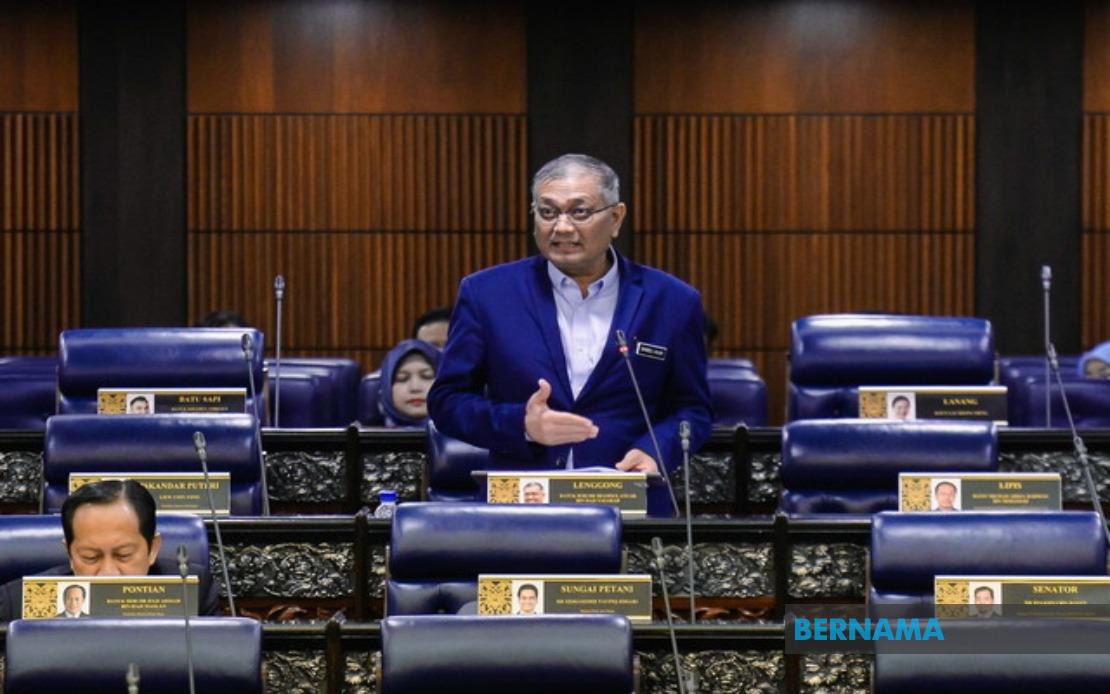
The Home Ministry has moved to address growing scrutiny surrounding disciplinary practices within the Royal Malaysia Police by asserting that mandatory extra drills and field duties represent legitimate mechanisms for enforcing discipline rather than punitive measures designed to inflict harm. Deputy Minister Datuk Seri Dr Shamsul Anuar Nasarah made the clarification during parliamentary proceedings, responding to questions about the procedures governing such assignments in the wake of heightened public concern over police welfare and duty-of-care standards.
The controversy intensified following the death of a policeman in Sepang in May, which prompted lawmakers to scrutinise the standard operating procedures governing the imposition of additional duties. Roy Angau Gingkoi, the member for Lubok Antu, raised questions about whether the ministry intended to standardise disciplinary measures across all ranks, reflecting broader concerns that such duties might be applied inconsistently or with undue severity depending on an officer's position within the hierarchy.
According to Shamsul Anuar, extra drills are authorised under Paragraph 32 of the Inspector-General of Police's Standing Orders, a regulatory framework specifically designed for addressing minor breaches of conduct among junior officers. The measure functions as an alternative to formal disciplinary proceedings, thereby allowing the force to correct behavioural issues through structured field assignments rather than resorting to more severe administrative action. The ministry's position emphasises that such duties serve the dual purpose of instilling professional standards and facilitating character development among personnel.
In response to the Sepang incident and concerns about the application of these drills, the PDRM Integrity and Standards Compliance Department (JIPS) introduced a new administrative directive on 29 June that mandates health assessment procedures before and during field duties. This represents a measurable strengthening of safeguards intended to protect officers' physical wellbeing and prevent circumstances that could contribute to harm. The enhanced protocol reflects the ministry's acknowledgment that while extra drills remain a valid disciplinary tool, their implementation must incorporate robust oversight mechanisms.
Existing regulations establish clear operational boundaries for the execution of field duties, specifying that such assignments cannot extend beyond four hours daily and must not continue for more than five consecutive days. These temporal constraints are designed to ensure that officers experience sufficient recovery time and that the cumulative burden of additional duties does not exceed reasonable limits. Supervising officers bear responsibility for conducting these duties in a controlled environment, with explicit consideration given to each officer's health status, the prevailing environmental conditions, and any other factors that might compromise their safety during execution.
The ministry rejected assertions that extra drills function as a tool of favouritism benefiting senior-ranking officers, arguing instead that the disciplinary framework operates on a differentiated basis according to service classification. Paragraph 32 specifically addresses junior officers as a category, while senior police personnel fall under separate disciplinary provisions tailored to their respective service grades. This distinction, the ministry contends, reflects appropriate regulatory adaptation rather than evidence of inconsistent application.
Questions about potential bullying or ragging within the disciplinary system prompted the ministry to emphasise that every enforcement action follows established procedural requirements and cannot be arbitrarily imposed by individual commanding officers. The ministry stressed that safeguards exist to prevent supervisors from wielding disciplinary authority without appropriate oversight and formal authorisation. This procedural rigour is intended to prevent the deterioration of disciplinary measures into abusive practices that might inflict psychological or physical harm.
The clarification addresses persistent tensions between police operational requirements and officer welfare considerations. Southeast Asian policing models frequently grapple with balancing the need for internal discipline with contemporary standards of workplace safety and protection against mistreatment. Malaysia's approach through extra drills reflects an attempt to maintain rigorous internal standards without resorting to formal sanctions that create permanent disciplinary records, yet the Sepang incident has exposed vulnerabilities in the execution framework.
For Malaysian readers and the broader regional context, the Home Ministry's position reflects evolving attitudes toward police accountability and officer protection. The introduction of health assessment protocols demonstrates responsiveness to public concern while maintaining disciplinary mechanisms considered essential for police operations. However, the effectiveness of these safeguards ultimately depends on consistent, conscientious application by supervising officers across the force's various divisions and regional deployments, a challenge that administrative directives alone may struggle to guarantee uniformly.

