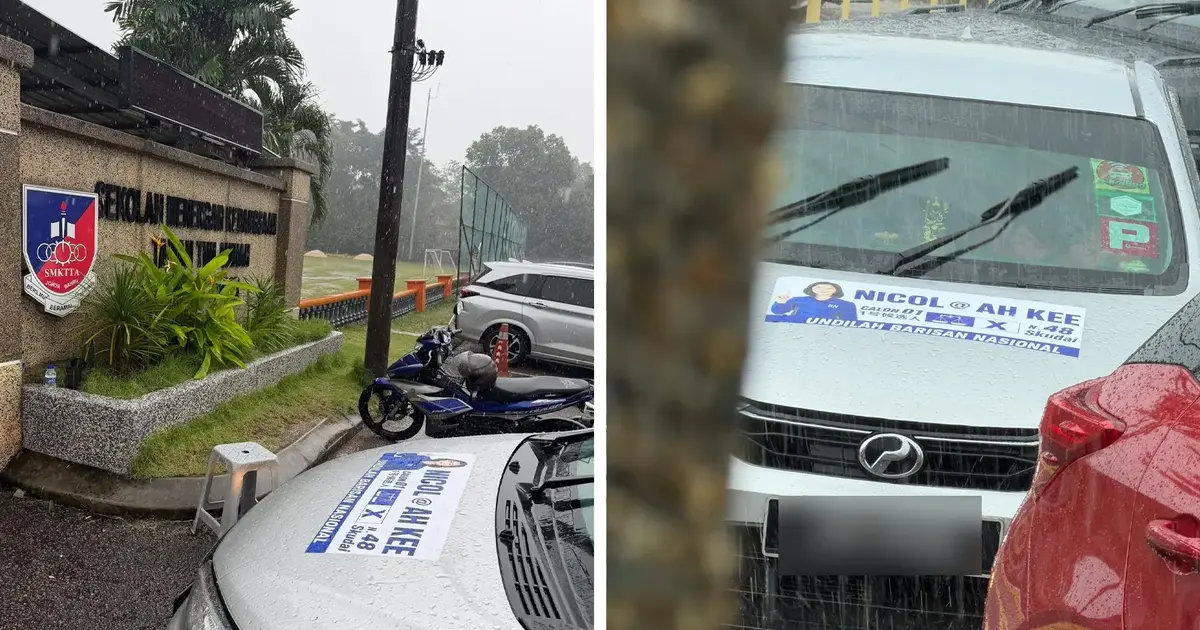
Kasthuri Patto, a former Democratic Action Party MP, has called for investigations into what she characterizes as electoral misconduct by Nicole Tan, the Barisan Nasional candidate contesting the Skudai seat. The allegation centers on a vehicle reportedly linked to Tan's campaign that was positioned outside a polling station while displaying election-related stickers, a practice that Malaysia's election laws strictly prohibit.
The incident underscores the heightened scrutiny surrounding campaign conduct during Malaysian elections, where regulatory frameworks exist to ensure fair competition and prevent intimidation or undue influence at voting venues. Election Commission regulations establish clear boundaries regarding campaign activity in the immediate vicinity of polling stations, with the intent of protecting the integrity of the voting process and ensuring voters feel free from pressure while casting ballots.
Skudai, located in Johor, represents one of Malaysia's politically significant constituencies. The seat has witnessed competitive contests in recent election cycles, reflecting the state's evolving political dynamics as both Barisan Nasional and opposition coalitions vie for voter support. Johor's political trajectory over the past decade has seen considerable flux, with the state serving as a crucial battleground that influences broader national electoral outcomes.
Kasthuri Patto's intervention brings a prominent opposition voice into the conversation surrounding Skudai's campaign conduct. As a former MP and established political figure, her allegations carry weight in public discourse and may prompt further scrutiny from election observers and regulatory bodies. The complaint mechanism itself reflects Malaysia's institutional framework for addressing electoral grievances, though the effectiveness and timeliness of such processes remain subjects of ongoing political debate.
The alleged violation represents what Malaysian electoral authorities classify as a breach of campaign protocols. Malaysian election law designates polling stations and their immediate surroundings as politically neutral zones where partisan campaigning must cease. This restriction applies to all candidates regardless of party affiliation and exists to prevent voter interference and maintain the sanctity of the voting environment. Vehicles bearing campaign signage constitute active campaigning under electoral law, making their presence near voting venues a potential breach.
Nicole Tan's candidacy itself reflects Barisan Nasional's slate-building strategy in the state, where the coalition seeks to maintain its traditional stronghold while facing renewed opposition pressure. The allegation, whether substantiated or disputed, contributes to the broader narrative surrounding the conduct of Skudai's electoral contest and may influence voter perceptions of campaign fairness.
For Malaysian election observers and stakeholders, such allegations highlight the ongoing challenges in enforcing electoral regulations consistently. While the Election Commission possesses authority to investigate breaches and recommend sanctions, questions persist about whether enforcement mechanisms operate uniformly across different parties and candidates. These concerns resonate particularly among opposition supporters who periodically raise fairness issues regarding campaign conduct.
The complaint also occurs within Malaysia's broader political context, where election-related controversies frequently generate intense partisan debate. Opposition figures regularly scrutinize Barisan Nasional campaigns for potential regulatory violations, while government-aligned parties occasionally face similar accusations from opposition quarters. This mutual monitoring reflects the polarized nature of contemporary Malaysian politics and the significant stakes involved in electoral outcomes.
From a regulatory perspective, the allegation prompts questions about Election Commission procedures for addressing on-the-ground violations. The commission's capacity to investigate complaints, obtain evidence, and enforce penalties during active election campaigns involves logistical and procedural complexities that sometimes slow response times. Swift resolution of electoral misconduct allegations remains a perennial challenge for Malaysian electoral administration.
The Skudai contest also demonstrates how campaign regulations intersect with practical implementation challenges. Polling stations serve numerous voters across extended hours, creating fluid environments where enforcement becomes technically difficult. Distinguishing between vehicles legitimately parked near polling stations and those intentionally positioned for campaign purposes requires judgment calls that may be subjectively interpreted by different observers.
For Johor voters and the broader Malaysian electorate, allegations of electoral impropriety, regardless of which party faces them, raise concerns about fairness and equal opportunity in the political marketplace. Public confidence in election integrity depends partly on the perception that all candidates operate under equivalent constraints and that violations receive consistent scrutiny.
The incident also reflects how technology and mobile campaign infrastructure create novel regulatory challenges. Modern political campaigns rely extensively on vehicles for transportation, signage deployment, and voter outreach, sometimes blurring lines between legitimate campaigning and regulatory violations. Existing electoral frameworks, formulated during different campaign eras, sometimes struggle to address contemporary campaign methods clearly.
Moving forward, the allegation against Tan will likely proceed through established complaint mechanisms, with the Election Commission determining whether sufficient evidence exists to substantiate the breach. Regardless of outcome, the case contributes to ongoing discussions within Malaysia's political sphere regarding campaign discipline, regulatory enforcement, and the conditions necessary for fair electoral competition in Skudai and beyond.

