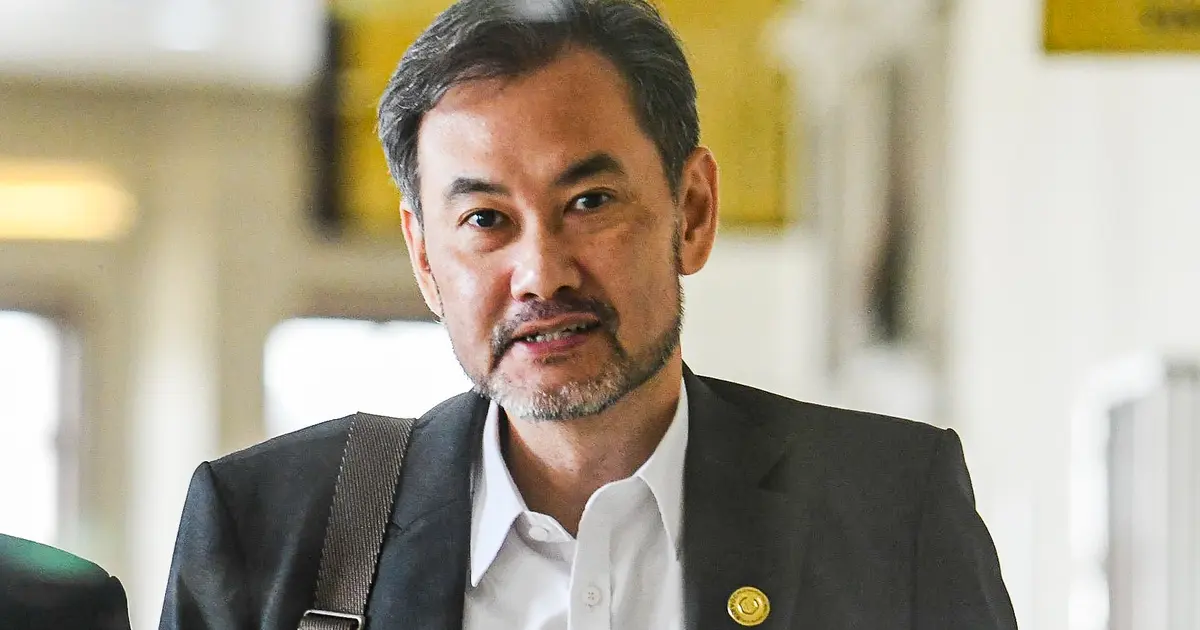
Former 1MDB CEO Shahrol Azral Ibrahim Halmi has firmly pushed back against assertions that he granted fugitive businessman Jho Low status or influence comparable to that of Malaysia's sitting prime minister, restating instead that informal communication channels through Low were simply practical given his proximity to then-Premier Najib Razak.
The clarification arrives amid continued scrutiny of Low's outsized role within the now-defunct state investment vehicle, particularly regarding how decisions were made at the highest levels of government. Shahrol's comments suggest that while Low did serve as an intermediary, this reflected convenience and access rather than any formal elevation of his position within state structures. The distinction matters considerably for understanding the mechanics of the 1MDB scandal, which has become a defining episode in Malaysian politics and corporate governance.
During his tenure at 1MDB, Shahrol operated within a complex web of political and business relationships. His acknowledgement that communication with Najib occurred through informal pathways, sometimes via Low, illuminates how decision-making processes became blurred between official government channels and private intermediaries. This arrangement, while not uncommon in Malaysian corporate culture, proved consequential when billions of dollars ultimately went missing from the fund, raising questions about oversight and accountability.
Jho Low, the now-fugitive businessman whose real name is Low Taek Jho, became one of Malaysia's most infamous figures following revelations that he orchestrated massive fraud within 1MDB. Operating from overseas, Low maintained remarkable influence over Malaysian state institutions despite holding no official position. His ability to shape decisions at the sovereign wealth fund—supposedly managed by professional executives answerable to government—became central to understanding how the scheme functioned at scale.
Shahrol's current position reflects a careful effort to distinguish between practical communication arrangements and actual decision-making authority. By characterizing Low as a channel rather than a decision-maker, he attempts to reframe the dynamic as one of convenience rather than impropriety. However, this distinction becomes murkier when examining actual transactions and investment decisions that proceeded according to Low's preferences rather than conventional financial analysis.
The former CEO's remarks carry significance for Malaysian observers tracking ongoing legal proceedings related to 1MDB. Multiple court cases, both domestically and internationally, continue examining how Low managed to influence Malaysia's most prominent financial institution. Understanding communication patterns and decision-making structures remains crucial for prosecutors seeking to establish the full scope of coordination between government officials, corporate executives, and the businessman at the scandal's centre.
For Southeast Asia more broadly, the 1MDB affair stands as a cautionary tale about governance vulnerabilities in emerging markets. The ease with which an individual without formal authority could redirect state resources highlights systemic weaknesses in institutional checks and accountability mechanisms. When private intermediaries gain unchecked access to government decision-makers, the potential for abuse multiplies exponentially, particularly in contexts where formal oversight mechanisms remain underdeveloped or politically constrained.
Shahrol's statements also underscore the complex motivations of individuals implicated in the scandal. Rather than portraying himself as a willing conspirator, he emphasizes the practical constraints and informal norms that governed his interactions. This framing—common among defendants in high-profile financial crimes—attempts to shift focus from personal culpability to systemic dysfunction. Whether such arguments persuade courts remains an open question as trials continue.
The 1MDB scandal fundamentally altered Malaysian politics and governance discourse. It contributed to Najib Razak's electoral defeat in 2018 and prompted extensive anti-corruption campaigns under the subsequent Mahathir government. Yet the complexity of unravelling exactly how decisions were made, and who bore responsibility for specific fraudulent transactions, continues to challenge Malaysia's legal system years after the initial revelations surfaced.
Shahrol's clarifications reflect a broader reckoning within Malaysia's corporate and political elite about institutional safeguards. The scandal exposed how informal networks could supersede formal governance structures, enabling unprecedented financial crimes. As Malaysia moves forward, strengthening institutional independence, enhancing transparency requirements, and limiting informal decision-making channels have become priorities for policymakers concerned about preventing similar abuses.
The ongoing legal processes involving 1MDB-related figures will likely continue generating revelations about how the fraud operated in practice. Shahrol's testimony and statements contribute pieces to an increasingly complex puzzle. His distinction between Low's role as communicator versus decision-maker may prove legally significant, though the ultimate impact on reform efforts depends on how comprehensively Malaysia addresses the underlying governance weaknesses the scandal exposed.

