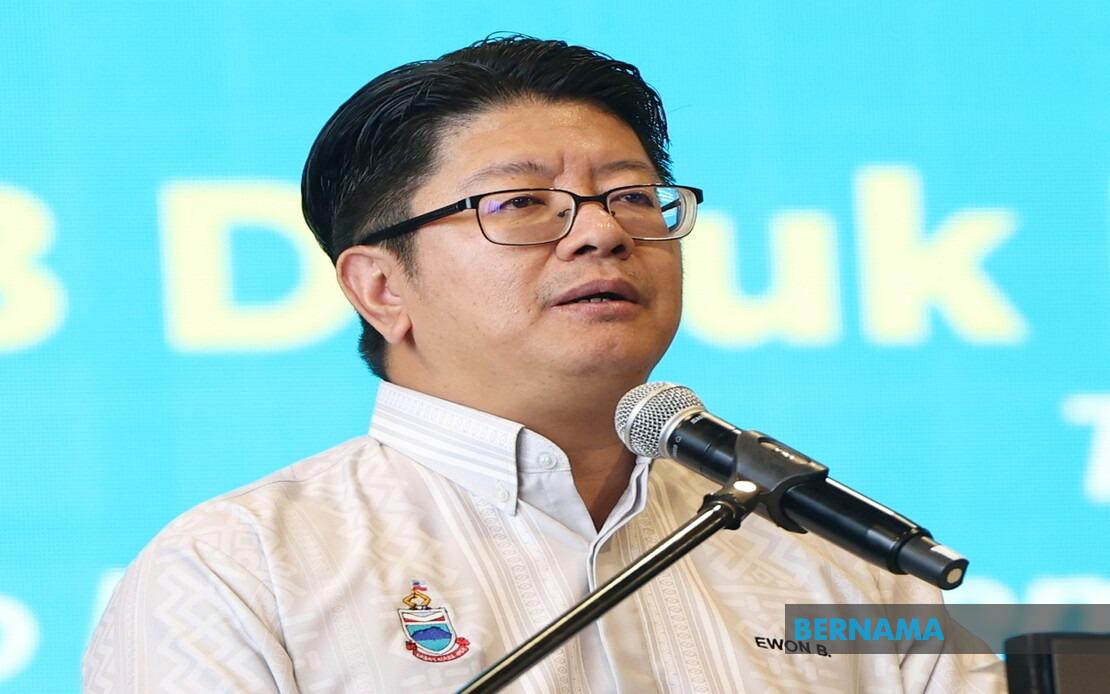
Datuk Ewon Benedick and Datuk Donald Peter Mojuntin have secured another term steering the United Progressive Kinabalu Organisation (UPKO) after emerging unchallenged as president and deputy president respectively during the party's 17th triennial delegates conference in Penampang on August 10. Their continuation at the helm, alongside five vice-presidents who faced no opposition, signals a period of organisational stability for the Sabah-based political party as it navigates the 2026-2029 term within the coalition framework.
The leadership lineup sustained by the party establishment includes vice-presidents Jairaiaz Joseph, Datuk Wong Thien Fook, Datuk Pangiran Lalung, Datuk Basari Sarikun, and Datuk Dr Laurentius Nayan Ambu, all of whom went uncontested during the election process. This absence of challenge at the top tier reflects a degree of consensus building within UPKO's organisational structure, though such unopposed transitions can also indicate limited intra-party competition for high-level positions. The concentration of continuous leadership raises questions about leadership succession planning and the development of emerging figures within the party.
In his closing remarks to delegates, Ewon articulated a vision of party cohesion and democratic respect despite the unopposed nature of the ballot. He emphasised that the electoral process should strengthen rather than fracture party unity, framing all members as components of a larger family structure. This messaging appears calculated to preempt perceptions that unopposed leadership might suggest democratic deficiency, instead positioning organisational consensus as a manifestation of party maturity and disciplined governance.
A critical dimension of UPKO's positioning lies in its role within the broader Gabungan Rakyat Sabah (GRS) coalition. Ewon underscored that the reelected leadership carries responsibility for channelling party resolutions to government structures, particularly to GRS chairman and Sabah Chief Minister Datuk Seri Hajiji Noor. This linkage between party leadership and government executive indicates UPKO's integration into Sabah's political establishment, though it also highlights potential constraints on the party's ability to operate independently from coalition partners.
The newly constituted leadership hierarchy faces immediate obligations at parliamentary and state assembly levels. Elected representatives bearing UPKO credentials are expected to articulate party positions and resolutions through legislative debates and formal statements. This expectation creates an interface between party ideology and governance outcomes, suggesting that UPKO sees itself as an active participant in Sabah's policy-making apparatus rather than a peripheral coalition member. However, the effectiveness of this representation depends on UPKO's negotiating leverage within a coalition where GRS holds dominant numerical strength.
Significant personnel changes occurred across UPKO's youth and generational wings, indicating that while senior leadership remained stable, the party channelled renewal efforts toward younger ranks. Carlye Lajimin assumed the UPKO Youth chief position with Newbaxter Tibin as deputy, refreshing a wing typically responsible for ground-level mobilisation and electoral foot-soldier recruitment. This strategic allocation of new faces to youth structures suggests party leadership recognises the importance of generational engagement despite maintaining continuity at the apex.
The women's division similarly experienced organisational turnover. Mohina Sidom retained her position as UPKO Women chief, signalling institutional recognition of her leadership, while Lomiti Jahan's election as deputy chief introduced new blood to a division representing a substantial segment of the party's membership base. Women's wings in Malaysian political parties increasingly shape electoral narratives around social policy and community welfare, making divisional leadership appointments consequential for party positioning.
The Young Generation leadership saw Emmanuel Atin elevated to the chief position with Alison Chan as deputy, establishing a distinct generational tier below the youth wing structure. This multilayered approach to age-based organisation permits UPKO to address different demographic constituencies with tailored messaging and recruitment strategies. The specificity of generational categorisation reflects modern party management techniques, distinguishing between youth activists and young professionals or emerging leaders.
For Malaysian observers, UPKO's leadership continuity carries implications beyond Sabah's borders. As a component of GRS and the broader federal coalition landscape, UPKO's internal stability or instability reverberates through coalition coherence calculations in federal politics. The unopposed reelection of Ewon and his team suggests at least surface-level alignment with membership expectations, though underlying dynamics of dissent or alternative leadership ambitions remain opaque in the absence of contested elections.
The party's triennial convention structure, consistent with many Malaysian political organisations, provides regular opportunities for leadership assessment and renewal. UPKO's choice to employ unopposed succession at the top tier, while introducing new faces in functional wings, represents a particular organisational philosophy emphasising proven senior leadership paired with refreshed operational capacity. Whether this model sustains organisational effectiveness over the 2026-2029 term will depend on the party's ability to translate stated resolutions into tangible governance outcomes within coalition constraints.
Looking forward, UPKO faces the challenge of maintaining internal cohesion while asserting distinct party identity within GRS. The leadership's rhetorical emphasis on strengthening rather than weakening the party through elections hints at concerns about fragmentation, suggesting that unopposed candidacies may reflect efforts to suppress rather than eliminate internal differences. The real test of this leadership team will be whether it can advance UPKO's interests within coalition politics while preserving member engagement and preventing dormancy.

