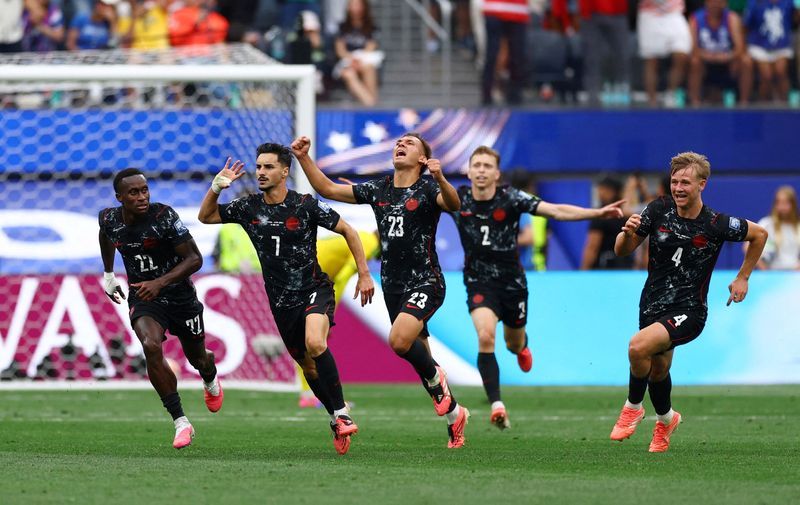
Canada has achieved a historic milestone in its football history, reaching the World Cup knockout quarter-finals for the first time after a dramatic 1-0 victory against South Africa at Los Angeles Stadium on Sunday. The decisive moment came in the 92nd minute when Stephen Eustaquio, receiving possession on the edge of South Africa's penalty area, unleashed a powerful strike that found its way past diving goalkeeper Ronwen Williams. The goal capped a tense encounter that saw Canada's supporters dominate the stands in a sea of red, their patience finally rewarded as the sun emerged through California's clouds in the closing stages.
Eustaquio's contribution marked the culmination of sustained Canadian pressure throughout the match, though opportunities had been limited in a cautious first half where both teams, making their competitive debuts in knockout football, showed considerable tactical restraint. The Canadian attacker reflected on his match-winning moment with evident emotion, describing the sensation of the entire team channelling their collective desire through his strike. "When I shot it, I felt everybody shot it with me. Everybody put a little bit of power on it, and it went to the back of the net, so I'm very happy," he explained to reporters after the final whistle.
Canada's path to this historic victory was fraught with frustration, particularly during the second half when South Africa adopted an increasingly defensive posture, seemingly content to force the contest into extra time and a potential penalty shootout. The South Africans' cautious approach meant that clear-cut opportunities remained few and far between for either side, with the match developing into a tense, low-scoring affair that tested the resolve of both teams. However, Canada's attacking intent remained evident, and their perseverance ultimately proved decisive when Eustaquio struck in stoppage time, leaving South Africa little time to mount any serious counter-response despite desperate attempts to find an equaliser before the final whistle.
Canada's coach Jesse Marsch acknowledged that his squad had created sufficient chances throughout the 90 minutes but lacked the clinical finishing to convert earlier opportunities into goals. His assessment of the team's performance balanced pragmatism with recognition of their achievement, noting that the decisive factor came when the opportunity finally presented itself to Eustaquio. "The hard work from these guys, the character — they're Canadian heroes. That's what I told them at the end. They are now Canadian heroes. I'm so happy for them," Marsch remarked, his tone reflecting the significance of the result for Canadian football.
The opening period presented limited goalmouth action, with Canada's most promising moment arriving just before halftime when a set piece created chaos in South Africa's box. Moise Bombito directed a header toward goal, only for Aubrey Modiba to clear the danger off the line, before Tajon Buchanan's subsequent effort proved too tame, striking goalkeeper Williams directly in the chest. Shortly afterward, Richie Laryea fell under challenge in the penalty area, prompting vociferous Canadian appeals for a penalty that was dismissed by the officials. A VAR review upheld the on-field decision, prompting furious protests from Canada's supporters and drawing reproach from coach Marsch as the teams departed for halftime.
The second half unfolded in a similarly competitive manner, with South Africa demonstrating little urgency to press their opponents despite holding equality on the pitch. Canada generated another opportunity when Jonathan David's close-range header, following a rebound from Tani Oluwaseyi's saved shot, was heroically blocked by Mbekezeli Mbokazi's defensive intervention. These missed chances accumulated throughout the match, building pressure and tension that eventually found release through Eustaquio's clinical finish deep into stoppage time. The emotional weight of that goal represented not merely victory in a single match but vindication of Canada's approach, resource allocation, and development pathway in international football.
Canada's advancement carries particular resonance as a tournament co-host, though notably the team was required to play their final group-stage match and this knockout encounter outside Canadian territory. The squad arrived in California having endured a disappointing 2-1 defeat to Switzerland in their final group game on Wednesday, managing only three days' rest before facing South Africa. Despite these challenging circumstances, Canada progressed from the group stage for the first time in three World Cup appearances, setting up a quarter-final meeting against either the Netherlands or Morocco on July 4 in Houston. This opportunity represents an unprecedented opportunity for the Canadian football programme to establish itself as a genuine competitive force at the World Cup level.
South Africa's exit, whilst disappointing, should not overshadow the achievement of reaching the knockout stage at their fourth World Cup attempt. The South Africans demonstrated defensive discipline and organisation throughout the encounter, though their reluctance to take greater attacking risks ultimately cost them dearly when Eustaquio struck. Coach Hugo Broos, at 74 years of age, appeared resigned to the outcome, suggesting in his post-match comments that this tournament would represent his final World Cup as a head coach. "I will see in the next days what I will do for the future," he stated, his words hinting at potential retirement from international football following this campaign.
The broader implications of Canada's progression extend beyond immediate sporting achievement, representing a watershed moment for football development in North America. The co-hosting arrangement has provided the Canadian national team with significant advantages in terms of player familiarity with venues, training facilities, and logistical support, yet the true test lies in their ability to sustain competitiveness against established football nations. Eustaquio's dramatic finish, delivered when Canadian hearts seemed to be sinking and South African hopes rising, exemplifies the margins by which international football is often decided. The drama of his strike and the jubilation it sparked among Canada's supporters underscored the passion and investment now surrounding the national programme, setting expectations that the team must now navigate as they prepare for their quarter-final encounter.

