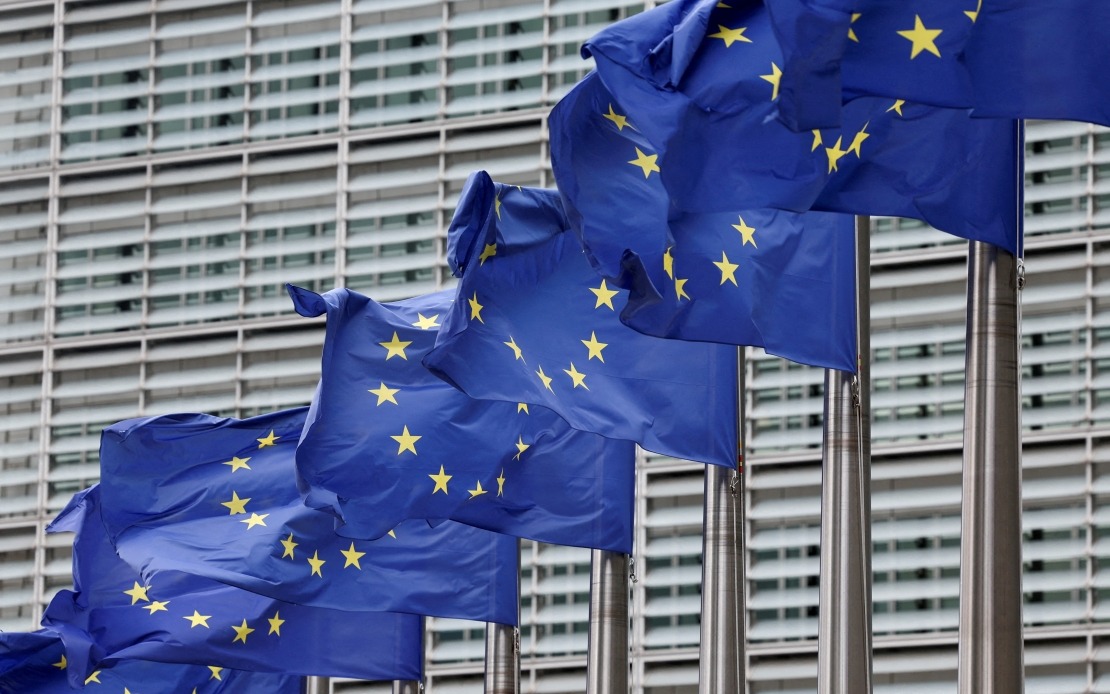
The European Union's top diplomats are gathering in Brussels on Monday to confront a thorny question that has long divided the bloc: whether to ratchet up economic pressure on Israel through targeted trade sanctions tied to its settlement policy in the occupied West Bank. The meeting comes as geopolitical tensions simmer across multiple fronts, forcing EU capitals to balance their stated commitment to Palestinian rights with competing strategic interests and domestic political considerations.
The European Commission has already prepared a menu of possible measures for ministers to consider, ranging from restrictions on specific goods produced in Israeli settlements to outright import bans. These options represent an escalation from previous EU approaches, which have largely focused on diplomatic statements and labelling requirements rather than formal trade penalties. The technical groundwork is thus complete, leaving the outcome dependent entirely on whether the 27 member states can forge a united position on an issue that touches on fundamental questions of international law, trade policy, and Middle Eastern geopolitics.
The fault lines within the EU are starkly visible. Spain, Ireland, and Belgium have emerged as vocal advocates for imposing severe sanctions, reflecting both domestic political currents and broader concerns about the legality of Israeli settlement expansion under international law. These countries view stronger measures as a logical progression of EU values and a necessary response to what they characterise as the continuing colonisation of Palestinian territory. However, this hardline position collides directly with the more cautious stance adopted by Germany and several other member states, which have historically resisted punitive economic measures against Israel despite criticisms of settlement policy.
The procedural complexities surrounding any potential sanctions further complicate matters. If member states classify trade restrictions as formal foreign policy sanctions—which would align with existing EU sanction regimes applied to Russia, Iran, and other countries—then unanimity becomes mandatory. This voting requirement gives any single country, including those sympathetic to Israel, an effective veto over collective action. Alternatively, if restrictions are framed as trade measures rather than sanctions proper, a qualified majority suffices, requiring support from 15 of the 27 states representing at least 65 percent of the EU's total population. This distinction carries profound implications for whether meaningful measures can actually be implemented.
For Malaysian observers and Southeast Asian policymakers, the EU's internal debate reflects broader global tensions about how democracies should respond to territorial disputes and settlement policies they view as violations of international norms. The region faces its own complex questions regarding maritime boundaries, territorial claims, and resource management, where principles of international law intersect with regional power dynamics. The EU's struggle to achieve consensus illustrates how difficult it is for multilateral bodies to enforce accountability when economic and political interests diverge among member states.
Beyond the settlement issue, the ministers' agenda encompasses other critical international challenges. The situation in Iran remains under scrutiny, particularly as regional tensions persist and nuclear negotiations remain stalled. The Ukraine conflict continues to dominate EU foreign policy calculations, with ministers expected to advance further sanctions targeting Russian individuals, entities, and organisations involved in Moscow's invasion. Ukrainian Foreign Minister Andrii Sybiha has been invited to participate in informal discussions with EU counterparts, providing Kyiv direct access to European decision-making forums.
Regarding Russia, while additional individual and entity sanctions appear likely to gain approval, consensus on a comprehensive new trade sanctions package remains uncertain. EU members remain divided over how far to escalate economic measures, with some states concerned about the knock-on effects on their own economies, energy security, and agricultural trade. This hesitation mirrors the broader challenge facing Western democracies in maintaining unified responses to geopolitical crises when member states experience asymmetric economic impacts from coordinated measures.
The settlement sanctions debate also reflects evolving European public opinion on the Israeli-Palestinian conflict. Growing populations within EU countries, particularly younger voters and immigrant communities, increasingly view Israeli settlement policy through a human rights lens. This demographic shift pressures governments to demonstrate responsiveness to constituent concerns, yet often collides with diplomatic traditions favouring engagement over confrontation and economic ties over isolation.
For Southeast Asia, the EU's negotiating dynamics hold instructive lessons about managing diversity within regional groupings. ASEAN's own decision-making consensus principle faces similar strains when member states hold divergent views on international matters. The EU experience suggests that finding common ground on contentious geopolitical issues requires either clear shared interests, supranational enforcement mechanisms, or willingness to accept lowest-common-denominator outcomes that satisfy few parties fully.
The outcome in Brussels will likely disappoint advocates on all sides. A unanimous EU sanction package appears improbable given German and other countries' opposition, yet member states may still manoeuvre toward some compromise measure—perhaps a qualified-majority trade restriction that sidesteps the unanimity requirement, or a softened statement of intent without immediate implementation. Whatever emerges, the divisions exposed during these deliberations will persist, shaping how the EU responds to future Palestinian-Israeli developments and signalling to other global actors that consensus on contentious foreign policy matters remains elusive.

