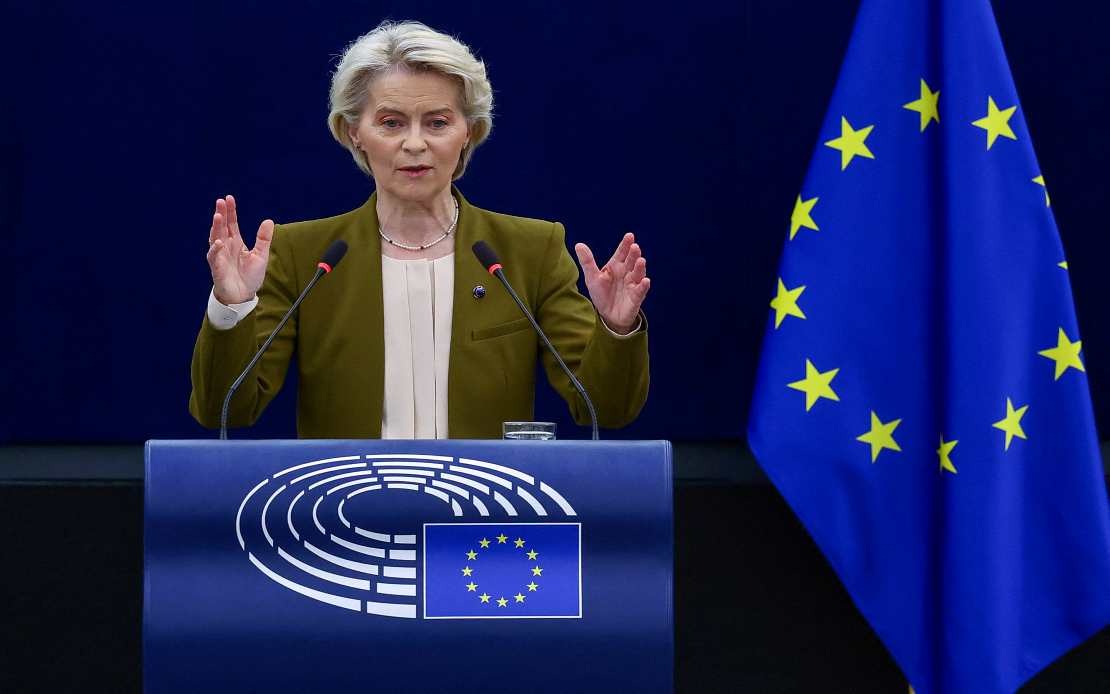
The European Union has mobilised €2.1 million in humanitarian assistance for Colombia in response to a powerful 7.4 magnitude earthquake that struck the country this week, resulting in at least 181 deaths and widespread devastation across multiple regions. The swift financial commitment underscores the bloc's rapid response mechanism for natural disasters, with European Commission President Ursula von der Leyen announcing the funding on Wednesday as rescue and recovery operations continued across affected areas.
The scale of the earthquake and the EU's response carries particular significance for Southeast Asian nations given the region's own seismic vulnerabilities. Countries like Indonesia, the Philippines, and Malaysia, which face comparable geological risks, often observe international humanitarian coordination models following major earthquakes. The EU's approach to coordinating satellite mapping services, cash assistance, and technical support alongside traditional humanitarian channels demonstrates an integrated response framework that regional disaster management authorities increasingly study and adapt.
The €2.1 million allocation targets multiple critical humanitarian needs in the immediate aftermath of the disaster. The funding will finance the delivery of essential medical supplies and health services to trauma victims and those displaced by the tremor. Water purification systems, sanitation infrastructure, and hygiene materials represent another major allocation priority, as earthquake-damaged water systems typically create secondary health crises within days of major seismic events. Shelter materials, emergency food supplies, and direct cash assistance to affected populations round out the assistance package, addressing the multifaceted needs that emerge when communities face such catastrophic disruption.
An initial €100,000 was channelled through the German Red Cross specifically targeting the hardest-hit regions of Chocó and Valle del Cauca, with the immediate objective of addressing the most pressing needs of approximately 2,500 families in those localities. This targeted geographic approach reflects coordination with Colombian authorities regarding where assistance would yield maximum humanitarian impact. The selection of the German Red Cross as an implementing partner reflects the long-standing humanitarian coordination relationships between major European institutions and Colombian civil society organisations, relationships that facilitate rapid, effective deployment of resources during emergencies.
Beyond financial contributions, the EU activated its Copernicus satellite mapping programme to support Colombian emergency services managing search and rescue operations. This technological dimension of the response represents an increasingly important component of international disaster assistance. Detailed satellite imagery enables rescue teams to identify collapsed structures, assess damage across regions, prioritise resource deployment, and track population movements. For nations in Southeast Asia monitoring similar capabilities, the EU's integration of space-based earth observation into humanitarian operations demonstrates how advanced technology can multiply the effectiveness of traditional relief efforts during time-critical phases of disaster response.
The coordination mechanisms embedded within this response reflect the EU's institutional capacity for rapid decision-making during emergencies. The European Commission maintained direct contact with Colombian government authorities to ensure that assistance aligned with evolving needs on the ground. This adaptive approach prevents the common challenge of aid arriving without coordination with local authorities, and ensures that international assistance complements rather than duplicates domestic response efforts. For regional observers, this model of maintaining flexibility while maintaining donor coordination represents a maturation of international disaster response protocols.
Colombia's earthquake response capacity, combined with EU support, illustrates how middle-income nations with established institutional frameworks can manage the initial phases of major disasters more effectively than less developed countries facing comparable events. However, the scale of the death toll and the geographic span of damage across multiple departments indicate that even well-organised responses require sustained international support. The initial €2.1 million commitment likely represents the first tranche of assistance, with subsequent funding possibly announced as damage assessments progress and medium-term recovery needs become clearer.
The earthquake's impact on Colombia's economic outlook and infrastructure represents another dimension of the disaster beyond immediate humanitarian concerns. Port facilities, transportation networks, and industrial infrastructure in affected regions require assessment for operational integrity. The EU's willingness to finance emergency assistance also signals potential future support for reconstruction and economic recovery phases. For Southeast Asian nations considering their own disaster financing mechanisms and international partnerships, the EU's multi-phase approach to earthquake response—combining immediate humanitarian aid, technical support, and signalling of longer-term reconstruction assistance—provides instructive lessons in building comprehensive disaster response frameworks.
The timeliness of the EU's response demonstrates how pre-established humanitarian funding mechanisms and partnerships accelerate aid delivery during emergencies. Rather than requiring lengthy approval processes after disaster strikes, the EU's rapid mobilisation of €2.1 million reflected pre-existing authority granted to the European Commission to deploy emergency funds. This institutional design feature proves particularly relevant for Southeast Asian nations developing their own regional disaster response architecture through mechanisms like the ASEAN Coordinating Centre for Humanitarian Assistance (AHA Centre), which similarly seeks to compress decision timelines during emergencies.
Looking forward, Colombia's recovery trajectory and the effectiveness of coordinated international and domestic response efforts will be closely watched not only in Latin America but by disaster management agencies worldwide. The integration of immediate humanitarian assistance, technological support, and coordination frameworks during this response provides case study material for ongoing refinement of global emergency management protocols. For Malaysian and Southeast Asian readers, the EU's response to Colombia's earthquake offers insights into how mature institutional mechanisms, pre-positioned funding authority, and international partnership networks can be mobilised to save lives and reduce suffering in the acute phases of major natural disasters.

