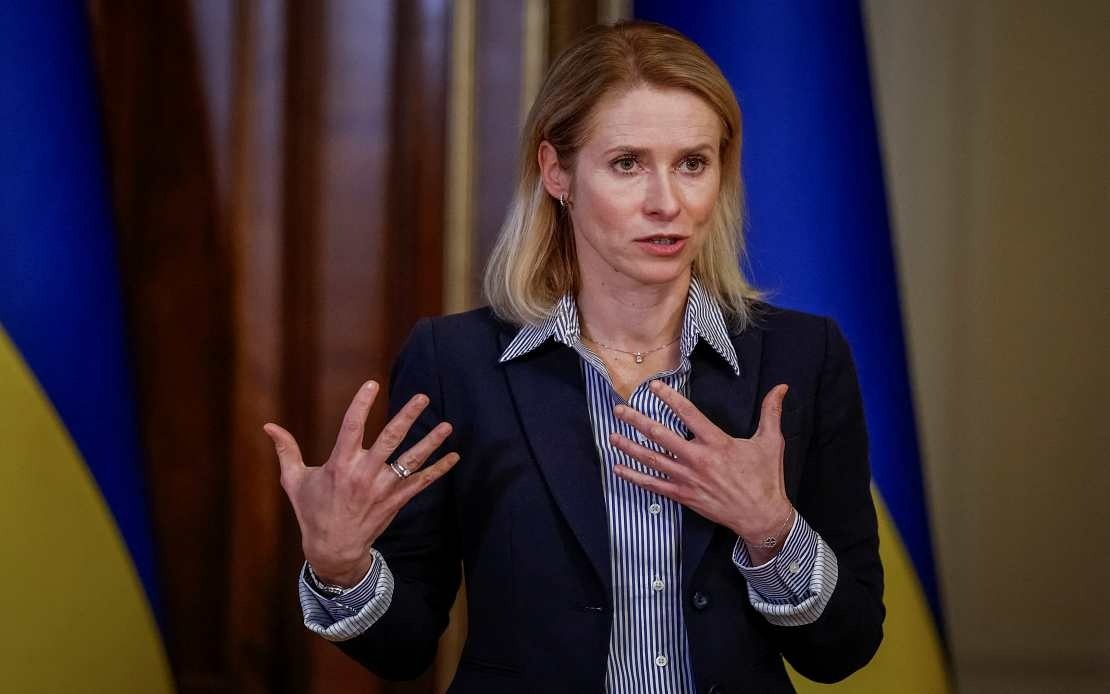
The European Commission and EU foreign policy chief Kaja Kallas have announced plans for a dedicated sanctions mechanism designed to confront migrant smugglers and the criminal syndicates that profit from human trafficking. The initiative, unveiled on Thursday, represents a coordinated response to what Brussels views as a critical security and humanitarian challenge facing the 27-nation bloc. European Commission President Ursula von der Leyen framed the proposal as essential to preventing loss of life while reasserting EU sovereignty over border policy. "We all have a common goal. To drive them out of business. And to save the lives of thousands of people who dream of a better life," von der Leyen stated. She added pointedly: "We in Europe must be the ones to decide who comes to us and in what circumstances."
The proposed sanctions architecture would enable Brussels to target both individuals and organisations engaged in migrant smuggling operations, human trafficking, drug trafficking, weapons trafficking, and related money laundering activities. This multi-dimensional approach acknowledges that these criminal enterprises rarely operate in isolation—the same networks that move people across borders frequently traffic narcotics and firearms, creating interconnected profit streams that fund broader criminal enterprises. By attacking the entire ecosystem rather than isolated smugglers, EU policymakers believe they can dismantle networks at their roots rather than merely disrupting temporary operations.
The enforcement mechanisms embedded in the framework are deliberately severe. Asset freezes would target the financial holdings of designated individuals and entities, cutting off the capital that fuels recruitment, transportation, and corruption of border officials. Prohibitions on providing funds or economic resources would prevent legitimate businesses from being co-opted into the smuggling supply chain. Travel bans would restrict the movement of key operatives and their associates, limiting their ability to coordinate operations across multiple jurisdictions. Together, these measures create what Brussels describes as a coordinated pincer movement against transnational trafficking organisations.
Implementing this framework requires unanimous consent from all EU member states—a procedural hurdle that reflects Brussels' consensus-based governance model but also presents a practical challenge. Hungary, Poland, and other nations have occasionally blocked EU foreign policy initiatives on various grounds, meaning proponents must secure agreement across ideologically diverse governments with differing immigration priorities. Some Central European states that have experienced significant transit migration may support stronger measures, while others might worry about unintended consequences for legitimate businesses or civil liberties. The unanimity requirement means the bloc cannot proceed without building a genuine consensus.
The proposal arrives amid intensifying public concern about migration across European borders. Media reports of boat disasters in the Mediterranean, with hundreds perishing annually, have sustained political pressure on governments to demonstrate they are responding to the humanitarian dimension of smuggling. Simultaneously, right-wing parties across Europe have successfully mobilised voter anxiety about immigration, creating political incentives for established governments to appear tough on irregular migration and the criminals facilitating it. Von der Leyen's carefully balanced rhetoric—emphasising both the criminal nature of smuggling operations and the protection of vulnerable migrants—reflects this delicate political tightrope.
The EU's existing sanctions apparatus already encompasses more than 40 distinct regimes targeting countries, terrorism financing, cyberattacks, human rights abuses, and chemical weapons use. This proliferation reflects the bloc's increasing reliance on economic coercion as a foreign policy tool, particularly following Russia's invasion of Ukraine. Adding a dedicated anti-trafficking regime to this arsenal suggests Brussels views human smuggling as a sufficiently distinct and persistent threat to warrant its own targeting mechanism rather than addressing it solely through existing terrorism or organised crime frameworks. The specialised regime could allow more flexible and rapid designation of emerging networks without requiring agreement on broader geopolitical matters.
For Southeast Asian states, this development carries significant implications. Many ASEAN nations serve as transit points for migrants headed toward Europe, and regional smuggling networks maintain operational links with European-based criminal organisations. Malaysia, Indonesia, and Thailand have long grappled with trafficking syndicates that move people through their territories toward third countries. EU sanctions targeting the European end of these networks could theoretically disrupt funding flows and make European recruitment more difficult, though criminal organisations typically possess multiple revenue sources and adapt quickly to enforcement actions. Nonetheless, closer EU scrutiny of trafficking networks may create opportunities for enhanced information-sharing and joint operations that could benefit Southeast Asian law enforcement efforts.
The proposal also reflects evolving thinking within EU security circles about the relationship between human smuggling and terrorism. Intelligence agencies have documented cases where smuggling networks unwittingly transport individuals later involved in extremist activities, though the scale of such incidents remains contested among analysts. By broadening the sanctions framework to capture trafficking networks before they can be compromised by terrorist organisations, EU policymakers aim to prevent a convergence of two distinct criminal threats. This preventive posture differs from purely reactive enforcement focused solely on prosecuting completed smuggling operations.
Implementation will likely prove as complex as the policy design. Identifying appropriate targets requires intelligence gathering and liaison with member state security services, some of whom have limited capacity for sophisticated transnational criminal investigations. The freeze on assets must comply with due process and property rights protections embedded in EU law, creating potential legal challenges from designated individuals and entities claiming misidentification or insufficient evidence. Money laundering components require coordination with financial intelligence units across member states and third countries, since smuggling proceeds frequently move through international banking channels that span multiple jurisdictions. The mechanism's effectiveness will ultimately depend on consistent member state commitment and adequate resourcing.
Broader questions loom regarding whether sanctions represent the most effective response to trafficking, or whether complementary strategies deserve equal emphasis. Some analysts argue that addressing root causes—poverty, conflict, and limited economic opportunity in migrants' countries of origin—would reduce demand for smuggling services more effectively than enforcement alone. Others contend that legal migration pathways, if expanded, would undercut smuggling economics by providing safer alternatives. The EU's new sanctions regime, by this logic, represents necessary but insufficient policy; sustained impact requires integration with development assistance, conflict resolution, and migration management reforms that remain politically contentious across the bloc. The proposal thus marks an important enforcement escalation, yet whether it generates meaningful disruption of trafficking networks or merely displaces operations remains an open question that only sustained implementation can answer.

