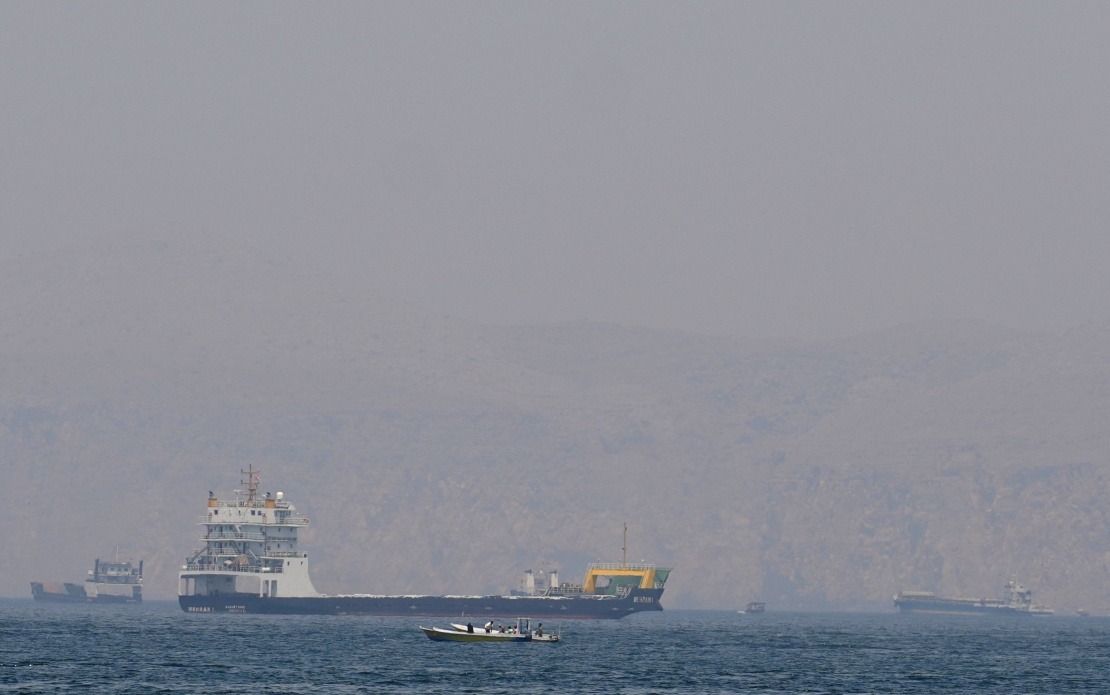
The European Union and the Gulf Cooperation Council have issued a forceful joint rebuke against any assertion of sovereignty or unilateral control over the Strait of Hormuz, declaring such claims fundamentally at odds with international maritime law. The unified stance emerged from a High-Level Forum on Regional Security and Cooperation held in Brussels on July 13, with EU foreign policy chief Kaja Kallas and Bahraini Foreign Minister Abdullatif bin Rashid Al-Zayani, representing the GCC's ministerial council leadership, steering the diplomatic initiative. Their statement represents a significant coordinated response to escalating tensions surrounding one of the world's most critical shipping lanes, through which approximately one-third of global maritime oil trade passes annually.
At the heart of the EU-GCC position lies an unambiguous assertion that international maritime passage cannot be subordinated to the whims of individual states. The two blocs declared that no bilateral arrangement, understanding, or memorandum between nations possesses legal validity to regulate or restrict the right of passage through an international strait. This principle anchors itself in established international law, particularly the UN Convention on the Law of the Sea, which guarantees freedom of navigation as an inalienable right for vessels of all nations. The statement emphasizes that this right cannot be subjected to control, authorization, suspension, obstruction, or any conditions imposed by any individual state, effectively creating a multilateral guardrail against unilateral actions.
The timing of this declaration carries substantial weight given the deteriorating security environment in the Middle East. The EU and GCC explicitly condemned Iranian attacks on commercial shipping transiting the strait and assaults on the sovereign territories of multiple regional nations. These incidents, according to the joint statement, have endangered civilian lives and those of seafarers while violating international law and UN Security Council Resolution 2817. By characterizing these attacks as unjustifiable under any circumstances, the two blocs have positioned themselves against escalatory actions that threaten maritime commerce and regional stability, a matter of considerable concern for Malaysian and Southeast Asian shipping interests that rely heavily on Strait of Hormuz transit.
The call for Iran to cease attacks and cease imposing conditions, transit fees, or service charges on Strait of Hormuz passage represents a direct rebuke of potential Iranian attempts to monetize or weaponize control over the waterway. Such actions would represent a fundamental departure from international maritime norms and would have cascading consequences for global energy security and trade flows. For countries like Malaysia, which depend on stable international shipping corridors for economic prosperity, any disruption to Hormuz transit creates ripple effects throughout regional supply chains and energy markets. The joint EU-GCC statement thus addresses not merely a localized diplomatic dispute but a threat to the interconnected global maritime system upon which Asian economies depend.
Security analysts recognize that the Strait of Hormuz occupies outsized strategic importance relative to its geographic dimensions. The narrow waterway represents a chokepoint where geopolitical rivalries and military capabilities converge, creating conditions for rapid escalation. The escalating tensions reflect broader US-Iran antagonisms that have intensified in recent months, with both parties engaging in direct military exchanges. This context renders the EU-GCC statement more than rhetorical—it represents a coordinated effort to establish redlines and prevent further militarization of the strait. The emphasis on restraint, dialogue, and diplomacy signals that international stakeholders recognize the catastrophic consequences of allowing maritime security to deteriorate further.
The expressed solidarity with affected countries and seafarers of all nationalities carries particular resonance for maritime nations. International shipping represents a multinational enterprise where crews hail from dozens of countries and commercial interests span continents. When vessels face attacks or arbitrary restrictions, the consequences extend far beyond regional borders. Malaysian shipping companies operating in the region, as well as personnel serving aboard international vessels, face heightened risks from the current environment. The EU-GCC commitment to protect international shipping acknowledges this broad vulnerability and positions maritime security as a matter of collective concern rather than isolated regional interest.
The joint commitment to coordinate closely in safeguarding freedom of navigation suggests institutional mechanisms may develop to monitor Strait of Hormuz transit and respond to future violations. Such coordination between the EU and GCC represents an unusual alignment of Western and Gulf Arab interests, reflecting recognition that maritime security transcends traditional geopolitical divisions. For Southeast Asian nations seeking to maintain stable shipping routes and predictable trading environments, this EU-GCC partnership potentially provides additional diplomatic weight in advocating for international maritime norms. The coordination also signals that economic costs of regional instability extend broadly, incentivizing multiple international actors to invest in de-escalation.
The statement's invocation of international law and established conventions reflects a deliberate strategy to anchor disputes within legal frameworks rather than power politics. By repeatedly referencing the UN Convention on the Law of the Sea and UN Security Council resolutions, the EU and GCC attempt to elevate maritime security from bilateral disputes to matters of universal legal principle. This legalistic approach carries implications for how future disputes might be resolved and establishes expectations that unilateral actions violating these conventions will face international pushback. For smaller nations like Malaysia, reliance on international legal frameworks provides some protection against more powerful states' unilateral assertions, making the EU-GCC position relevant to broader Southeast Asian interests.
The backdrop of military escalation between the US and Iran adds complexity to diplomatic efforts. Despite a Pakistan-brokered memorandum of understanding signed in June aimed at ending conflict and achieving lasting peace, tensions have continued mounting. This apparent failure of recent diplomatic initiatives underscores how entrenched antagonisms can resist resolution attempts and how quickly agreements can become overshadowed by renewed hostilities. The EU-GCC call for restraint and renewed commitment to dialogue implicitly acknowledges that previous agreements have proven insufficient, requiring deeper international engagement and broader stakeholder participation to achieve sustainable stability in the region.
For Malaysia and other Southeast Asian maritime trading nations, the implications of ongoing Strait of Hormuz instability extend to energy security, shipping costs, and insurance premiums. Uncertainty surrounding transit conditions creates economic headwinds affecting regional competitiveness and inflation pressures. The EU-GCC statement, by reaffirming commitment to freedom of navigation and pledging coordinated action, attempts to provide reassurance that international stakeholders recognize the stakes and remain committed to preventing further deterioration. However, the gap between diplomatic statements and concrete security improvements remains substantial, leaving regional economies exposed to ongoing volatility until fundamental diplomatic breakthroughs materialize.
The joint EU-GCC position also reflects recognition that maritime security cannot be disaggregated from broader Middle Eastern stability. Regional conflicts, whether involving state actors or non-state armed groups, eventually threaten international shipping through geographic proximity and capacity to interdict commercial traffic. By condemning attacks and emphasizing the universal stakes in maintaining open sea lanes, the two blocs have positioned maritime security as integral to regional peace and global economic order. This framing potentially opens pathways for diplomatic engagement beyond narrow bilateral disputes, inviting all regional and international stakeholders to recognize their shared interests in preserving stable maritime corridors that benefit humanity broadly rather than serve narrow geopolitical objectives.

