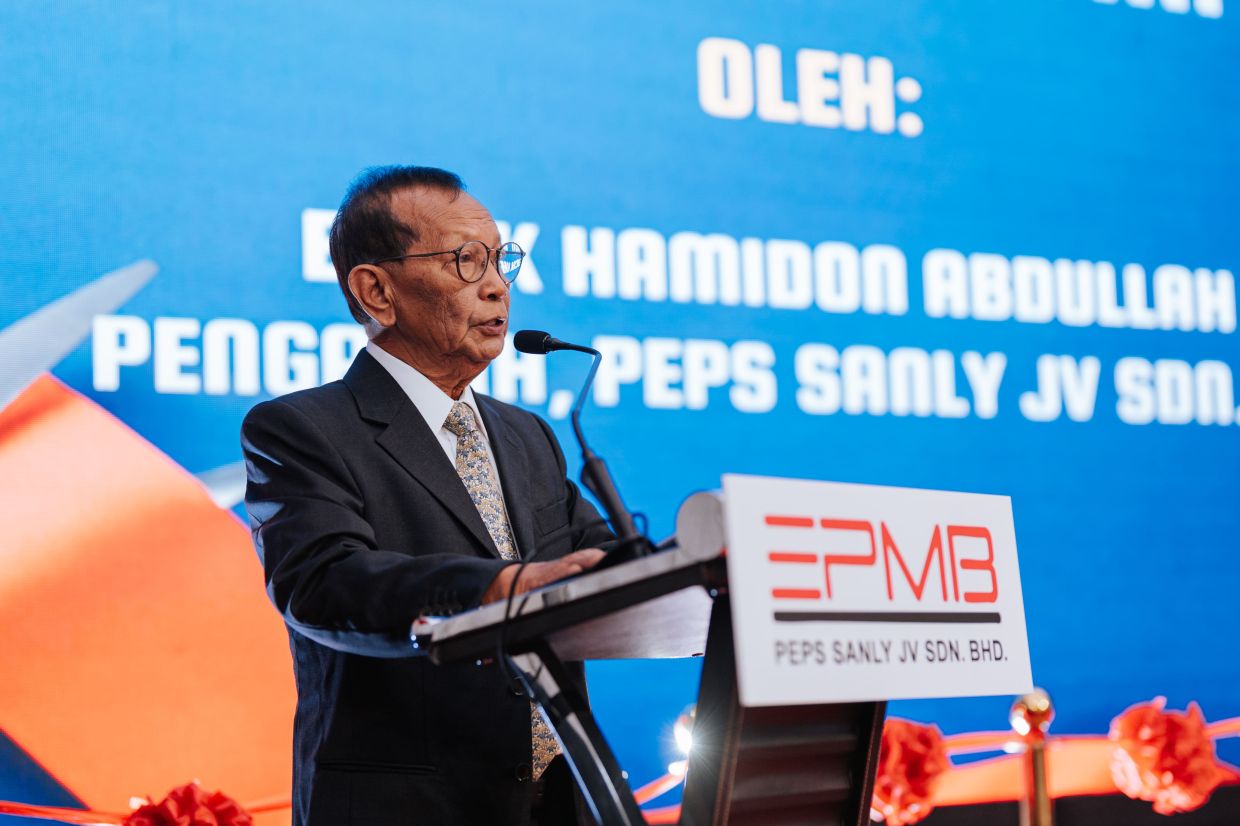
EPMB has officially opened a manufacturing facility in Tanjong Malim designed to produce critical chassis and structural components for Proton's passenger vehicle range, marking a significant expansion of domestic automotive supply capacity. The plant, operated through Peps Sanly JV Sdn Bhd, a joint venture between EPMB and China-based Sanly Auto Parts Co Ltd, commenced commercial production in October 2025 within the Automotive High Technology Valley (AHTV), a purpose-built industrial cluster focused on advanced vehicle manufacturing.
The new facility spans 9,909 square metres and has been engineered to achieve a monthly production capacity of 40,000 complete car sets, translating to an annual output potential of 480,000 units. This scale positions the plant as a significant contributor to Proton's component supply chain, particularly as the national carmaker accelerates its expansion across Southeast Asia and develops its portfolio of electric and conventional vehicles. The facility's production footprint reflects careful investment in both manufacturing infrastructure and workforce capability to meet Proton's stringent quality and delivery requirements.
The Tanjong Malim plant will manufacture three critical module assemblies essential to vehicle platform architecture: front corner modules that integrate steering and suspension systems, subframe modules that form the foundation for engine and transmission mounting, and rear axle module assemblies that support the vehicle's powertrain integration. These components will initially serve Proton's established models including the Persona sedan and Iriz hatchback, as well as the AMA01 platform that underpins the modernised Saga. The facility is also positioned to supply the upcoming AMA02 and AMA05 platforms, indicating EPMB's role in supporting Proton's medium-term product development pipeline.
The partnership between EPMB and Sanly Auto Parts was formally established in February 2025, following months of technical and commercial negotiations focused on localising the production of chassis components previously sourced externally or imported. The collaboration represents a strategic deepening of local content in Malaysian vehicle manufacturing, a priority for national automotive policy and essential for Proton's cost competitiveness in regional markets where pricing remains highly sensitive. By establishing domestic assembly of these modules, the joint venture reduces Proton's reliance on overseas suppliers and shortens supply chains that have historically been vulnerable to disruption.
Sanly Auto Parts brings substantial expertise spanning metalworking, assembly processes, and automotive chassis system design—capabilities that span three decades of operations serving major Chinese original equipment manufacturers. The company's historical ties to Geely and other major Chinese OEMs provide direct exposure to manufacturing methodologies and supply ecosystem practices that have enabled Chinese automotive companies to achieve competitive cost structures without compromising quality standards. This technical transfer is particularly valuable as Malaysian manufacturers seek to enhance productivity and reduce per-unit manufacturing costs in an increasingly competitive regional market.
EPMB's executive chairman Hamidon Abdullah emphasised that the partnership enables the company to harness Sanly's competitive cost advantages while maintaining alignment with international quality benchmarks required by Proton. The joint venture model allows EPMB to leverage its established relationships and operational knowledge within Malaysia's automotive ecosystem while accessing Sanly's manufacturing excellence and supply chain networks throughout East Asia. This hybrid approach addresses a persistent challenge for Malaysian suppliers: balancing the need for cost efficiency with the quality and reliability demands of a national carmaker competing internationally.
The new facility represents a continuation of EPMB's nearly four-decade relationship with Proton, during which the supplier has evolved from producing basic components to manufacturing sophisticated module assemblies. This institutional relationship reflects mutual understanding of market dynamics, regulatory requirements, and technical standards specific to the Malaysian and Southeast Asian automotive landscape. The investment demonstrates EPMB's confidence in Proton's strategic direction, particularly the carmaker's commitment to maintaining competitive pricing while transitioning toward electric vehicle production.
Proton's pursuit of regional growth targets and its published electric vehicle roadmap create sustained demand for locally produced components across multiple platforms. The Tanjong Malim facility is positioned to supply both conventional internal combustion engine vehicles and electric variants, as chassis module designs can be adapted for different powertrains. This flexibility is strategically important as Proton navigates the automotive industry's transition toward electrification, which will compress traditional supplier networks while creating opportunities for companies that can serve multiple powertrain architectures from single manufacturing facilities.
The location within the Automotive High Technology Valley reflects deliberate clustering of component suppliers in proximity to assembly facilities and research institutions. This industrial geography reduces logistics costs, enables rapid response to quality issues or design modifications, and facilitates collaboration on product development initiatives. The AHTV model, increasingly adopted across Southeast Asia, has proven effective in building integrated automotive ecosystems that compete on responsiveness and innovation rather than low-cost labour alone.
For Malaysian readers, the facility's opening signals continuing transformation of the domestic automotive supply base toward higher-value manufacturing. Rather than importing assembled components, Malaysia is developing domestic capability to produce complex modules requiring precision engineering and advanced assembly techniques. This progression up the manufacturing value chain creates employment in skilled technical and engineering roles while retaining profit and tax revenue within the domestic economy. The EPMB-Sanly partnership exemplifies how Malaysian companies can access global expertise and networks while maintaining substantial local operations and control.
The broader implications extend to Malaysia's automotive positioning within ASEAN and wider Asia. As Chinese manufacturers increasingly compete in Southeast Asian markets, the capacity to rapidly absorb best-practice manufacturing techniques while adapting them to local contexts becomes crucial for competitiveness. EPMB's access to Sanly's methodology and networks facilitates this technology transfer in a controlled, commercially beneficial framework. For Proton specifically, the partnership reduces structural cost disadvantages that have historically limited its ability to compete in price-sensitive segments where regional competitors from Thailand, Indonesia, and India have advantages.
The facility's full operational ramp-up will be monitored closely by industry observers assessing whether the joint venture can achieve consistent quality, on-time delivery, and cost targets. Success would validate the model of Chinese-Malaysian partnerships in automotive manufacturing and likely encourage similar collaborations among other local suppliers. Conversely, operational challenges would signal constraints in technology transfer or labour skill availability that could affect broader efforts to upgrade Malaysia's manufacturing sector.

