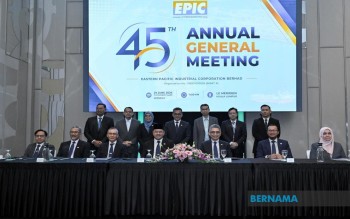
Eastern Pacific Industrial Corp Bhd (EPIC) has unveiled an ambitious growth roadmap, setting its sights on generating RM700 million in annual revenue and building net asset value to RM1 billion by the end of this decade. The integrated oil and gas solutions provider, which operates primarily across Malaysia's energy infrastructure sector, revealed the targets as part of its EPIC Strategic Business Plan 2025-2030 during its annual general meeting in Kuala Lumpur. The expansion programme will draw on existing strengths in oil and gas operations, port management and an emerging renewable energy portfolio, positioning the company to capitalise on Malaysia's evolving energy landscape amid the global transition toward cleaner power sources.
The ambitious 2030 targets reflect confidence built on tangible recent momentum. EPIC reported net profit of RM20.6 million for the year ended December 31, 2025, representing a robust 24 percent increase from RM16.6 million in the preceding financial year. More significantly, the company's revenue climbed to RM411.9 million from RM403.8 million previously, marking the latest chapter in a consistent growth trajectory that commenced in 2022. This steady performance progression demonstrates that the company's operational foundation is sufficiently robust to support the aggressive expansion agenda now being pursued, while also signalling to investors and stakeholders that management possesses realistic visibility into market opportunities.
Group chief executive officer Dr Ts Muhtar Suhaili attributed the stronger 2025 results to several converging factors that underscore the company's diversifying revenue streams. The acquisition of Rahar Niaga Sdn Bhd bolstered the operational footprint, while newly secured contracts for Pan Malaysia Maintenance, Commissioning and Modification services alongside Hook-Up and Commissioning work injected fresh revenue contributions. Simultaneously, a rise in offshore rig arrivals and cargo volumes through EPIC's port management operations provided additional uplift. These performance drivers collectively illustrate how the company benefits from multiple revenue channels within the energy sector, reducing dependence on any single business line and creating resilience against commodity price volatility.
Looking ahead to 2026, Muhtar expressed confidence that the company will extend its growth streak, predicting another record-breaking year as existing contracts mature and new opportunities crystallise. The optimism is grounded in tangible contract visibility. EPIC's approved contract value for its oil and gas business currently ranges between RM1.3 billion and RM1.5 billion, providing a substantial revenue foundation for the medium term. However, the executive cautioned that actual earnings will remain contingent upon the timing and quantum of work orders and purchase orders issued by clients such as Petronas, underscoring the importance of contract execution discipline and client satisfaction in realising financial targets.
EPIC's geographic expansion within Malaysia is already gaining traction, with the company successfully diversifying beyond its traditional Terengganu base into the southern region of Peninsular Malaysia, including the key industrial hubs of Pengerang and Melaka. This geographical diversification reduces regional concentration risk and positions EPIC to service multiple energy infrastructure projects simultaneously across different parts of the country. More notably, the company has recently penetrated Sabah, representing a significant eastward expansion into Malaysian Borneo where substantial oil and gas activity continues. These territorial gains complement the company's broader strategy of establishing a nationwide presence within Malaysia's energy sector, ensuring it remains relevant as clients expand operations across regions.
Renewable energy represents a critical pillar of EPIC's long-term growth strategy, reflecting the company's acknowledgement that Malaysia's energy mix is evolving. The company is actively participating in bidding for the hybrid hydro-solar project in Kenyir, competing alongside its parent company Terengganu Inc. This investment in clean energy infrastructure positions EPIC to benefit from Malaysia's renewable energy targets and potential government subsidies or concessional financing for green projects. Should EPIC secure the Kenyir project or similar renewable ventures, it would diversify revenue sources away from traditional hydrocarbon operations, creating a more resilient business model aligned with global energy transition trends and potentially attracting environmentally conscious investors.
Beyond Malaysia's borders, EPIC's board has authorised management to pursue expansion into neighbouring Asian markets as part of the 2030 strategy, signalling ambitions to establish the company as a regional player rather than merely a domestic operator. This regional expansion reflects recognition that many Southeast Asian nations possess comparable energy infrastructure needs and competitive dynamics that might favour an established Malaysian player with proven execution capabilities. However, the company is proceeding cautiously with respect to West Asian opportunities, citing prevailing geopolitical uncertainties that could complicate operations or create unforeseen risks. This balanced approach suggests a management team pragmatic about growth but mindful of political and security considerations that could jeopardise investments.
Strategic partnerships constitute another avenue through which EPIC is expanding capacity without proportional capital outlays. In February this year, EPIC's subsidiary EPIC OG Sdn Bhd entered into a collaboration agreement with Begas Energy Sdn Bhd to provide project management services for a Terminal Turnaround, Maintenance and Modification contract in Sabah. This partnership model allows EPIC to strengthen its presence in Sabah and Sarawak while leveraging complementary capabilities of local partners, potentially opening pathways to additional joint opportunities across Malaysian Borneo's energy infrastructure sector.
For Malaysian investors and regional observers, EPIC's trajectory carries several implications. The company demonstrates that Malaysian energy services firms can achieve competitive scale through disciplined execution and strategic positioning, even as global energy markets undergo profound transition. The company's willingness to invest in renewable energy while maintaining core oil and gas operations suggests a pragmatic view of Malaysia's energy future—one where traditional hydrocarbons will remain economically important for the next decade while clean energy capabilities become increasingly valuable. Furthermore, EPIC's success in securing Petronas contracts across multiple regions validates the company's technical credentials and relationship management, providing confidence that the stated revenue targets rest upon genuine commercial foundations rather than aspirational projections.

