Malaysia's Employees Provident Fund has achieved an important milestone with its i-Legasi initiative, approving 63 applications that have transferred RM46.3 million in retirement savings to 86 beneficiaries since the scheme's introduction in February. The programme represents a significant shift in how retired workers can support their immediate family members, allowing those with substantial accumulated savings to ensure financial stability across generations without waiting for inheritance procedures.
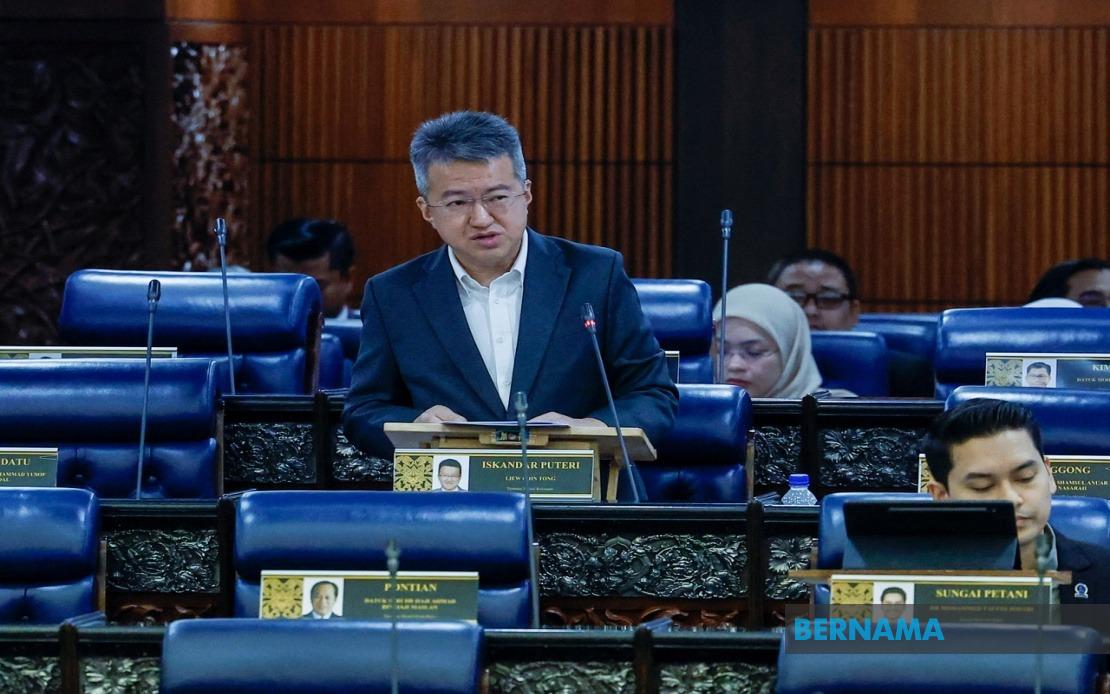
Deputy Finance Minister Liew Chin Tong outlined the scheme's mechanics during parliamentary proceedings, explaining that EPF members aged 55 and above become eligible to participate once their retirement savings exceed the Adequate Savings benchmark of RM650,000. Rather than keeping excess funds locked in their individual retirement accounts, members can now voluntarily transfer portions of these savings directly into the EPF accounts of eligible immediate family members, creating a structured mechanism for intergenerational wealth transfer that remains within the retirement savings ecosystem.
The i-Legasi initiative addresses a crucial challenge facing Malaysia as the nation transitions towards an aged population. With projections indicating Malaysia will become an ageing society by 2030, policymakers recognize that retirement adequacy extends beyond individual savings to encompass broader family financial resilience. By enabling wealth redistribution within families, the programme acknowledges that retirement security often depends on collective family resources rather than individual accumulation alone, a reality particularly important in Malaysian cultural contexts where multigenerational financial support remains customary.
Progress towards the Basic Savings target demonstrates broader movement in the right direction for EPF members. As of May 31, approximately 3.04 million active members aged between 18 and 60—representing 38.3 per cent of the 7.94 million members in that age group—had achieved their age-specific Basic Savings targets. The target of RM390,000 by age 60 serves as a government-endorsed benchmark for retirement adequacy, though this figure remains contested among financial planners who argue it may prove insufficient given inflation and extended lifespans.
Year-over-year improvement shows encouraging momentum, with membership achievement rising from 35 per cent in May 2025 to 38.3 per cent by May 2026. This three-percentage-point increase translates to an additional 330,000 members reaching their savings benchmarks annually, suggesting that existing EPF contribution structures and awareness campaigns are yielding measurable results. However, the data also reveals that nearly 62 per cent of working-age members still fall short of their targets, indicating substantial work remains in addressing Malaysia's retirement savings deficit.
The government and EPF have committed to deepening collaboration in developing integrated policy frameworks designed to enhance retirement adequacy. These efforts encompass multiple dimensions: increasing contribution incentives to encourage higher savings rates, expanding social protection mechanisms for vulnerable populations, and refining savings benchmarks to reflect contemporary economic realities. Such comprehensive approaches recognize that individual retirement security cannot rely solely on mandatory contributions but requires complementary policy tools and incentive structures.
For Malaysian workers, the i-Legasi scheme offers practical advantages beyond traditional estate planning. The transfer process operates within EPF's established administrative infrastructure, avoiding probate delays and legal complications associated with conventional inheritance. Moreover, transferred funds maintain their tax-advantaged status within the EPF framework, preserving the retirement savings purpose of these assets. This structural design encourages genuine family financial planning rather than treating the scheme merely as a vehicle for bypassing inheritance procedures.
The modest absolute numbers—63 approved applications over four months—suggest either cautious uptake during the initial phase or limited awareness among eligible members. The scheme's success will likely depend on sustained public education about eligibility criteria, application procedures, and the financial benefits of intergenerational transfers. Early adopters may have been more financially literate or better informed about government initiatives, a pattern that could gradually change as word spreads through community networks and financial advisors begin incorporating i-Legasi into retirement planning conversations.
Regional implications deserve consideration as other Southeast Asian nations grapple with similar demographic transitions and retirement security challenges. Malaysia's approach of enabling voluntary transfers while maintaining savings discipline through EPF oversight offers a middle path between unrestricted inheritance and restrictive provident fund rules. Neighbouring countries facing comparable ageing populations may examine the i-Legasi model for potential adaptation, particularly those with mandatory savings schemes seeking to balance individual accumulation with family financial resilience.
The initiative also reflects evolving policy thinking about how to leverage existing institutional infrastructure to address social challenges. Rather than creating entirely new programmes, the government expanded EPF's mandate to facilitate family financial transfers, minimizing implementation costs while building on decades of institutional expertise. This pragmatic approach may explain why the scheme moved from conception to launch relatively quickly, though it also highlights the importance of continuous monitoring to ensure the mechanism achieves its intended outcomes without unintended consequences.
Looking forward, policymakers should consider whether current savings benchmarks adequately reflect projected retirement expenses in an ageing Malaysia. Medical costs, extended longevity, and inflation adjustments may render the RM390,000 target insufficient for comfortable retirement, particularly for lower-income workers whose household expenses consume larger income proportions. The i-Legasi scheme's success ultimately depends not just on enabling transfers but on ensuring both transferring members and recipients possess savings levels genuinely adequate for long-term financial security.
The momentum demonstrated by i-Legasi approvals and the incremental improvement in Basic Savings achievement rates suggest Malaysian workers are gradually responding to policy incentives and retirement adequacy messaging. However, sustaining this progress requires persistent effort across multiple fronts: enhancing public awareness, refining contribution structures, and strengthening social protection mechanisms that support vulnerable populations unable to accumulate substantial retirement savings through employment alone. Malaysia's retirement security challenge remains substantial, but initiatives like i-Legasi demonstrate government commitment to implementing practical, structure-aware solutions.

