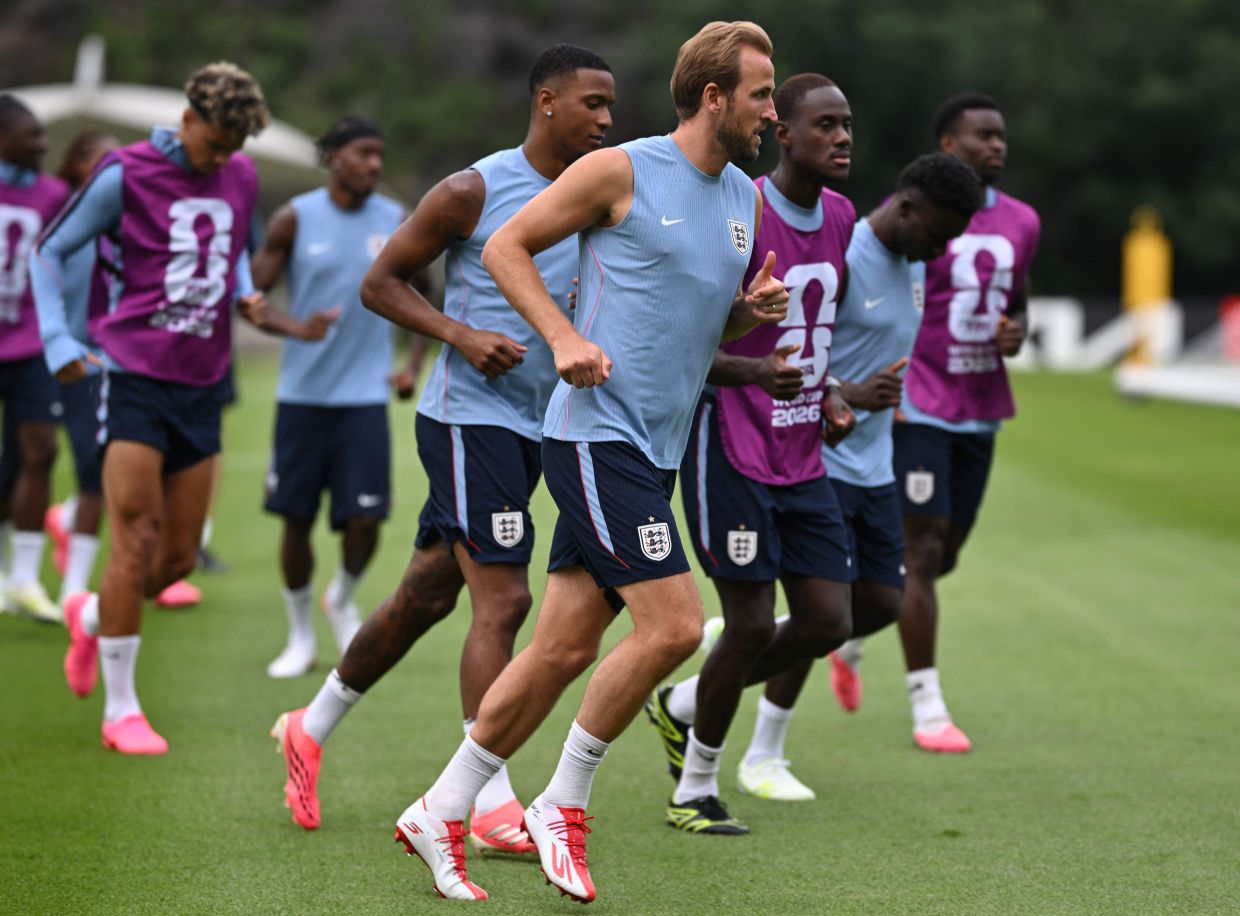
England will test themselves against Mexico on Sunday at one of international football's most storied venues, the Estadio Azteca in Mexico City, as the tournament's knockout stage intensifies with high-profile matchups that will determine which nations advance to the quarter-finals. The encounter comes a day after France and Morocco secured their places in the last eight, setting the stage for two more nations to join them following matches in Mexico and New Jersey this weekend.
England's return to the Azteca holds particular significance in the nation's football history. The English last visited this ground 40 years ago for the infamous 1986 World Cup encounter against Argentina, a match seared into the collective memory for Diego Maradona's controversial 'Hand of God' goal. This time around, the Three Lions arrive with considerably lower expectations than they began the tournament with, despite harbouring ambitions of ending a 60-year drought without winning a major international title. Manager Thomas Tuchel's squad has disappointed through the group phase, requiring a late rescue by captain Harry Kane to edge past the Democratic Republic of Congo with a 2-1 victory just days ago.
The challenge facing England extends far beyond their opponents on the pitch. The Estadio Azteca's elevation of approximately 2,240 metres above sea level presents a considerable physiological obstacle that Tuchel has already flagged as a concern. Speaking before his team's departure for Mexico, the England boss emphasised the impossibility of physical adaptation within such a short timeframe, suggesting the altitude will function as a tangible disadvantage. His comments hint at the genuine difficulties posed by playing at such elevation, where oxygen levels are significantly lower and fatigue accumulates more rapidly than at sea level.
Tuchel's immediate tactical preoccupation involves fortifying England's defensive structure, which has demonstrated troubling vulnerabilities to direct pace throughout the tournament. The right flank in particular has proven problematic, with attacking movements down that channel repeatedly exposing defensive weaknesses. Against a Mexican team displaying impressive form and confidence, these gaps could prove fatal. Nevertheless, Tuchel's familiarity with the Azteca following his pre-match reconnaissance visit has convinced him of the occasion's magnitude, describing it as an iconic stadium hosting a genuine World Cup spectacle.
Mexico arrives at the knockout stage in strikingly different form. Javier Aguirre's team has won all four matches played on home soil without conceding a single goal, a defensive record that stands in sharp contrast to England's frailties. Their 2-0 elimination of Ecuador represented Mexico's first knockout victory at the World Cup in four decades, and extending that run by defeating a higher-ranked opponent would constitute another significant historical achievement. Aguirre, at 67, has spoken of the need for a near-perfect performance against England, who occupy fourth place in the FIFA rankings compared to Mexico's tenth position, acknowledging the gap in quality whilst emphasising his team's home advantage.
The Mexico coach's measured assessment of England's capabilities reveals respect for the opposition without surrendering optimism. He highlighted England's depth of quality across their squad, the physicality of their players, and the calibre of talent available to Tuchel both domestically and internationally. Yet his insistence that the match will ultimately reduce to a fundamental test of 11 versus 11, regardless of altitude considerations, suggests confidence in his team's ability to compete at the highest level when playing in front of their own supporters.
Weather presents another variable that could influence Sunday's encounter. Thunderstorm forecasts prompted FIFA to briefly consider advancing the scheduled 6pm local kickoff time on Sunday, though the governing body ultimately confirmed the match would proceed as originally planned. Forecasts continue to predict storm activity in Mexico City around the scheduled start time, though temperatures are expected to remain moderate at around 21 degrees Celsius, considerably cooler than the near-record 38-degree heat that characterised France's victory over Paraguay in Philadelphia on Saturday.
The winner of the England-Mexico clash will advance to a quarter-final showdown in Miami against the victor of the simultaneous match between Norway and Brazil at the MetLife Stadium in New Jersey. That encounter carries equal drama, with Erling Haaland's Manchester City forward leading Norway's attack and having already demonstrated devastating form by scoring five goals in three tournament appearances. Brazil's defensive partnership will feature Arsenal's Gabriel Magalhaes alongside Paris Saint-Germain's Marquinhos, both players with recent Premier League experience against Haaland and thus possessing intimate familiarity with his movement patterns and finishing technique.
Brazil's coach Carlo Ancelotti has adopted a notably relaxed demeanour regarding Haaland's threat, arguing that his defenders' repeated exposure to the Norwegian striker during club football means extensive tactical preparation would be redundant. His confidence reflects Brazil's status as five-time World Cup champions, though Ancelotti and others recognise that Brazil's dominance in recent tournaments has diminished compared to previous eras. The South Americans enter as tournament favourites, yet Stale Solbakken, Norway's manager, has astutely observed that Brazil no longer commands the overwhelming superiority they possessed several years ago.
Solbakken has imposed discipline on his squad's mentality heading into the Brazil encounter, explicitly instructing players to approach the match as a competitive examination rather than a ceremonial occasion. This psychological framing—treating the fixture as a football match rather than becoming overwhelmed by the magnitude of facing a five-time champion—represents sound coaching preparation for an underdog operation. The severity of weather warnings at the New Jersey venue, with the National Weather Service issuing flood warnings, adds another element of unpredictability to Sunday's proceedings.
These round-of-16 encounters represent a watershed moment in the tournament, where individual performances and fine margins determine progression towards the global championship. England's struggle to maintain defensive coherence against pace, Mexico's home form and defensive solidity, Brazil's pedigree, and Norway's attacking potency will all be tested under pressure in knockout football's unforgiving environment. For Malaysian football enthusiasts, these matches offer compelling observation of how elite international teams perform under the intensified scrutiny of knockout-stage competition, where tactics solidify and psychological resilience becomes paramount.

