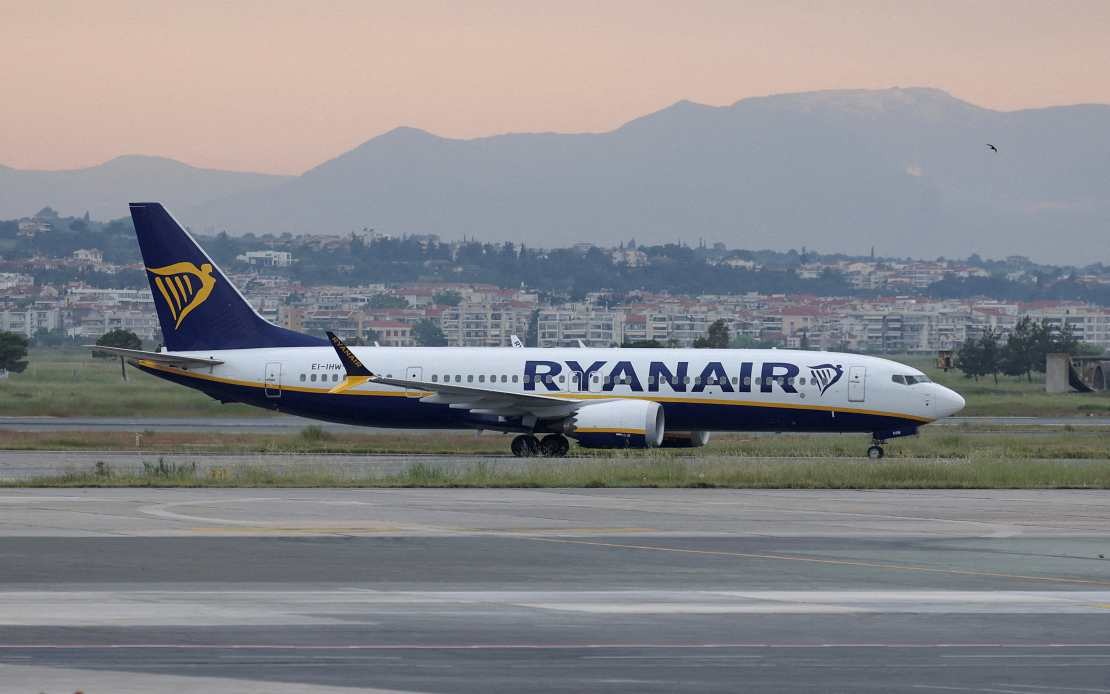
An investigation by United States authorities has disclosed that a catastrophic engine failure aboard a Ryanair aircraft last month resulted in cabin depressurisation and a harrowing incident in which a passenger was partially expelled through a shattered window during flight. The Malta Air flight, which was operating under the Ryanair brand, experienced the emergency whilst travelling from Thessaloniki in Greece to Munich in Germany, with the incident occurring as the aircraft climbed following its departure from Thessaloniki International Airport.
According to findings released by the US National Transportation Safety Board, the right-engine fan blade separated during the initial ascent phase, sending high-velocity debris throughout the engine housing and into the aircraft structure itself. The violent mechanical failure generated fragments with sufficient force to penetrate both the pressurised cabin and the aircraft's exterior skin, demonstrating the extreme energies involved in such propulsion system failures and highlighting the vulnerability of aircraft structures to uncontained engine damage.
The investigation documented two distinct breach points in the fuselage where engine material penetrated the aircraft's integrity. The primary breach occurred through a passenger window in row 11, with the window completely dislodged from its frame, whilst a secondary perforation was discovered in the lower fuselage skin positioned behind the right wing junction. This dual penetration indicated the widespread and unpredictable trajectory of the ejected engine components as they ricocheted through the engine bay and into surrounding structures.
The passenger seated in row 11, designated seat F in the incident reports, experienced the most immediate danger as the decompression created a pressure differential that drew them partially through the damaged window opening. The individual became lodged in the shattered aperture, suspended between the cabin and the exterior environment at approximately 10,000 feet altitude. This scenario represents one of aviation's most dangerous emergency situations, combining rapid decompression effects with the physical hazard of an open breach in the aircraft envelope.
The critical intervention of fellow passengers prevented what could have been a fatal outcome. Other travellers aboard the aircraft managed to physically restrain and pull the affected passenger back into the cabin, overcoming both the aerodynamic forces and the passenger's partial entrapment in the damaged window frame. Their coordinated response likely saved the individual's life during the minutes required for the flight crew to manage the emergency descent and restore cabin pressure to survivable levels.
Safety investigators also uncovered evidence suggesting that bird remains, including feathers and organic matter, had been ingested into the engine prior to or during the initial phases of the mechanical failure. This finding points towards a bird strike event occurring either during takeoff or in the early climb phase. Bird ingestion remains a documented cause of engine failure across the aviation industry, though modern engines are designed with sufficient tolerances to contain such failures within the engine casing under normal circumstances. The presence of biological material in multiple engine sections suggests the bird strike may have occurred at a vulnerable moment or involved a particularly large specimen.
The flight crew executed an emergency descent and diverted the aircraft back to Thessaloniki International Airport, where it made a safe landing despite the severe structural damage and the ongoing emergency situation. The rapid response of both the crew and cabin crew members in managing the decompression emergency and assisting the injured passenger demonstrated effective emergency procedures, though the incident underscores the unpredictability of uncontained engine failures and their potential to create multiple simultaneous hazards.
The injured passenger received medical attention for injuries sustained during the incident, though the severity was considerably less than might have been expected given the circumstances. The aircraft itself sustained extensive damage requiring significant repairs, and the incident triggered a broader examination of engine containment standards and window structural resilience across the industry. The Malta Air fleet, which operates under franchise as Ryanair, operates hundreds of aircraft across European and international routes, making engine reliability and failure containment procedures integral to the airline's operational safety profile.
This incident adds to a growing body of aviation safety data regarding uncontained engine failures, a classification reserved for catastrophic mechanical breakdowns where debris escapes the engine casing and penetrates the aircraft structure. While modern jet engines are engineered to contain most failure scenarios, the physics of high-speed rotating components means that certain failure modes can still generate debris with sufficient energy to breach aircraft structures. The investigation's documentation of both the failure mechanism and the passenger rescue provides valuable data for continued refinement of structural design standards and emergency response protocols.
For Southeast Asian aviation operators and passengers, the incident carries important implications regarding fleet maintenance standards and emergency preparedness. Many regional carriers operate similar aircraft types and must ensure that routine engine inspections and borescope examinations are conducted according to manufacturer specifications to detect early signs of blade degradation. The role of passenger vigilance and mutual assistance in emergencies also emerged clearly from this case, suggesting that emergency briefing and passenger education remain critical safety components beyond crew training and technical systems.

