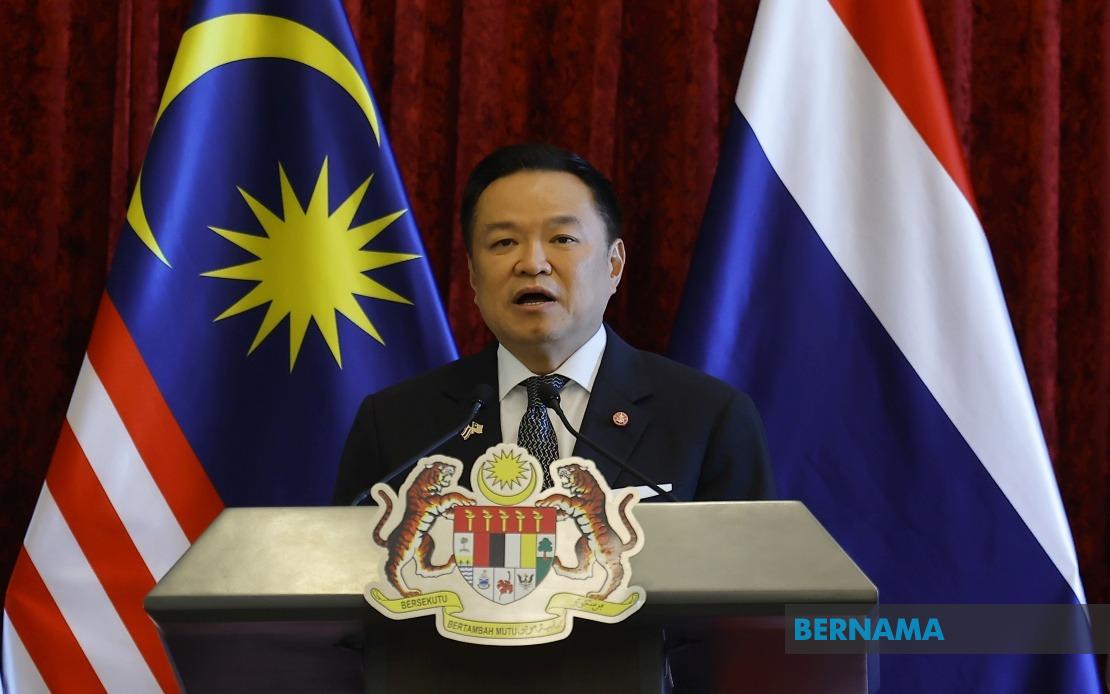
Thai Prime Minister Anutin Charnvirakul has underscored that resolving the protracted conflict in Thailand's southern border provinces and tackling the attendant security challenges constitute core objectives for his administration. Speaking alongside Malaysian Prime Minister Datuk Seri Anwar Ibrahim during a joint press conference in Putrajaya on Thursday, Anutin stressed that the two nations would deepen and sustain their collaborative efforts to enhance both security frameworks and socioeconomic development across the contentious border region.
The Thai premier articulated a foundational principle underpinning peace initiatives in the area: that stability and economic progress are mutually reinforcing. "Peace creates the conditions for development, while development helps build lasting peace," Anutin observed, framing the challenge not merely as a security problem requiring military responses, but as a structural issue demanding comprehensive solutions that address root causes of grievance and instability.
Anutin's remarks reflected appreciation for Malaysia's strategic positioning as an impartial facilitator in what has become known as the Southern Thailand Peace Dialogue process. This mediation role is significant within the region, as Malaysia bridges a relationship fraught with historical sensitivities and competing interests. The country has leveraged its diplomatic standing to encourage dialogue between Bangkok and armed groups, demonstrating the kind of soft power that Southeast Asian neighbours can exercise in intra-regional disputes.
Central to Malaysia's facilitation efforts is a formal peace dialogue structure established with Thai government participation and representatives from significant opposition movements. The Malaysian delegation is headed by Datuk Mohd Rabin Basir, who brings considerable institutional experience from his previous position as director-general of the National Security Council. Basir's appointment on July 1, 2024, marked a deliberate choice to place someone with deep security apparatus knowledge at the helm of peace negotiations, suggesting Malaysia's commitment extends beyond ceremonial diplomacy.
Thailand's counterpart in these talks is Thanat Suwannanont, who directs the National Intelligence Agency. This alignment of negotiators drawn from security and intelligence communities reflects how both governments view the talks—not as peripheral peace-building exercises, but as integral components of their respective national security strategies. The participation of Barisan Revolusi Nasional (BRN) representatives adds complexity, as BRN's involvement legitimises non-state actors whilst creating expectations that concessions and agreements will carry binding weight.
Anwar's public assurance that Malaysia categorically rejects violence and remains determined to collaborate with Thailand in holding perpetrators accountable addressed a critical concern in bilateral relations. Such statements serve multiple audiences: they reassure Bangkok of Malaysian commitment whilst signalling to domestic constituencies that Malaysia operates with principled clarity regarding rule of law and criminal responsibility. The emphasis on bringing those responsible to justice reflects an emerging consensus that accountability mechanisms, rather than blanket amnesties, may form part of any sustainable settlement.
For Malaysian readers, the significance of these developments extends beyond symbolic bilateral cooperation. The southern Thai conflict has direct implications for Malaysia's own security posture, as the border region encompasses Yala, Pattani, and Narathiwat provinces adjacent to Kelantan and Terengganu. Cross-border movements of combatants, weapons smuggling, and spillover effects from Thai military operations have periodically affected Malaysian communities. Furthermore, Malaysian citizens—both Muslim and non-Muslim—work and operate businesses in the affected Thai provinces, creating humanitarian and consular dimensions to the conflict.
The peace dialogue framework represents a maturation of Thai-Malaysian approaches to border management. Historically, the relationship suffered from mutual suspicion regarding intervention, religious dimensions of the conflict, and differing strategic priorities. The current dialogue process suggests that both governments recognise the futility of securitised approaches alone and the necessity of political settlement. Malaysia's neutral mediation stance provides an alternative to the zero-sum framing that characterised earlier periods.
Development initiatives accompanying peace efforts carry particular weight in the southern Thai context. Areas wracked by decades of violence lag significantly in infrastructure, education, and economic opportunity—factors that sustain grievance cycles and recruitment pipelines for armed groups. Joint Thai-Malaysian development projects, potentially supported through ASEAN mechanisms or bilateral arrangements, could address these structural vulnerabilities. Thailand's willingness to contemplate sustained development partnership suggests recognition that military dominance alone cannot resolve the underlying conflicts.
The timing of Anutin's statements reflects Thailand's broader political stabilisation following institutional transitions. A government explicitly positioning peace as a priority rather than securitisation represents a potential shift in Bangkok's approach to the southern problem. However, Thai military factions, provincial bureaucracies, and hardline Buddhist nationalism constitute countervailing forces that may resist compromise, making Malaysia's continued mediation role crucial in maintaining momentum.
Regionally, the Thai-Malaysian border situation also influences ASEAN cohesion and broader Southeast Asian stability calculations. Indonesia, Vietnam, and other neighbours monitor developments, as intra-regional conflicts can generate refugee flows, arms trafficking networks, and sectarian spillovers affecting the wider community. Malaysia's constructive engagement demonstrates how medium-sized powers can add value to regional stability through patient diplomacy and neutral positioning.
Moving forward, the test of these commitments will emerge through concrete progress in dialogue outcomes, measurable decreases in violence incidents, and the mobilisation of development resources. Anutin's reiteration of priorities and Anwar's public backing suggest both governments recognise the political necessity of demonstrating progress to domestic constituencies and regional partners. Whether these declarations translate into breakthrough agreements or structural transformation of the conflict remains the critical question.

