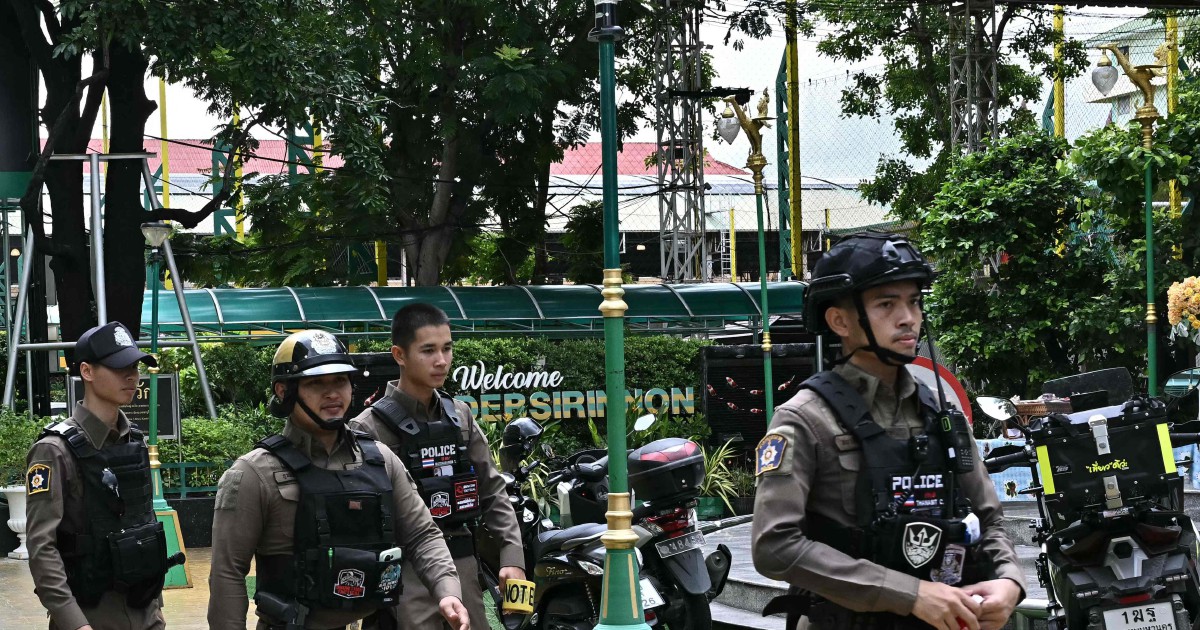
An international trafficking operation has ensnared eleven French nationals in Thailand, who were detained following the discovery of substantial quantities of cannabis in their possession at the start of the summer season. The detentions, confirmed by Thai law enforcement authorities to international news agencies, expose an increasingly common criminal tactic: luring unsuspecting European tourists into drug smuggling schemes through the promise of subsidised or complimentary holidays.
The scheme appears to have exploited the travel aspirations of French citizens through what authorities describe as a "free holiday" recruitment pitch. What presented itself as an attractive offer—a bargain-priced or fully funded escape to one of Southeast Asia's most popular tourist destinations—concealed a far more sinister purpose. The perpetrators of these networks systematically recruit individuals from Europe, often targeting those with limited financial means or those simply seeking affordable travel opportunities, and pressure them into transporting narcotics across international borders without their full knowledge or understanding of the legal consequences involved.
Several kilograms of cannabis were recovered from the luggage of these detainees, suggesting this was not a small-scale operation but rather part of a broader trafficking infrastructure. Thailand's approach to drug offences remains notably strict by international standards, and anyone caught with significant quantities of controlled substances faces substantial prison sentences. The French nationals arrested now face an uphill legal battle in a foreign jurisdiction, with some potentially looking at years of incarceration if convicted under Thai law.
This incident highlights how Southeast Asian tourist hubs have become critical nodes in global drug trafficking networks. Thailand, despite its reputation as a holiday paradise with world-class beaches and cultural attractions, has simultaneously become a transit point and source region for drug distribution across Europe and beyond. Criminal organisations operating in this region have refined their methods, moving beyond traditional courier systems to exploit the vulnerability of individual tourists who may not fully comprehend the risks they are taking.
The recruitment methodology employed by these networks deserves particular scrutiny. Rather than relying on traditional criminal networks, traffickers now leverage legitimate-seeming travel companies, social media platforms, and informal networks to identify and approach potential couriers. The appeal to financial desperation or wanderlust proves remarkably effective, especially among younger Europeans accustomed to backpacking across Asia. Once individuals accept the offer, they are provided with luggage containing narcotics and instructed to pass through customs at designated airports—a process that subjects them to significant personal risk without necessarily comprehending the magnitude of their involvement.
For Malaysia and the broader Southeast Asian region, this development carries important implications. Malaysia, like Thailand, functions as both a tourist destination and a strategic location along major drug trafficking routes connecting the Golden Triangle producer regions with international markets. The increasing sophistication of trafficking networks that target casual travellers suggests that enforcement agencies throughout the region must enhance cooperation and intelligence-sharing mechanisms. Customs authorities, in particular, need refined detection techniques and training to identify the behavioural patterns that distinguish legitimate tourists from those being coerced into drug transportation.
The French government's role in supporting its detained nationals remains a crucial dimension of this crisis. Consular assistance, legal representation, and diplomatic engagement can make meaningful differences in the treatment and eventual outcomes these individuals face. However, the broader diplomatic challenge extends to encouraging all nations to tighten regulations around fraudulent travel schemes and to prosecute those who operate these recruitment networks.
For potential travellers from Malaysia and neighbouring countries, this case underscores the necessity of rigorous verification when booking holiday packages, particularly those that seem disproportionately inexpensive or come through informal channels. Legitimate travel providers maintain transparent operations, verifiable business registrations, and clear terms of engagement. The sophisticated criminal networks operating across Asia rely on precisely the kind of desperation and haste that bypasses rational scrutiny.
The detention of these eleven individuals represents both a failure of prevention and an opportunity for enhanced regional understanding of how these networks operate. Thai authorities have demonstrated their commitment to enforcing drug laws aggressively, but the upstream problem—the recruitment of foreign nationals—remains inadequately addressed through international collaboration. The networks targeting European tourists are likely simultaneously targeting individuals from Asian nations, creating a shared security challenge that demands coordinated responses across law enforcement, immigration, and tourism regulatory bodies throughout Southeast Asia.
As more details emerge from the Thai investigation, French authorities and their Southeast Asian counterparts will need to trace the organisational structures behind these recruitment efforts. Understanding whether a single network orchestrated these detentions or whether multiple independent operators are running parallel schemes will significantly influence the enforcement response. What seems clear is that the "free holiday" model, however familiar it may have become in news reports, continues to devastate lives and undermine the legitimate tourism industries upon which regional economies increasingly depend.

