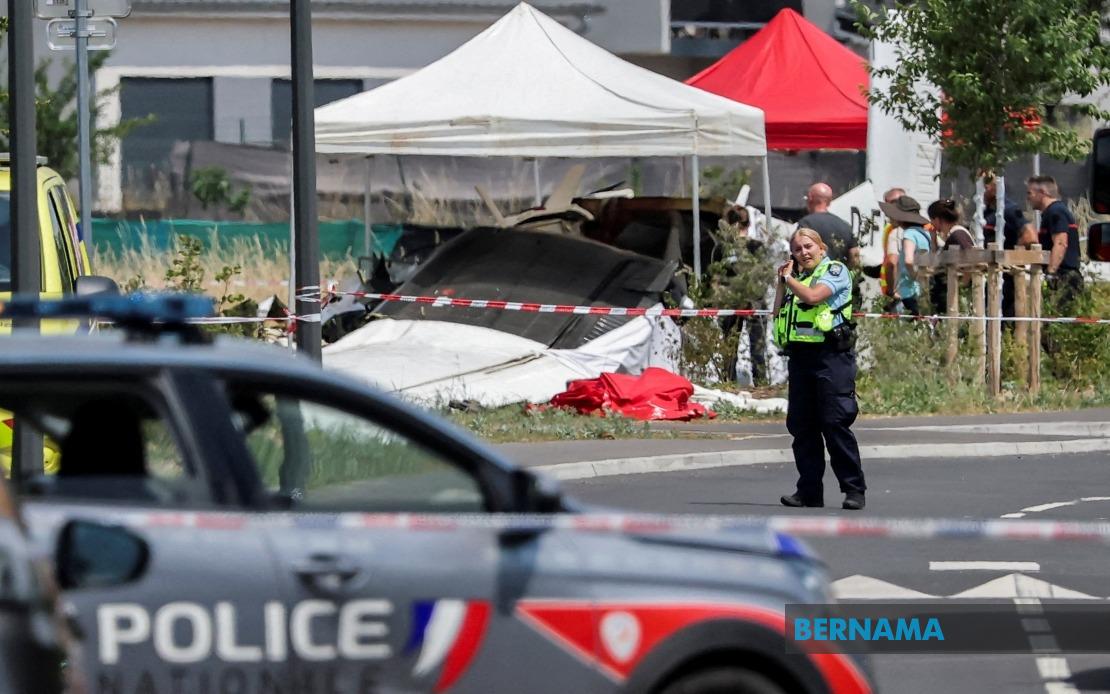
A tragic aviation incident unfolded in eastern France on Sunday when a civilian aircraft carrying skydivers and nurses plummeted to the ground near the city of Nancy, resulting in the death of all eleven people on board. The crash occurred in Tomblaine, a town within the Meurthe-et-Moselle department, only moments after the plane lifted off from Nancy-Essey Airport, marking one of France's deadlier recent air disasters involving a small civilian operator.
The doomed flight was transporting an unusual mix of passengers engaged in recreational activities. Among those killed were two groups of five parachutists who were conducting a scheduled skydiving session, along with the pilot. However, authorities soon revealed that the passenger manifest also included independent nurses who had joined the expedition as participants in what was described as an initiation ceremony or team-building event. This revelation added another layer to the tragedy, suggesting the flight served as a social gathering rather than a purely commercial skydiving operation.
Thierry Pechey, who heads the Meurthe-et-Moselle branch of the Order of Independent Nurses, provided crucial information to broadcasters about the victims' identities. His account clarified that independent nurses were among those participating in the fateful journey, joining experienced skydiving instructors in what was meant to be a memorable bonding experience. The mixing of professional skydiving personnel with nurses undertaking an initiation event highlighted how small civilian aircraft often accommodate diverse groups for specialized recreational purposes across Europe.
The immediate aftermath saw French authorities mobilizing their emergency response infrastructure across the region. Interior Minister Laurent Nunez confirmed his intention to visit the crash site on the same day to assess the situation firsthand and demonstrate governmental engagement with the crisis. Such ministerial-level responses underscore the significance French officials attach to major aviation incidents, particularly those involving loss of life among civilians engaged in leisure activities.
Meurthe-et-Moselle Prefect Yves Seguy took command of the coordinated emergency operations by activating the departmental operational centre, designed to marshal multiple agencies and services toward unified response efforts. This centralized approach enabled real-time monitoring of rescue and investigation activities, ensuring that police, firefighters, medical personnel, and aviation authorities worked in concert. The prefect's decision to personally oversee coordination from the operational centre reflected the gravity with which local officials treated the unfolding disaster.
Local law enforcement immediately established restrictions around the crash zone to facilitate the work of emergency responders and investigators. Authorities requested that members of the public maintain distance from the area around Rue Salvador Allende in Tomblaine, creating an exclusion zone that would allow rescue teams unimpeded access to wreckage and potential survivors. Such cordoning measures, while inconvenient for residents, prove essential for both safety and the preservation of evidence that aviation investigators require to determine the cause of the accident.
For Malaysian readers and broader Southeast Asian observers, this incident carries particular relevance given the region's heavy dependence on aviation for both commercial and recreational purposes. The crash underscores persistent risks associated with smaller civilian aircraft operations, even in highly developed nations with robust regulatory frameworks. Skydiving and adventure tourism represent growing industries across Southeast Asia, and this tragedy serves as a sobering reminder of the inherent dangers involved in these activities, regardless of the operator's experience level or location.
The mixing of professional personnel with amateur participants—as evidenced by the combination of skydiving instructors and nurses—raises questions about risk assessment and liability protocols for such ventures. Operations that amalgamate different passenger groups and purposes require careful consideration of safety procedures, aircraft maintenance standards, and pilot qualifications. European aviation authorities maintain some of the world's strictest standards, yet incidents still occur, suggesting that no amount of regulation entirely eliminates aviation hazards.
Investigators will now focus on determining what mechanical, operational, or environmental factors precipitated the crash immediately following takeoff. The timing of the accident—so soon after the aircraft left the runway—typically points toward either critical technical failure during ascent, pilot error, or sudden adverse weather conditions. Data from the aircraft's black boxes, if recoverable, will prove invaluable in reconstructing the final moments and identifying preventive measures for future operations.
This incident will likely prompt renewed scrutiny of recreational aviation operations involving specialized activities like skydiving. Regulatory bodies across Europe may review and potentially tighten requirements for aircraft used in such ventures, including enhanced maintenance protocols, pilot training standards, and passenger safety briefing procedures. The tragedy also underscores the importance of transparent communication regarding passenger manifests and the true nature of operations—information that helps authorities understand accident circumstances more rapidly.
For the families and colleagues of those who perished, this disaster represents profound loss. The victims were individuals pursuing recreational enjoyment alongside colleagues and fellow professionals, making the randomness of the tragedy particularly difficult. Their deaths will influence policy discussions and operational reviews that ripple across aviation sectors in France and beyond, potentially reshaping how similar adventures are conducted and regulated in the coming years.

