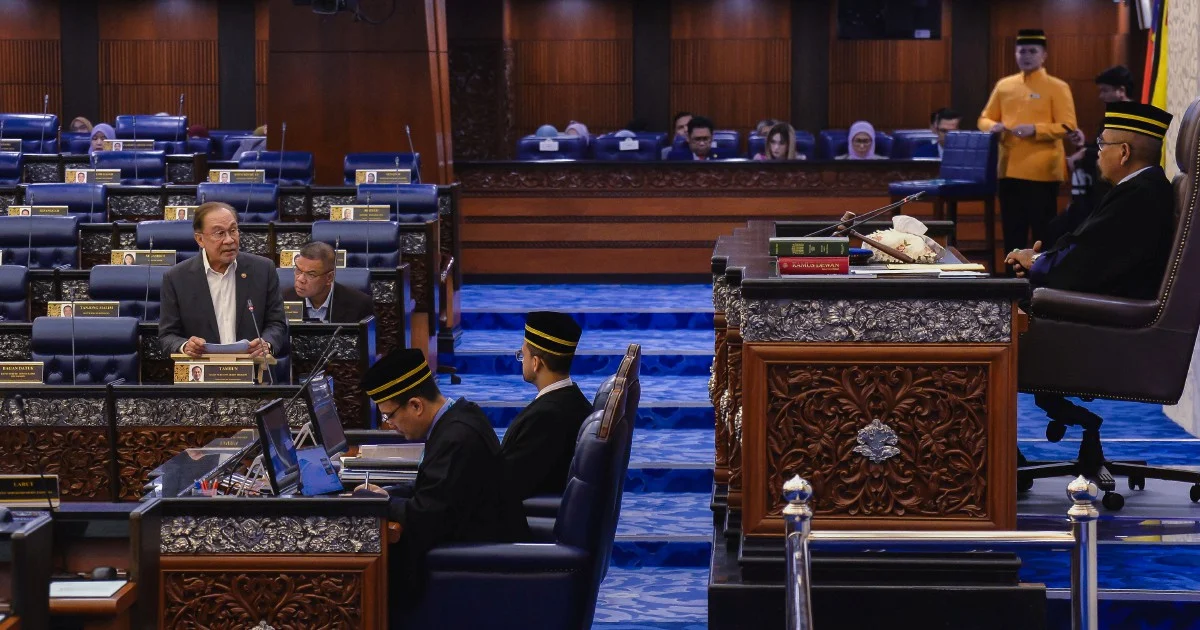
The Election Commission has indicated it will intervene if a caretaker government overrides established election guidelines by announcing policies or implementing decisions that carry financial consequences, Prime Minister Datuk Seri Anwar Ibrahim disclosed in Kuala Lumpur. The undertaking represents an effort to enforce stricter compliance during interim administrations between elections, a period traditionally marked by restricted governmental action to maintain democratic neutrality.
Caretaker governments have long occupied an ambiguous position within Malaysia's constitutional framework. Once parliament dissolves ahead of general elections, the outgoing administration continues in a holding capacity until a new government takes office. However, convention dictates that such interim governments should refrain from major policy shifts or budgetary commitments that could influence electoral outcomes or constrain successor administrations. The Election Commission's mandate to scrutinise breaches underscores growing concerns about the scope of discretionary power available to caretaker administrations.
The Prime Minister's statement arrives amid heightened attention to caretaker conduct following recent electoral cycles. Malaysia's election authorities have grappled with definitional challenges around what constitutes a prohibited "financial implication." Policy announcements spanning benefit increases, infrastructure projects, or subsidy implementations create obvious fiscal footprints, yet caretaker governments occasionally push boundaries by framing announcements as continuation of existing programs or routine administrative adjustments.
For Malaysian voters and observers of governance, the distinction matters considerably. A caretaker government announcing salary increases for public servants, for instance, commits taxpayer resources and potentially influences electoral sentiment by benefiting specific voter constituencies. Similarly, announcements regarding development projects, licensing approvals, or procurement contracts can channel resources toward particular regions or demographic groups, creating tangible electoral advantages. The Election Commission's enforcement commitment represents acknowledgment that informal conventions require institutional reinforcement.
Southeast Asia's broader democratic environment provides instructive parallels. Neighbouring jurisdictions have similarly grappled with caretaker period discipline, recognising that unrestrained interim governments can accumulate extensive financial obligations that democratically-elected successors inherit without consent. Thailand and Indonesia have both refined their own approaches through constitutional amendments and electoral commission guidance, attempting to balance administrative continuity with electoral fairness.
Implementing such oversight mechanisms presents practical challenges for enforcement bodies. Election commissioners must differentiate between prohibited decision-making and routine administrative functions that caretaker governments legitimately execute. Pension payments, utility procurement, or essential service maintenance cannot simply cease during interim periods. The Election Commission therefore requires sophisticated frameworks distinguishing routine operations from discretionary policy-making designed to generate political advantage.
The ramifications extend beyond immediate electoral cycles. Caretaker governments that accumulate substantial unbudgeted commitments create fiscal complications for incoming administrations, potentially constraining their policy agendas before they formally assume office. This dynamic proves particularly significant in Malaysia's context, where divided government or narrow parliamentary majorities sometimes result. An incoming government facing inherited financial obligations from its caretaker predecessor may find its legislative agenda significantly constrained.
Private sector actors and international observers also monitor caretaker conduct carefully. Businesses seeking government contracts or policy concessions may approach caretaker administrations believing such interim governments lack democratic legitimacy to commit future resources. Conversely, international investors consider governmental stability and consistency when evaluating Malaysia's investment climate. Caretaker periods characterised by unpredictable decision-making or regulatory uncertainty can temporarily depress business confidence.
The Prime Minister's confirmation that the Election Commission possesses enforcement capacity also signals Malaysia's commitment to institutional safeguards protecting electoral integrity. Citizens may harbour concerns that powerful caretaker leaders could exploit their interim positions to entrench political advantages, circumvent parliamentary oversight, or favour particular constituencies. Explicit Election Commission authority to investigate and act against such breaches addresses these apprehensions through transparent institutional mechanisms.
Looking forward, Malaysia's electoral management authorities may develop detailed guidance clarifying which decision categories require election commission pre-approval during caretaker periods. Precedent from previous elections, legal opinions, and constitutional scholarship could inform such guidelines. Political parties themselves possess incentives to support clarity, as ambiguity benefits incumbent caretaker governments but disadvantages opposition figures assuming caretaker responsibilities following electoral defeats.
The statement also reflects evolving administrative sophistication within Malaysia's institutional ecosystem. Earlier democratic periods sometimes accepted caretaker arrangements with minimal oversight, trusting outgoing leaders' voluntary compliance with conventions. Contemporary Malaysian governance recognises that institutional mechanisms better protect public interests than reliance upon individual probity. This shift toward formal safeguards characterises broader trends across Southeast Asian democracies.
For ordinary Malaysian citizens, these developments carry tangible significance. Transparent enforcement of caretaker guidelines helps ensure that election outcomes genuinely reflect voter preferences rather than incumbent advantages accumulated through discretionary spending. Over multiple electoral cycles, such institutional discipline accumulates substantial cumulative benefits for democratic governance quality. The Election Commission's mandate therefore contributes to systemic fairness extending beyond any single campaign.
As Malaysia continues navigating complex political transitions between electoral cycles, the Election Commission's active engagement with caretaker conduct oversight demonstrates institutional maturation. The commission's willingness to scrutinise financial implications of interim governmental decisions establishes important precedent, signalling that Malaysian democracy takes electoral period neutrality seriously. This commitment, reinforced by Prime Minister Anwar Ibrahim's public confirmation, strengthens confidence that Malaysia's democratic institutions increasingly possess effective tools for protecting electoral integrity and governance fairness.

