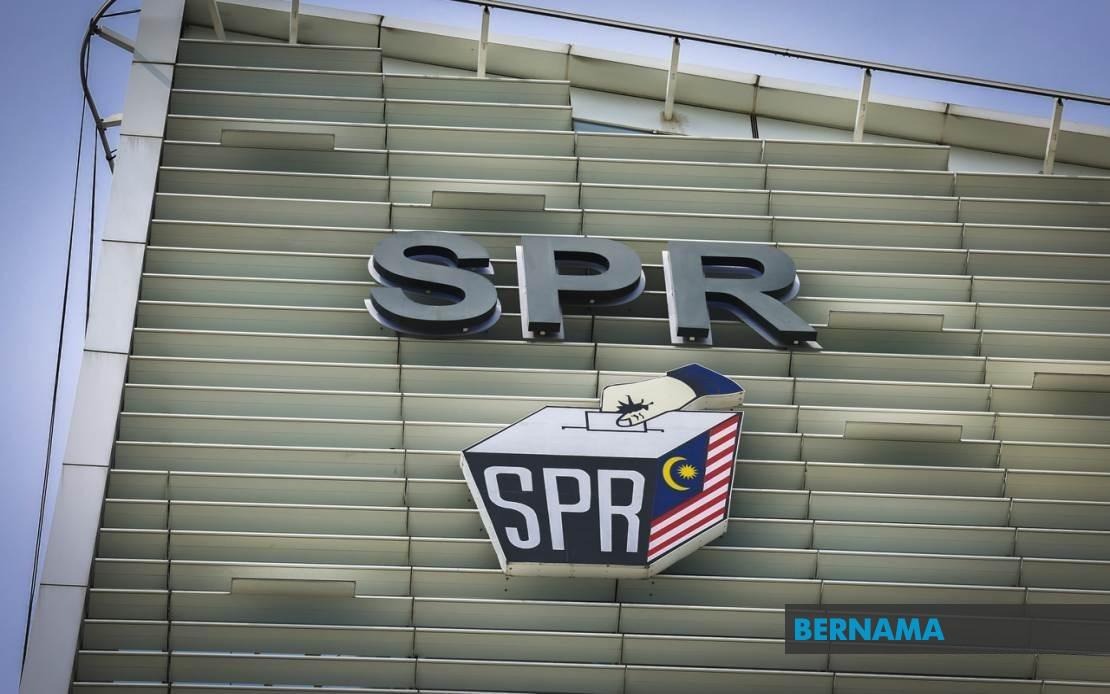
The Election Commission is preparing a comprehensive review of proposals to grant postal and early voting privileges to Malaysia's auxiliary police workforce, according to Deputy Minister M. Kulasegaran in the Dewan Negara today. The examination will assess whether the 27,000 auxiliary officers currently serving across government agencies, public transport operators, ports, airports, and energy facilities can be accommodated within existing electoral frameworks whilst maintaining security operations during election periods.
Kulasegaran's statement followed a motion tabled by Senator Datuk Salehuddin Saidin highlighting a significant gap in voting accessibility for this essential security personnel category. Unlike regular police and armed forces members who already qualify for postal voting under Category 1A regulations, auxiliary officers are denied equivalent provisions despite performing comparable duties protecting national infrastructure. This disparity creates practical challenges when these officers are required to remain at their posts during polling day, potentially denying them their democratic right to participate in elections.
The proposal addresses a genuine operational dilemma facing government agencies and private sector employers who deploy auxiliary police at strategic locations. If all officers at a single facility were permitted to take leave simultaneously on election day, security coverage would be compromised at airports, ports, power generation plants, financial institutions, and other critical infrastructure. Salehuddin's motion reflects growing recognition that electoral rules must adapt to accommodate modern security requirements without sacrificing either democratic participation or national operational capacity.
Currently, postal voting remains available to three defined categories of voters. The first encompasses Election Commission staff, election workers, armed forces and police personnel on duty, and media representatives assigned to election coverage. The second category includes Malaysian citizens living permanently abroad. The third covers selected government department and agency personnel whose work duties cannot be suspended on polling day. Auxiliary police fall outside these classifications despite demonstrating comparable operational constraints to personnel within Category 1A.
The Election Commission's forthcoming study must navigate complex legislative terrain. Any expansion of postal voting eligibility requires careful consideration of the Election Registration of Electors Regulations 1981, which currently define the boundaries of permissible voting methods. Kulasegaran emphasised that electoral procedures must balance voter convenience against legal safeguards designed to maintain electoral integrity and prevent fraud. The regulatory framework exists partly to ensure that postal voting remains exceptional rather than routine, preserving the principle that in-person polling remains the primary voting mechanism.
Beyond regulatory adjustments, the EC has encouraged all voters, including auxiliary police personnel, to consider transferring their electoral registration to constituencies where they currently reside. This alternative approach leverages existing regulations to provide practical relief without requiring comprehensive legislative reform. However, many auxiliary officers stationed at remote facilities—such as oil and gas platforms, port operations, or isolated energy installations—may find relocation impractical, making postal voting the more feasible solution for their circumstances.
The auxiliary police sector represents a substantial and often overlooked segment of Malaysia's security infrastructure. These officers work across diverse sectors including telecommunications, banking, retail, hospitality, and government facilities, performing duties ranging from access control to asset protection. Their exclusion from postal voting provisions creates inequitable treatment compared to uniformed police and military personnel performing analogous functions. The disparity highlights how electoral regulations, though well-intentioned, sometimes fail to account for Malaysia's evolving employment landscape and security arrangements.
Salehuddin's motion came during the Senate's Adjournment Speech session, marking the first debate on a government administrative matter under the procedures introduced in 2022. The venue itself reflects the Senate's evolving role in scrutinising executive policy, complementing parliamentary oversight mechanisms. That this voting accessibility issue reached the Dewan Negara demonstrates mounting awareness among legislators that electoral participation should not be determined by professional obligation.
The Election Commission faces competing priorities in its review. The organisation must ensure that expanding postal voting eligibility does not create administrative burdens that compromise voting security or tabulation accuracy. Processing postal ballots requires robust systems to verify voter identity, prevent duplicate voting, and maintain ballot confidentiality across dispersed locations. Additionally, extending postal voting to large numbers of auxiliary officers concentrated in specific sectors could strain election logistics during compact electoral calendars.
For Malaysian businesses and government agencies employing auxiliary police, this proposal carries operational significance. Clear resolution of voting access would provide certainty in workforce planning and scheduling around election dates. Conversely, continued restrictions force employers to either grant ad hoc leave requests that could affect security coverage or risk accusations of restricting workers' voting rights. A standardised postal voting mechanism would eliminate this ambiguity.
The study's outcomes will reveal much about Malaysia's evolving approach to balancing democratic principles against operational pragmatism. The nation has demonstrated willingness to adapt electoral procedures through registrations transfers and early voting provisions for specific groups. Expanding these mechanisms to auxiliary police would represent logical extension of existing flexibility, recognising that modern governance sometimes requires non-traditional solutions to protect both democratic participation and national security interests simultaneously.
Kulasegaran's commitment to studying the proposal suggests receptiveness to the underlying argument, though legislative and regulatory adjustments may require time. The examination must involve the Home Ministry, which oversees auxiliary police regulation, alongside the Election Commission and relevant enforcement agencies. Coordination across these bodies will determine whether this review produces concrete reforms or remains exploratory exercise. For Malaysia's 27,000 auxiliary officers and the critical infrastructure they protect, the Commission's findings could determine whether their voting rights finally receive parity with other security personnel.

