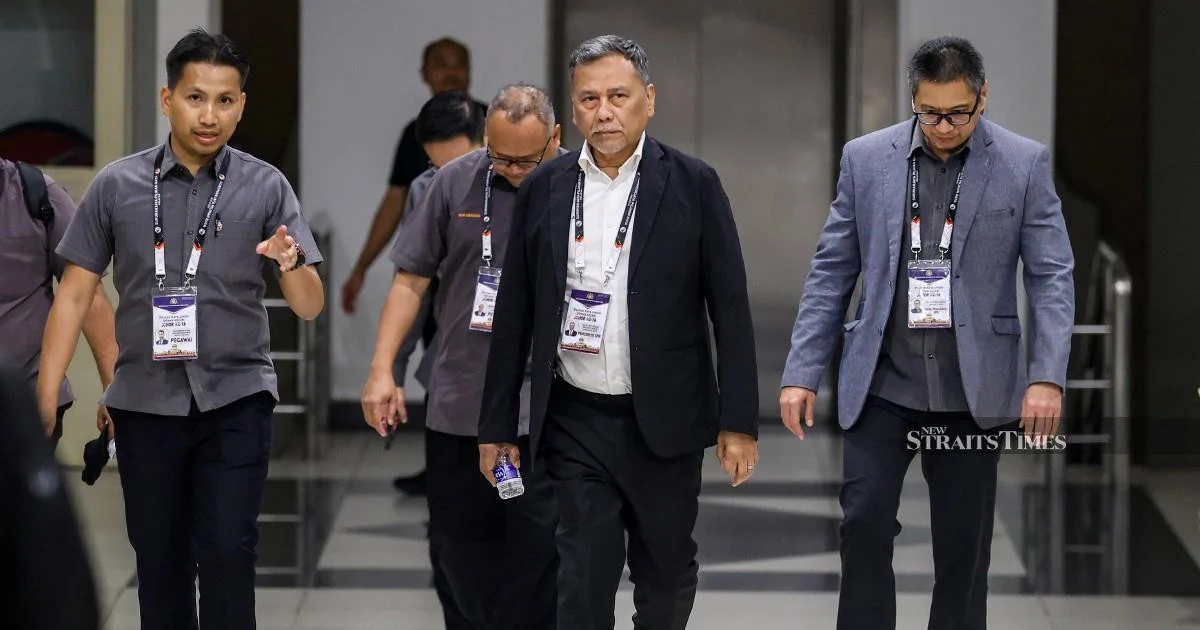
The Election Commission announced it will undertake a thorough examination of instances where voters have been posting photographs of their marked ballot papers across social media platforms, signalling growing concern over the practice during recent electoral cycles in the country.
The announcement, made in Iskandar Puteri, reflects the regulatory body's recognition that digital technology has fundamentally altered how voters engage with the electoral process and share their civic participation. What was once a private act conducted within the polling booth increasingly becomes a public statement through smartphone cameras and online sharing, creating new challenges for electoral authorities worldwide.
The practice of photographing marked ballots raises multiple concerns that extend beyond simple infractions. While Malaysia has long maintained laws against ballot-tampering and electoral fraud, the scale at which social media enables ballot documentation has outpaced traditional enforcement mechanisms. The Election Commission must now develop strategies to monitor, investigate, and respond to violations that occur within minutes across distributed digital networks rather than within a single geographic location.
From a privacy perspective, voters who document their ballots inadvertently create a digital record of their voting preferences, potentially exposing their choices to family members, employers, or other interested parties who might view the images online. This fundamentally contradicts the principle of the secret ballot, a cornerstone of democratic systems that Malaysia has upheld since independence. The confidentiality of voting decisions protects citizens from coercion, intimidation, or reprisal based on their electoral choices.
The commission's decision to intensify scrutiny also addresses concerns about potential vote-buying or coercion. In some electoral contexts globally, individuals have been pressured or paid to photograph their ballots as evidence they voted in a particular way. While such allegations have not been widely documented in Malaysia specifically, the Election Commission's preventive approach suggests policymakers are conscious of emerging threats that could compromise electoral integrity during future elections.
Investigating these cases presents practical difficulties that differ significantly from traditional electoral violations. The decentralised nature of social media means violations occur across multiple platforms simultaneously—Facebook, Instagram, TikTok, and other networks—requiring coordination between the Election Commission and technology companies. Furthermore, determining intent becomes crucial; a voter who inadvertently photographs themselves holding a marked ballot differs significantly from one deliberately attempting to prove their voting choice or circumvent electoral rules.
For Malaysian voters and political observers, the commission's attention to this issue signals that authorities recognise electoral enforcement must evolve with technological change. As Malaysia approaches future state and federal elections, clearer guidelines regarding what constitutes acceptable behaviour during the voting process may become necessary. Public education campaigns explaining why ballot photographs pose risks could help voters understand the reasoning behind such restrictions.
The issue also has broader implications for Southeast Asia, where social media penetration continues increasing and younger voters—more digitally native—comprise larger portions of the electorate. Other regional nations facing similar challenges may observe how Malaysia's Election Commission addresses this gap between traditional electoral law and modern digital behaviour.
The commission's review likely encompasses not only identifying violators but also understanding motivations behind ballot photography. Some voters may share images out of civic enthusiasm or genuine confusion about regulations, while others may have more problematic intentions. This nuanced understanding will be essential for developing proportionate responses that maintain electoral integrity without excessive punitive measures against voters exercising democratic participation.
Looking forward, the Election Commission may consider whether existing electoral legislation adequately addresses digital-age violations or whether new regulations are necessary. Different jurisdictions have approached this differently; some have explicitly prohibited ballot selfies through legislation, while others rely on existing rules about ballot conduct. Malaysia's regulatory approach will signal how seriously the country prioritises adapting its democratic institutions to contemporary challenges.
The announcement also reflects broader debates within Malaysia about balancing citizen freedoms with electoral security. Voters understandably wish to celebrate their participation and share this act with their networks, yet unchecked ballot documentation creates verifiable records of individual political preferences that contradict fundamental democratic principles. Resolving this tension will require careful policymaking that respects voter autonomy while protecting the integrity of the secret ballot.
As the Election Commission proceeds with its investigation and review, stakeholders including political parties, civil society organisations, and technology platforms will likely watch closely. The outcomes could shape electoral conduct guidelines and potentially influence how Malaysians approach voting in coming years, making this seemingly straightforward administrative review a significant moment for democratic practice in the country.

