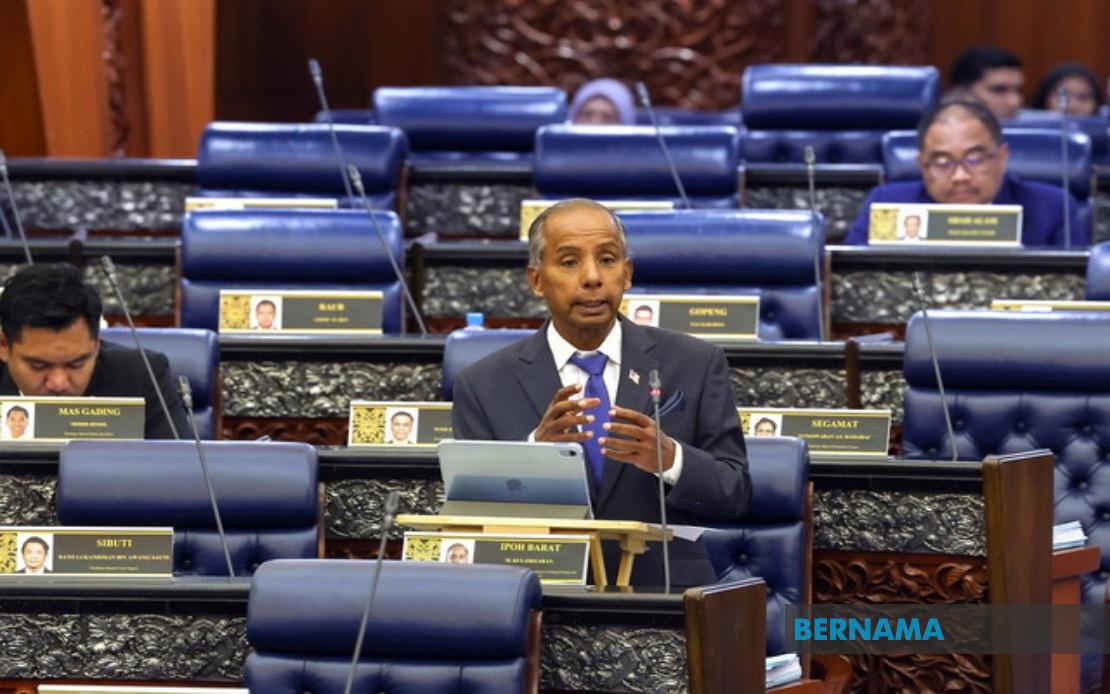
The Election Commission is conducting an extensive examination of a proposal to introduce domestic postal voting for Malaysian voters across Peninsular Malaysia, Sabah and Sarawak, marking a potential watershed moment in the country's electoral modernisation efforts. The scope of this initiative reflects growing recognition within Malaysia's electoral administration that voting accessibility remains a critical issue for millions of citizens, particularly those living in remote areas, diaspora communities, and individuals with mobility constraints.
M. Kulasegaran, Deputy Minister in the Prime Minister's Department (Law and Institutional Reform), disclosed the review's progress during parliamentary proceedings, emphasising that the work involves extensive consultation with multiple stakeholders. The inclusion of political parties in these discussions underscores the cross-partisan nature of electoral reform, suggesting that the government recognises postal voting as a matter transcending partisan advantage. This collaborative approach contrasts with more contentious electoral proposals and reflects international best practice in electoral reform implementation.
The timeline for this significant undertaking extends into 2025, with the Election Commission expected to complete its comprehensive study within that period. This deliberately measured pace allows for thorough vetting of implementation mechanisms, security protocols, and administrative feasibility across Malaysia's diverse geographical and demographic landscape. The extended duration also provides adequate opportunity for feedback from political parties, civil society organisations, and electoral experts, ensuring that any eventual framework incorporates lessons learned from international postal voting systems and addresses Malaysia-specific concerns.
Postal voting presents particular relevance for Malaysia's distributed population, especially given the geographical challenges faced by voters in Sabah and Sarawak, where distances between population centres and polling stations can be substantial. For workers employed far from their registered constituencies, postal voting could substantially increase electoral participation rates and reduce the administrative burden currently imposed on voters seeking advance voting arrangements. The initiative also carries implications for Malaysian diaspora communities in neighbouring countries, though the current proposal focuses on domestic voters.
Beyond the postal voting examination, Kulasegaran signalled governmental receptiveness toward restructuring the Election Commission's institutional positioning. The proposal to place the Commission under parliamentary oversight rather than the Prime Minister's Department has gained traction in recent policy discussions, with government representatives now openly acknowledging its merit. This potential repositioning would align Malaysia more closely with international standards for electoral independence, though such institutional changes require careful legislative engineering and political consensus.
The government's openness to reconsidering the Commission's administrative placement reflects broader discourse around electoral integrity and institutional autonomy. By removing the Election Commission from executive departmental structures and positioning it under parliamentary scrutiny, the reform would theoretically enhance public confidence in the Commission's impartiality and independence. This development demonstrates that electoral reform conversations in Malaysia extend beyond procedural modifications to encompass structural governance questions.
Regarding enforcement challenges at polling stations, the government defended existing mechanisms governing mobile telephone usage during voting. The Election Commission maintains that current control procedures prove sufficient for managing this particular concern, suggesting that existing protocols achieve desired compliance levels without requiring legislative enhancement. The refusal to designate mobile phone violations as a specific offence under the Election Offences Act 1954 indicates the government's preference for administrative management rather than criminalisation of polling conduct breaches.
This measured approach to mobile phone enforcement reflects practical considerations about prosecution and enforcement resource allocation within Malaysia's electoral administration. Rather than creating additional statutory offences, the Commission appears to rely upon polling station officials' discretionary authority and existing general electoral offence provisions to address disruptive conduct. This philosophy prioritises operational efficiency over legislative expansion, though critics may contend that clearer statutory definitions could strengthen enforcement consistency across the country's tens of thousands of polling stations.
The convergence of these electoral discussions—postal voting implementation, institutional restructuring, and polling station management—suggests that Malaysian electoral governance faces a period of substantive reconsideration. The studies and policy deliberations underway will likely influence electoral processes for subsequent decades, affecting how millions of Malaysians participate in democratic participation. The inclusion of Sabah and Sarawak in the postal voting review acknowledges their particular geographical and administrative circumstances, ensuring that any framework adopted recognises Malaysia's regional diversity.
For Southeast Asian observers monitoring Malaysia's electoral evolution, these developments carry instructional value. Malaysia's deliberative approach to postal voting implementation—emphasising stakeholder engagement over rushed adoption—provides a model for other regional democracies grappling with similar accessibility questions. The government's willingness to contemplate structural reforms affecting electoral bodies demonstrates receptiveness to international norms regarding electoral independence, even where implementation requires navigating domestic political sensitivities.
Stakeholders including opposition parties, civil society organisations, and constitutional scholars will likely scrutinise both the postal voting study's eventual recommendations and any parliamentary proposals regarding Commission restructuring. These initiatives collectively represent Malaysia's response to evolving expectations surrounding electoral access, integrity, and institutional independence in an increasingly complex democratic landscape.

