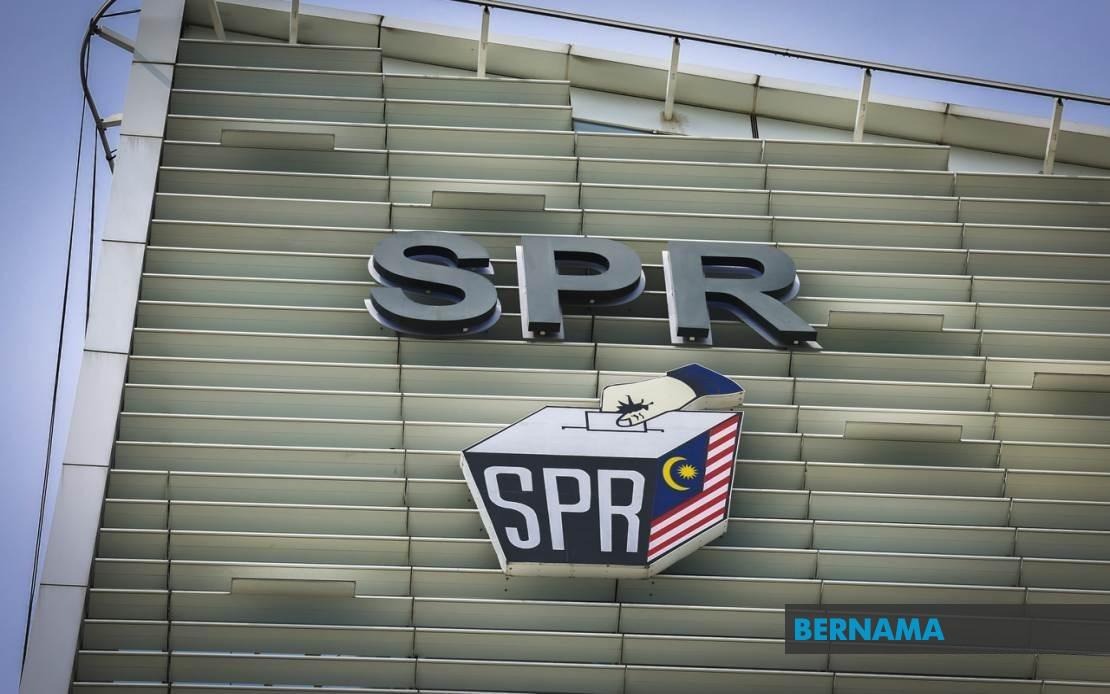
The Election Commission has begun distributing postal ballot papers to eligible voters participating in the 16th Negeri Sembilan state election, marking a crucial milestone in the electoral preparation process. In total, 13,263 postal ballots were handed out to voters who qualify under various categories established by electoral law, reflecting the commission's commitment to ensuring all eligible citizens can exercise their franchise despite geographical or professional constraints.
According to Datuk Khairul Shahril Idrus, the Election Commission's secretary, the distribution exercise adheres strictly to the Elections (Postal Voting) Regulations 2003, a legal framework designed to accommodate voters unable to cast their ballots in person. The structured approach divides eligible postal voters into distinct categories, each governed by specific regulations and procedural requirements that ensure both accessibility and electoral integrity.
The largest cohort of postal voters comprises election officials, government commissioners, police and military personnel, and media practitioners covering polling-related duties. These professional groups received 12,669 ballot papers through Form 1A, recognizing that their work obligations or security assignments during the election period necessitate alternative voting arrangements. This category reflects the practical realities of conducting a nationwide democratic exercise while maintaining the operational capacity of state institutions.
A secondary but significant group consists of Malaysian citizens residing abroad who have registered to vote in their home constituencies. Approximately 343 postal ballots were issued to this diaspora through Form 1B, acknowledging the reality that many Malaysian expatriates wish to maintain a voice in domestic political affairs despite living outside the country's borders. This provision has become increasingly important as international migration patterns have grown more complex.
The third designated category involves personnel from 11 security and health sector agencies, who received 251 postal ballots through Form 1C. This allocation underscores the election commission's recognition that certain critical government functions must continue uninterrupted during polling periods, and the workers performing these essential duties deserve voting access commensurate with their civic responsibilities.
The entire distribution process was conducted transparently, with representatives from all 103 contesting candidates and independent aspirants present to observe proceedings. This transparency mechanism serves multiple purposes: it builds public confidence in the integrity of postal voting arrangements, provides candidates with assurance that procedures are being followed correctly, and creates an auditable record of ballot issuance that can be reviewed if electoral disputes subsequently arise.
Voters receiving postal ballots face specific responsibilities to ensure their votes are properly cast and preserved. The Election Commission has emphasized that all postal voters must complete their Identity Declaration Forms accurately and comprehensively, as incomplete or incorrect documentation could render their votes invalid. This requirement balances voter accessibility with the need to maintain electoral standards and prevent fraudulent voting attempts.
Critical timing constraints shape the postal voting process. Voters who receive postal ballots must mark them and return completed documents to their respective returning officers before 5 pm on August 1, the designated polling day. This deadline applies regardless of postal delays or other logistical complications, meaning voters must account for delivery times when deciding when to submit their ballots. The compressed timeframe reflects electoral law's requirement that ballot counting occur promptly after voting concludes.
The Election Commission has also issued explicit guidance on maintaining ballot secrecy, a fundamental democratic principle. Postal voters are specifically warned against photographing their ballot papers or circulating such images through social media platforms. This instruction addresses modern challenges to electoral privacy, acknowledging that digital devices have created new avenues through which voters might inadvertently or deliberately compromise ballot secrecy or enable vote-buying schemes.
The broader context involves a competitive electoral race across Negeri Sembilan's 36 state assembly seats. One hundred and three candidates representing various political parties and standing as independents are competing for these positions, demonstrating the significant political stakes in this contest. The scale of candidacy means that postal voting procedures must accommodate substantial electoral participation while managing administrative complexity.
Negeri Sembilan's eligible voter population stands at approximately 889,490 registered electors, based on the electoral commission's database updated through June 4, 2026. This figure comprises 867,151 ordinary voters who will participate during standard polling hours, alongside 16,884 military personnel and their spouses and 5,455 police officers designated as early voters. These demographic segments and their designated voting windows illustrate how electoral law attempts to balance universal participation with operational feasibility.
The election schedule itself provides opportunities for advance participation beyond standard postal voting. Early voting is scheduled for July 28, enabling eligible voters in specific categories to cast their ballots several days before the official polling day. This staggered approach reduces congestion at polling stations and accommodates shift workers and other citizens whose schedules might conflict with standard voting hours.
The postal voting distribution represents a meticulous procedural exercise that reveals how modern elections balance democratic inclusivity with administrative rigour. By establishing multiple categories of postal voters and distributing ballots weeks before election day, the Election Commission ensures that geographic location, professional obligations, or security assignments need not prevent citizens from participating in state governance. This infrastructure of postal voting has become fundamental to Malaysian electoral practice, enabling the nation to maintain high participation rates while accommodating the complex realities of contemporary life.

