A tragic accident during election campaign preparations claimed the life of a 34-year-old man in Negeri Sembilan yesterday, raising fresh concerns about road safety during the state's intensive political period. The victim was struck by a lorry while engaged in flag installation work for the 16th Negeri Sembilan state election campaign along Jalan Kuala Sawah-Rantau, in the vicinity of Kampung Belangkan. The incident, which occurred at approximately 6.40 pm, resulted in the fatal wounding of the worker engaged in routine campaign activities that have become a visible hallmark of Malaysian election seasons.
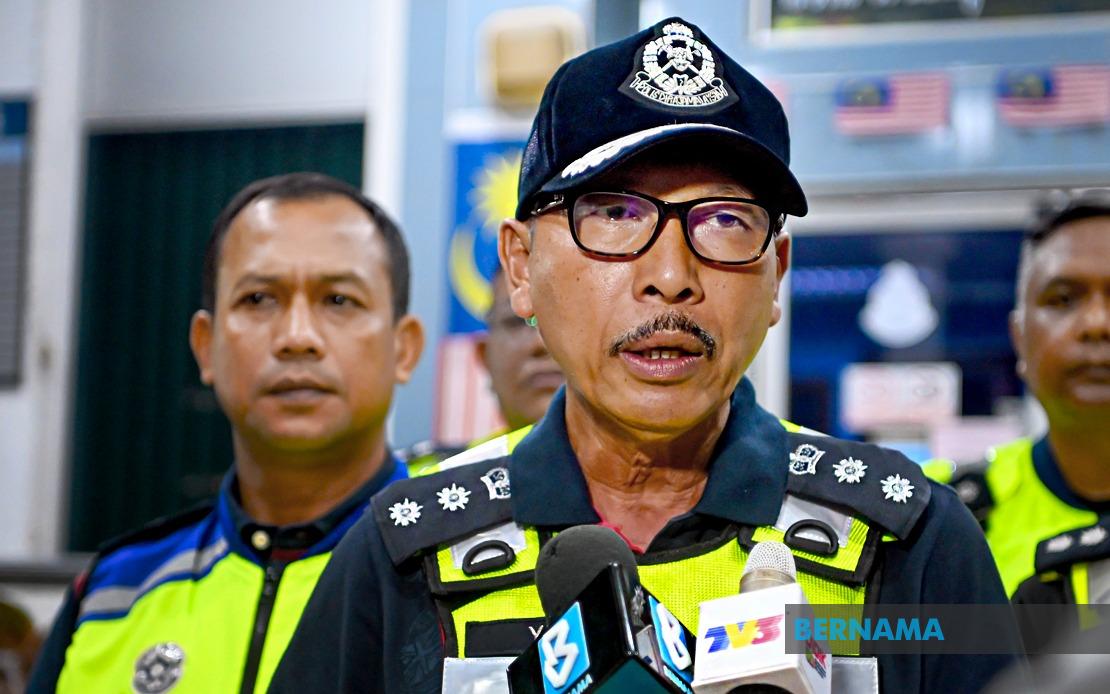
According to Seremban district police chief ACP Mohd Yatim Osman, preliminary findings indicate that the vehicle collided with a roadside signpost before striking the victim, who had been positioned along the shoulder of the road in the direction of Rantau. The impact of the collision proved immediately catastrophic, inflicting severe injuries to the victim's face and head region. He was pronounced dead at the scene, with no opportunity for medical intervention to alter the outcome.
The identity of the vehicle remains unconfirmed at this stage, though investigators have established that it was a lorry that initiated the collision. Most concerning for law enforcement authorities is the fact that the driver abandoned the scene immediately after the accident, leaving no information about their identity, the vehicle's registration, or their whereabouts. This aspect of the incident has elevated the priority of the police investigation, transforming what might be classified as a traffic accident into a criminal matter requiring active pursuit of a fleeing suspect.
The election campaign cycle in Malaysia frequently sees volunteers and party workers mobilized across communities to erect bunting, banners, and flags in public spaces. While such activities form an integral part of democratic participation and campaign visibility, they necessarily expose workers to traffic hazards, particularly when conducted along busy road corridors. The timing of this incident—during the preparation phase of a major state election—underscores the pressures placed on campaign volunteers who work extended hours under challenging conditions.
Police have initiated a formal investigation under Section 41(1) of the Road Transport Act 1987, which addresses offences related to motor vehicles involved in accidents causing injury or death. The charge framework available under this legislation carries significant penalties, particularly when combined with elements of hit-and-run behaviour, which itself constitutes a separate criminal offence. The investigation remains ongoing as authorities work to establish the precise sequence of events and identify both the vehicle and its operator.
The Seremban Police Department has issued a public appeal for information from anyone who witnessed the accident or who may possess knowledge about the incident. Investigating officer Insp Nor Fadzilah Mohd Zainuddin has been designated as the lead investigator, and the public has been directed to contact her directly at 019-4611794 or through the Seremban IPD Operations Room at 06-6033222. This dual-channel reporting mechanism reflects the urgency with which authorities are treating the matter.
For campaign organizations and party structures operating in Negeri Sembilan, this incident serves as a stark reminder of the occupational risks undertaken by volunteers during election periods. While such deaths remain statistically rare, they highlight the need for enhanced safety protocols when deploying workers in traffic-prone environments. Campaign managers and party leadership typically rely on volunteers who contribute their time without extensive safety training or personal protective equipment, making them particularly vulnerable to incidents such as this.
The circumstances of this case—particularly the driver's decision to flee rather than remain at the scene—raise questions about accountability within the transport sector. Heavy vehicle operators bear special responsibility on public roads, and the apparent negligence demonstrated in this instance has intensified scrutiny on how commercial driving conduct is monitored and enforced.
For Malaysian voters and political observers, this tragedy adds a human cost dimension to election campaigns that often receive little public attention. Beyond the visible campaign machinery of rallies, speeches, and publicity materials lies a network of dedicated workers whose contributions are frequently overlooked until incidents such as this occur. The loss of a campaign volunteer mid-way through an election cycle represents both a personal tragedy for the victim's family and an operational disruption for the political organization that mobilized him.
The investigation's progress will likely attract continued media and public interest, particularly if authorities successfully identify and apprehend the fleeing driver. Such an outcome would establish important legal precedent regarding accountability for hit-and-run incidents in Malaysia and might prompt broader discussions about mandatory compliance mechanisms for commercial vehicle operators.

