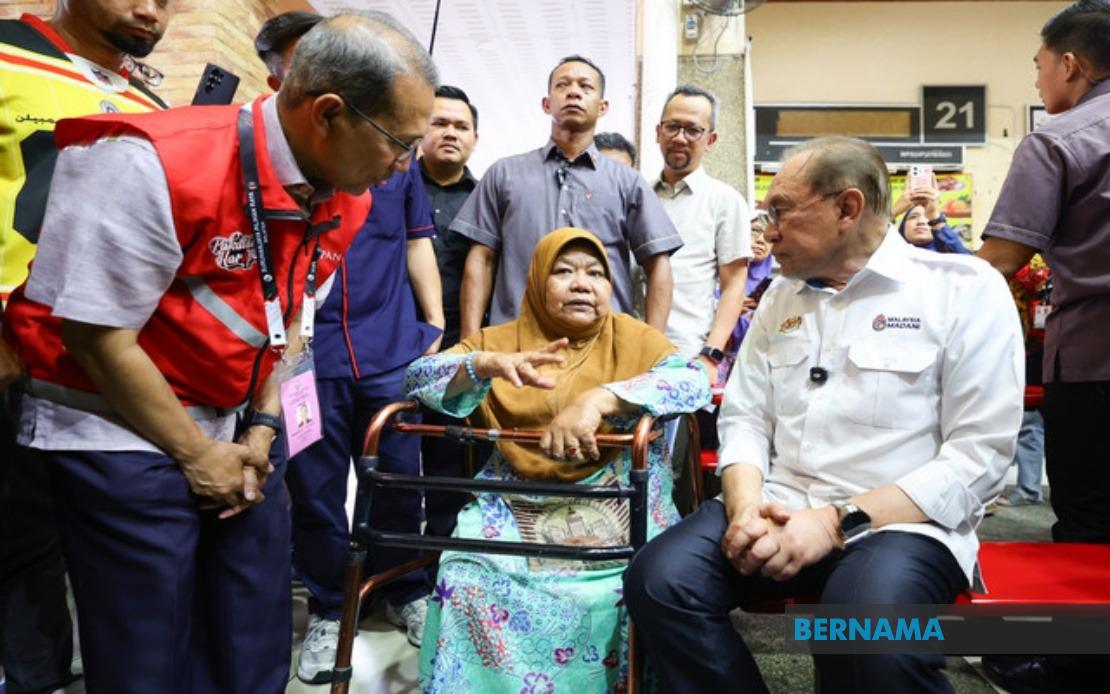
In a display of determination that caught the attention of bystanders at Benteng Ampangan in Seremban, 68-year-old Jumaah Mohd Alif navigated through light rain on her three-wheeled motorcycle to realise an ambition she had harboured for years. The journey from her village of Kampung Gedung Lalang, undertaken despite the weather and her physical limitations, culminated in a face-to-face meeting with Prime Minister Datuk Seri Anwar Ibrahim, a moment she described as profoundly meaningful and something she will treasure throughout her remaining years.
Jumaah's determination becomes all the more remarkable when considered against the backdrop of her medical history. Three and a half decades ago, an accident claimed her left leg, yet this loss has not diminished her spirit or her engagement with her community and national affairs. The prospect of meeting the country's leader in person—something that had eluded her despite decades of living in Malaysia—proved motivation enough to overcome both the inclement weather and the practical challenges posed by her disability.
When word spread through her village that the Prime Minister would be visiting Ampangan, Jumaah made the decision to undertake the trip herself rather than merely hope for a future opportunity. She told reporters that she had previously only observed Anwar from considerable distances or through television broadcasts, never genuinely believing that a direct encounter would become possible. The serendipitous nature of the visit—a chance communication from fellow villagers—transformed what might have remained an unrealised aspiration into lived experience within a matter of hours.
The timing of Anwar's presence in Negeri Sembilan was no coincidence. As the Prime Minister and chairman of Pakatan Harapan, he was in the state specifically to drum up support for the coalition ahead of polling day. With the Election Commission having scheduled early voting for July 28 and general polling for August 1, the 16th Negeri Sembilan state election represents a crucial opportunity for the government to consolidate its political standing in a state where margins can prove decisive. Campaign visits such as this one serve both the immediate electoral purpose and the broader function of maintaining visible engagement with voters across Malaysia's regions.
Beyond the personal satisfaction of meeting Jumaah, her story carries implications for how Malaysia's leadership relates to marginalised communities. Senior citizens and persons with disabilities often experience barriers—both physical and systemic—that prevent them from accessing public spaces and participating fully in civic life. Jumaah's willingness to surmount these obstacles to witness her Prime Minister speaks to a deeper hunger among this demographic for acknowledgment and inclusion in national conversations. Her presence at the event represented not merely an individual's achievement but also a statement about the importance of accessibility and recognition for vulnerable populations.
During their interaction, Jumaah articulated aspirations that reflect concerns shared widely among elderly and disabled Malaysians. She expressed a hope that the government would sustain and deepen its commitment to the welfare of senior citizens and persons with disabilities, suggesting that while progress may have been made, much remains to be done. Her words carried both gratitude for whatever support mechanisms currently exist and a gentle insistence that more targeted, comprehensive policies remain necessary to ensure this population does not face neglect or marginalisation.
The broader context of the Negeri Sembilan state election underscores why such grassroots encounters matter politically and socially. State elections in Malaysia often serve as barometers of public sentiment and provide opportunities for parties to test their messaging and organisational capacity. A coalition seeking to maintain momentum must not only appeal to swing voters in urban and suburban areas but also demonstrate genuine concern for citizens in rural communities and among groups that have historically received less political attention. Jumaah's village represents exactly the kind of constituency that can tip the balance in tightly contested races.
What makes Jumaah's journey particularly noteworthy is how it illustrates the human desire to connect with leadership, transcending the typical structures of political campaigns. While political operatives and strategists craft messaging and organise events from air-conditioned offices, individual citizens like Jumaah make conscious decisions about how they will engage with their government. Her three-wheeled motorcycle traversing a rainy road from Kampung Gedung Lalang to Benteng Ampangan represents an act of political participation that polling organisations and campaign managers cannot fully capture in their metrics and surveys.
The story also highlights adaptations that Malaysians with disabilities have developed to maintain mobility and agency despite systemic and infrastructural challenges. The three-wheeled motorcycle, a vehicle choice common among individuals with lower-limb disabilities across Southeast Asia, enabled Jumaah to maintain independence and undertake journeys that would have been impossible or significantly more burdensome using other modes of transport. Her ability to operate this vehicle with confidence and navigate to her destination speaks to personal resilience and the resourcefulness that often characterises the lives of persons with disabilities.
Looking ahead to the August 1 polling day, encounters like the one between Anwar and Jumaah will likely be referenced by political analysts seeking to understand the human dimensions of electoral engagement. Beyond vote counts and demographic breakdowns, elections are fundamentally about moments of connection between leaders and citizens, about whether people believe their voices are heard and their concerns matter. For Jumaah, the meeting validated her existence as a constituent worthy of the Prime Minister's time and attention—a validation that carries weight in any political system.
As Malaysia continues to develop its approach to inclusivity and accessibility, stories such as Jumaah's serve as both inspiration and reminder. They inspire by demonstrating individual determination and the power of political participation regardless of circumstance. They remind policymakers and leaders that elderly citizens and persons with disabilities remain active, engaged members of society whose contributions and voices deserve sustained recognition. The Negeri Sembilan state election will ultimately turn on numerous factors, but encounters between leaders and constituents like Jumaah ensure that electoral contests remain, at their core, fundamentally human affairs.

