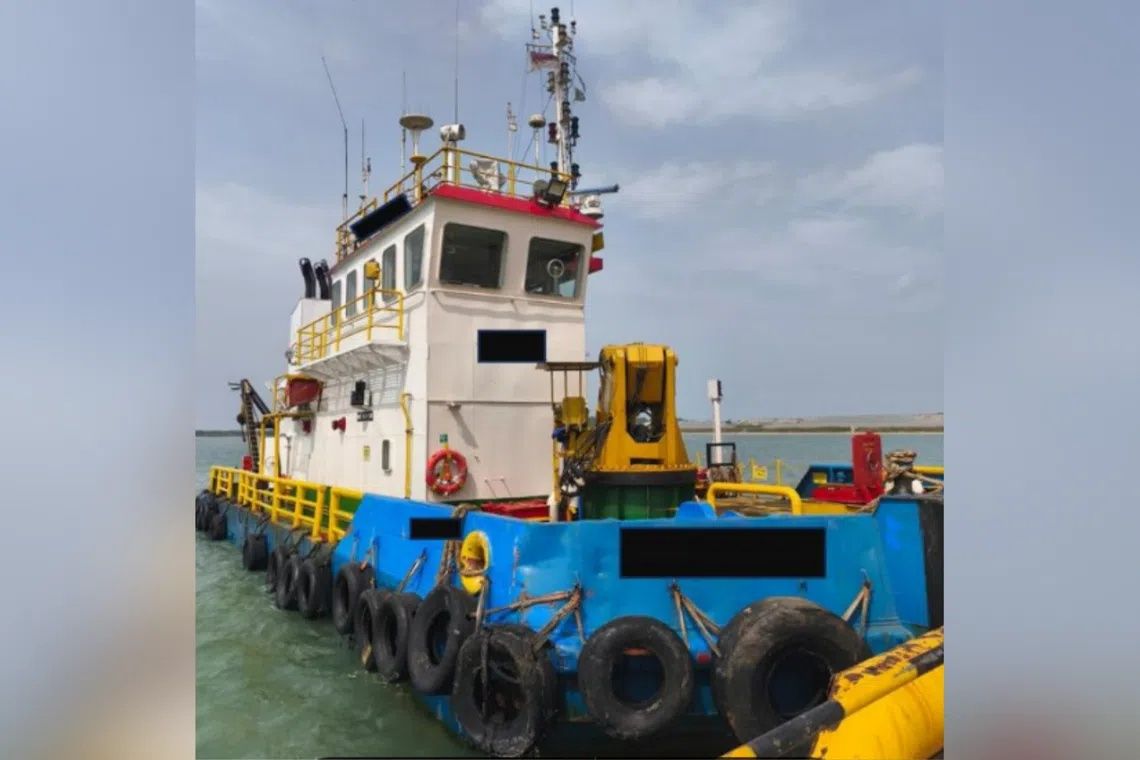
Eight men will appear before Singapore courts on Friday to face charges stemming from an alleged illegal transaction involving marine gas oil discovered aboard a Singapore-registered tugboat in the waters off Tuas. The arrests follow an early morning enforcement operation conducted by Police Coast Guard officers just after 1 am on August 13, during which the suspected theft came to light.
The suspects, ranging in age from 25 to 54 years old, all served as crew members aboard the vessel that drew the attention of maritime authorities. According to police findings released later that day, preliminary investigations pointed to a deliberate misappropriation scheme in which the men allegedly removed marine gas oil valued at approximately S$10,570 from company supplies without authorisation. Rather than remaining onboard, the stolen fuel was subsequently sold outside official channels, with the proceeds directed toward the individuals' personal accounts.
The discovery underscores vulnerabilities within Singapore's maritime sector, where fuel pilferage by crew members has emerged as an ongoing concern. Marine gas oil ranks among Singapore's most valuable cargo commodities, given the island's position as a global shipping hub and the substantial refuelling operations conducted daily across its territorial waters. The relatively modest amount allegedly stolen in this case—less than S$11,000—reflects the reality that such thefts often occur in incremental fashion, with crew members exploiting access to fuel systems across multiple transactions rather than attempting large, conspicuous hauls.
Under Singapore law, the individuals face charges of theft by servant of property in possession of master, a provision designed specifically to prosecute employees who misappropriate assets entrusted to their employer. This charge carries severe penalties reflecting the jurisdictional approach toward maritime crime. Conviction could result in substantial fines coupled with incarceration extending up to seven years, terms comparable to those applied in commercial theft cases involving significant property loss. The legal framework aims to deter opportunistic crew members from exploiting their privileged access to valuable ship resources.
The incident reflects broader enforcement priorities for Singapore's Police Coast Guard, which operates under mounting pressure to maintain security across one of the world's busiest shipping corridors. The Tuas anchorage area, situated in western Singapore waters, represents a critical zone where vessels undergo routine maintenance, refuelling, and provisioning. The concentration of maritime activity in such areas creates both operational efficiency and security challenges, as numerous crew members move between ships and docking facilities daily.
Police statements characterised the incident as part of a persistent problem requiring sustained vigilance. Officials emphasised that authorities view fuel theft from vessels with seriousness proportionate to its impact on maritime commerce and security architecture. The statement released following the arrests indicated that enforcement agencies would maintain heightened monitoring across Singapore territorial waters, conducting random inspections of tugboats and other commercial vessels to disrupt potential smuggling networks and crew misconduct.
The preventive framework deployed by Singapore authorities extends beyond reactive law enforcement to encompassing systematic deterrence operations. Regular security checks, coordinated patrols, and inter-agency intelligence sharing create an environment where maritime workers understand that theft carries elevated detection risks. For Malaysia and other Southeast Asian nations reliant on Singapore's maritime infrastructure, such enforcement efforts provide reassurance regarding supply chain integrity and fuel security. Any disruption to legitimate maritime commerce through organised theft networks could reverberate across regional shipping operations.
Tugboat operators face particular challenges in maintaining crew discipline and preventing pilferage, as these vessels operate extensively throughout Singapore waters serving larger container and bulk carriers. The crews typically work extended shifts under demanding conditions, factors that enforcement agencies acknowledge when implementing oversight. However, financial desperation or opportunism nonetheless motivates some individuals to exploit access privileges. The case under investigation suggests that despite awareness of legal consequences, certain crew members calculated that modest, incremental theft could proceed undetected.
For Malaysian readers, this incident carries relevance extending beyond immediate Singapore concerns. The Port of Singapore's security posture directly affects Malaysian vessels transiting through nearby waters and utilising regional fuel supply chains. Malaysian shipping companies operating tugboats or contracting crew through Singapore-based operators must implement robust internal controls and crew vetting procedures to ensure their personnel do not engage in similar misconduct while docked. A single employee's criminal activity can compromise an entire company's insurance ratings and regulatory standing throughout Southeast Asia's maritime sector.
The enforcement response initiated in Tuas signals Singapore's commitment to maintaining regulatory standards that protect its reputation as a safe, secure maritime hub. Such consistency supports regional confidence in Singapore-centred supply chains and logistics operations. Beyond the immediate criminal proceedings, the case illustrates why maritime stakeholders throughout Southeast Asia must invest in crew training, financial literacy programmes, and grievance mechanisms that address underlying motivations for workplace theft.

