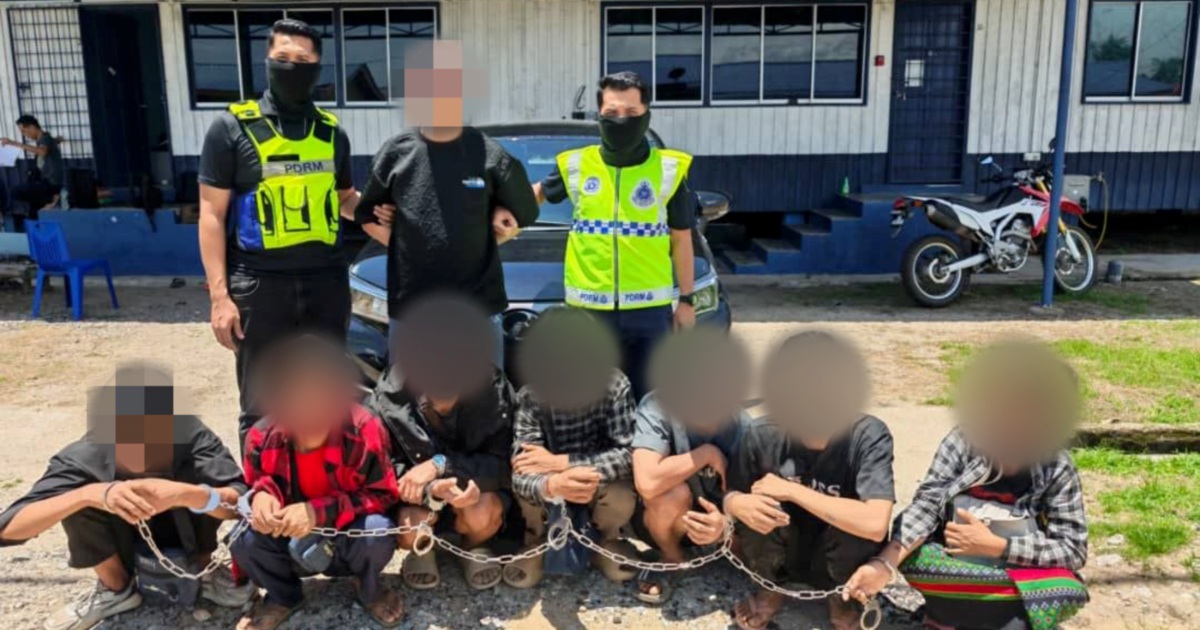
Police in Kota Baru conducted a dawn raid that resulted in the arrest of eight individuals suspected of involvement in human trafficking operations, marking another significant enforcement action against organised migrant smuggling networks in Malaysia's northeastern state. The operation, which took place in the early hours of the morning, focused on a vehicle transporting undocumented migrants across the border region, where such illicit movements have become increasingly prevalent.
Among those apprehended is a Malaysian citizen believed to be the principal operator facilitating the movement of seven undocumented nationals from Myanmar. The suspect's alleged role demonstrates the critical involvement of local facilitators in migrant smuggling syndicates, individuals who leverage their citizenship status and knowledge of local routes to coordinate cross-border movements. Such arrangements typically exploit vulnerabilities in border enforcement and infrastructure, allowing criminal networks to operate with relative impunity in areas where surveillance remains limited.
The remaining seven detainees are Myanmar nationals whose immigration status renders them particularly vulnerable to exploitation by trafficking organisations. These individuals often pay substantial sums, sometimes borrowing from unlicensed lenders or incurring debt-bondage arrangements, to secure passage into Malaysia in pursuit of employment opportunities. The discovery of undocumented migrants in transit highlights the persistent demand for irregular labour migration routes despite Malaysia's substantial intake of legal migrant workers across multiple sectors.
Kelantan's geography places it on a critical trafficking corridor, with proximity to the Thailand-Myanmar border and established smuggling routes making it a focal point for enforcement efforts. The state's coastal and land borders present considerable challenges for detection, as criminal networks continuously adapt their methods to evade police operations. The success of this particular operation underscores the importance of intelligence-led policing and inter-agency coordination in disrupting these activities before migrants complete their onward journey.
The arrest reflects broader regional concerns about transnational human smuggling, a phenomenon that connects Malaysia to migration crises across Southeast Asia. Myanmar's political instability and economic deterioration have intensified emigration pressures, with large populations seeking livelihood opportunities in neighbouring countries. Malaysia, despite its own economic constraints, remains a destination because of perceived wage advantages compared to origin countries, even for undocumented migrants who accept informal sector employment and heightened vulnerability to exploitation.
Authorities have increasingly prioritised prosecutions against Malaysian facilitators, recognising that dismantling domestic smuggling networks is essential to reducing the attractiveness of irregular migration routes. Individuals convicted of human trafficking and migrant smuggling face substantial prison sentences and financial penalties under Malaysia's Anti-Trafficking in Persons and Anti-Smuggling of Migrants Act. The arrest of the Malaysian suspect sends a clear deterrent message, though enforcement remains sporadic across many border regions.
For the apprehended Myanmar nationals, detention presents a complex outcome. Malaysian immigration law mandates processing of undocumented migrants, typically resulting in mandatory detention pending deportation hearings. However, deportation procedures remain protracted, leaving migrants in detention centres for extended periods during which they face separation from support networks and reduced access to legal counsel. International human rights organisations have documented concerns about conditions in Malaysian immigration detention facilities and the vulnerable status of traumatised migrants within the system.
The operation also reflects resource allocation decisions within Kelantan's police force, which must balance migrant smuggling enforcement against other crime prevention priorities. Border states in Malaysia typically experience higher concentrations of smuggling activity compared to interior regions, necessitating dedicated task forces and specialised intelligence units. The investment in this early morning operation suggests sustained commitment to disrupting trafficking networks, though sustainability depends on adequate funding and personnel continuity.
Regional cooperation mechanisms, including information sharing with Thai and Myanmar authorities, have gradually improved, yet gaps remain in coordinated border security. Kelantan's Pengkalan Kubor border checkpoint and other crossing points require enhanced screening capabilities and personnel training to identify trafficking victims among the broader migrant population. Intelligence about smuggling routes and operators facilitates preventive operations, though much information derives from arrested migrants and informants rather than proactive surveillance.
The incident contributes to Malaysia's documented annual migrant smuggling statistics, with Kelantan consistently appearing among states with highest recorded cases. These figures, while demonstrating police activity, represent only a fraction of actual smuggling operations, as many cases proceed undetected. Law enforcement analysts estimate that documented cases reflect perhaps ten to twenty percent of total smuggling activity, suggesting smuggling networks remain substantially larger than arrest statistics indicate.
Forward processing of these cases will determine whether prosecutions proceed against the Malaysian suspect and whether Myanmar nationals receive victim status recognition or face deportation. Such outcomes significantly influence how potential migrants assess risks associated with irregular routes, potentially motivating engagement with smuggling networks if perceived legal consequences appear insufficiently severe. The case therefore represents one node within a complex system of migration governance, smuggling networks, and enforcement strategies across Southeast Asia.

